The sofa is right.
The rug is down.
The cushions are styled.
But the walls are still empty.
Or worse, covered with pieces that were bought one at a time and have nothing to do with each other.
A room with bare walls feels unfinished.
A room with poorly hung or badly scaled art feels like it was furnished by someone who gave up at the last moment.
Wall décor done right is the layer that signals taste.
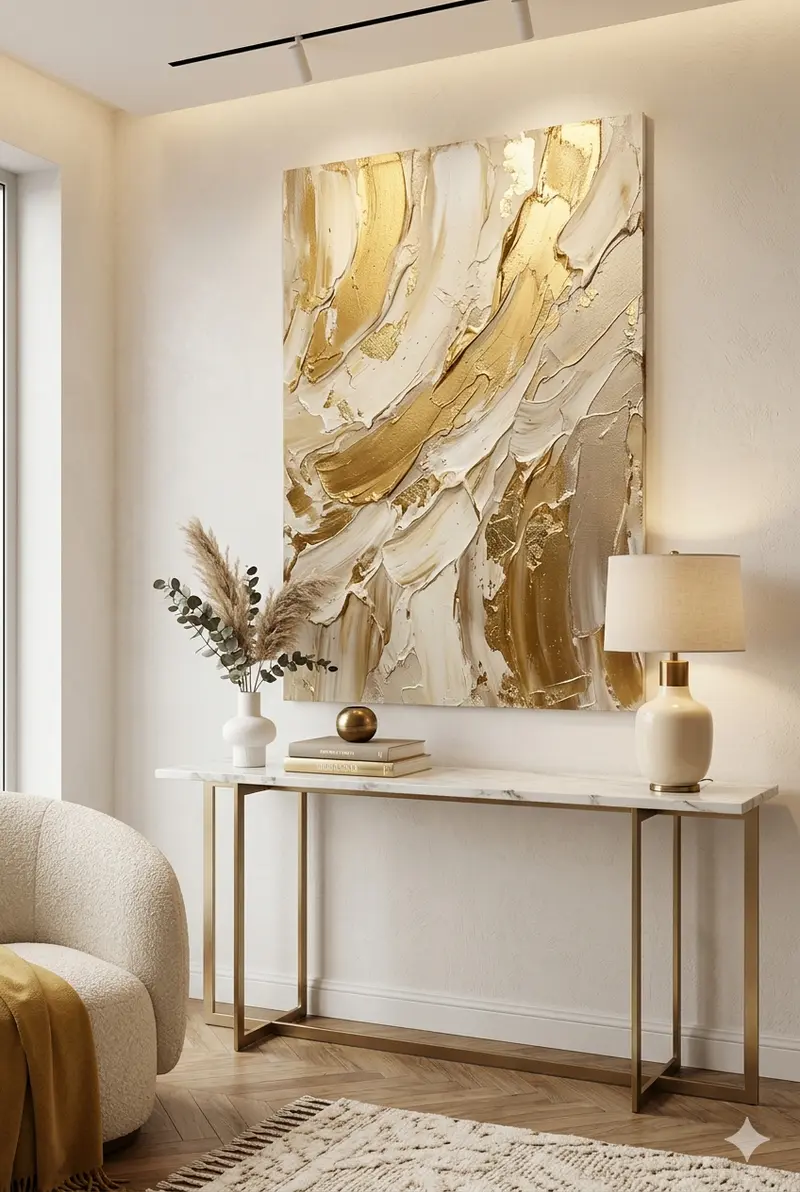
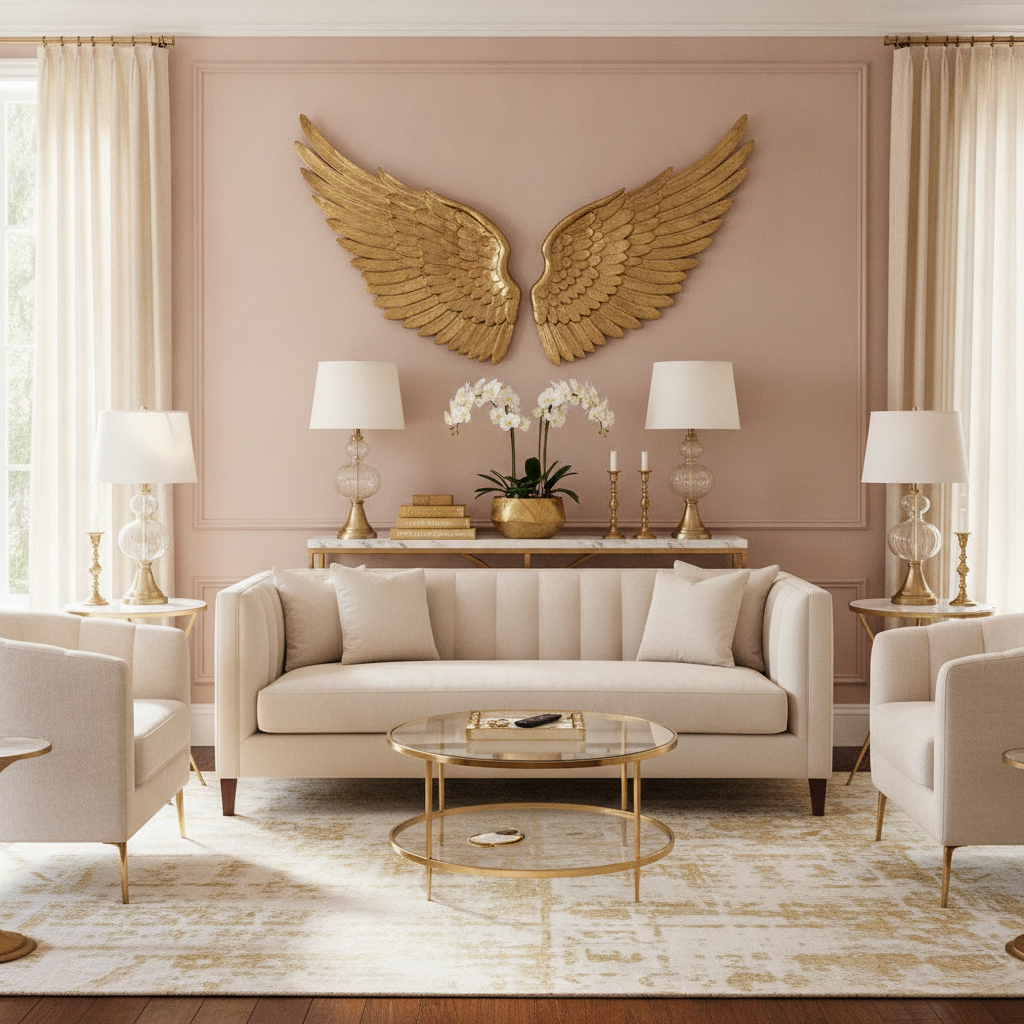
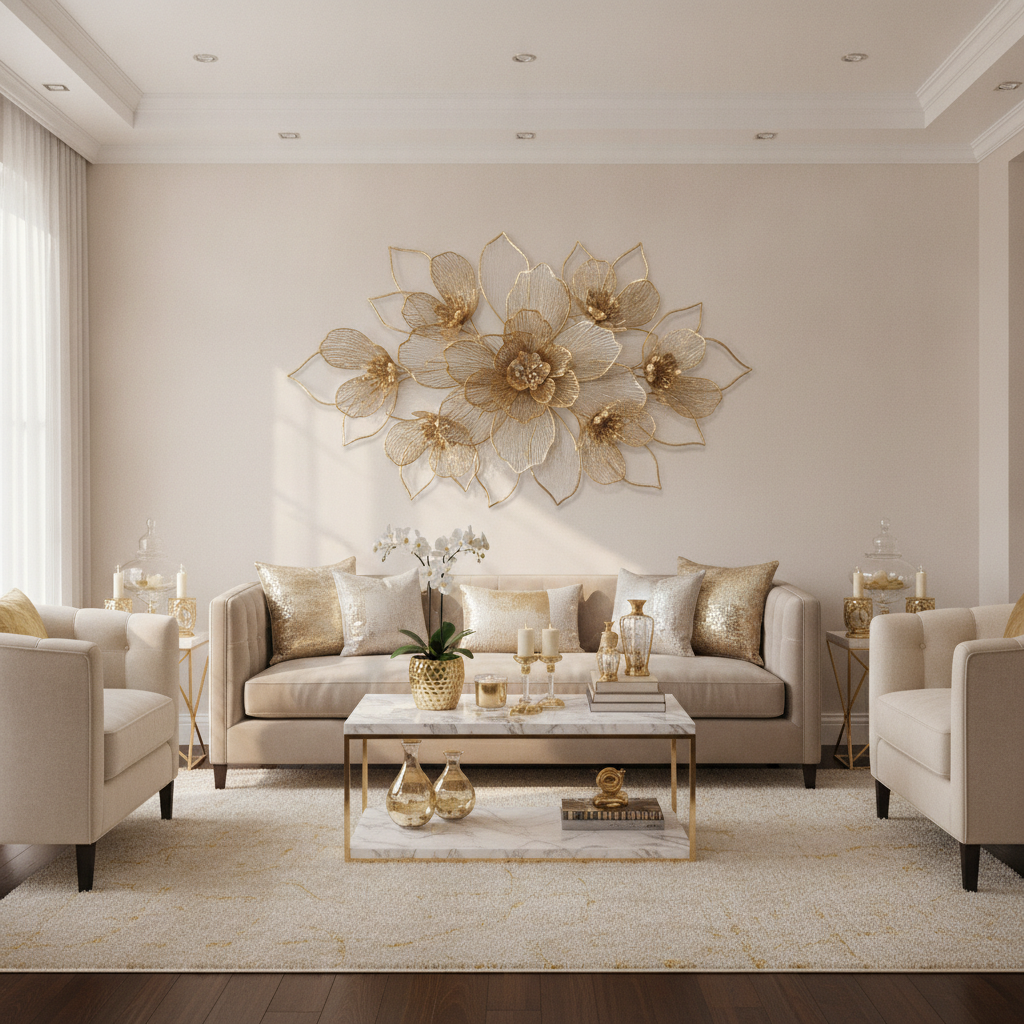
A champagne gold leaf metal sculpture that catches the afternoon light in the living room.
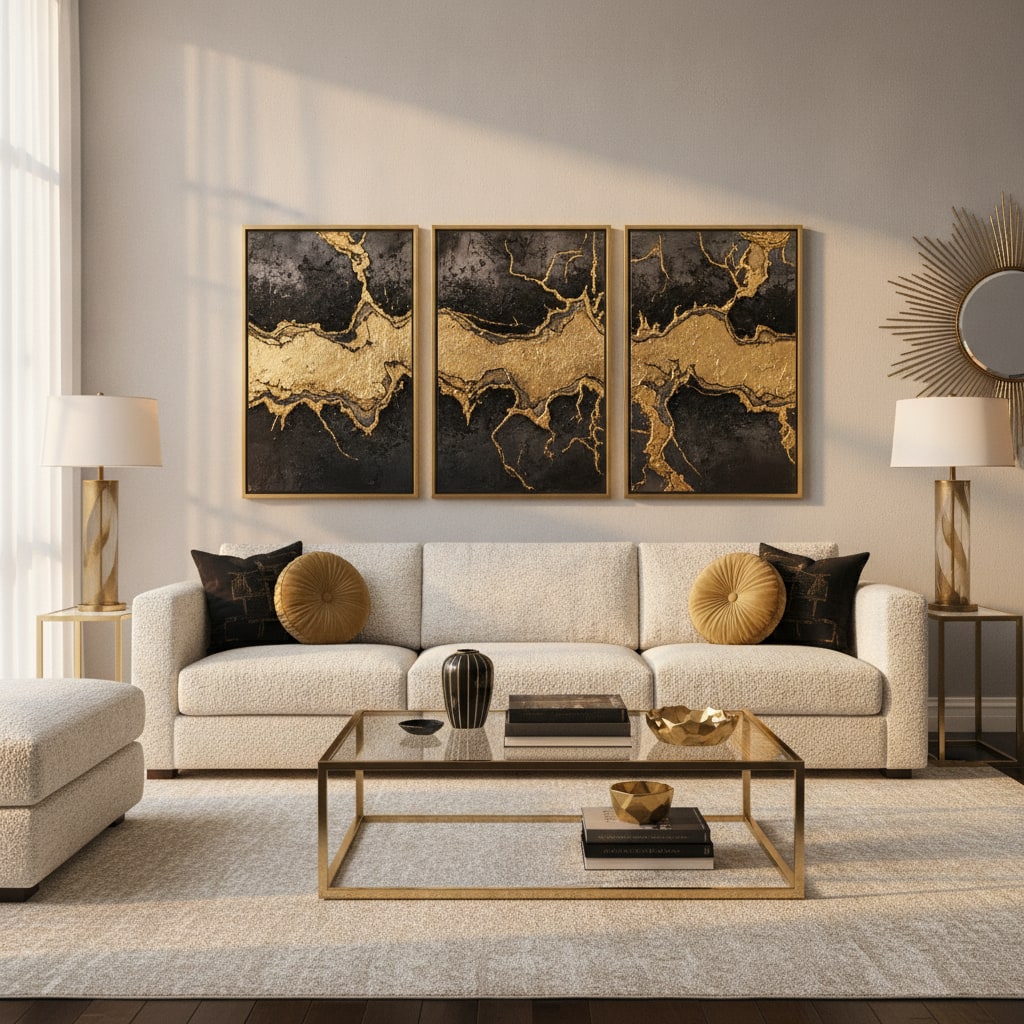
An oversized triptych canvas that fills the wall above the sofa the way the room always needed.
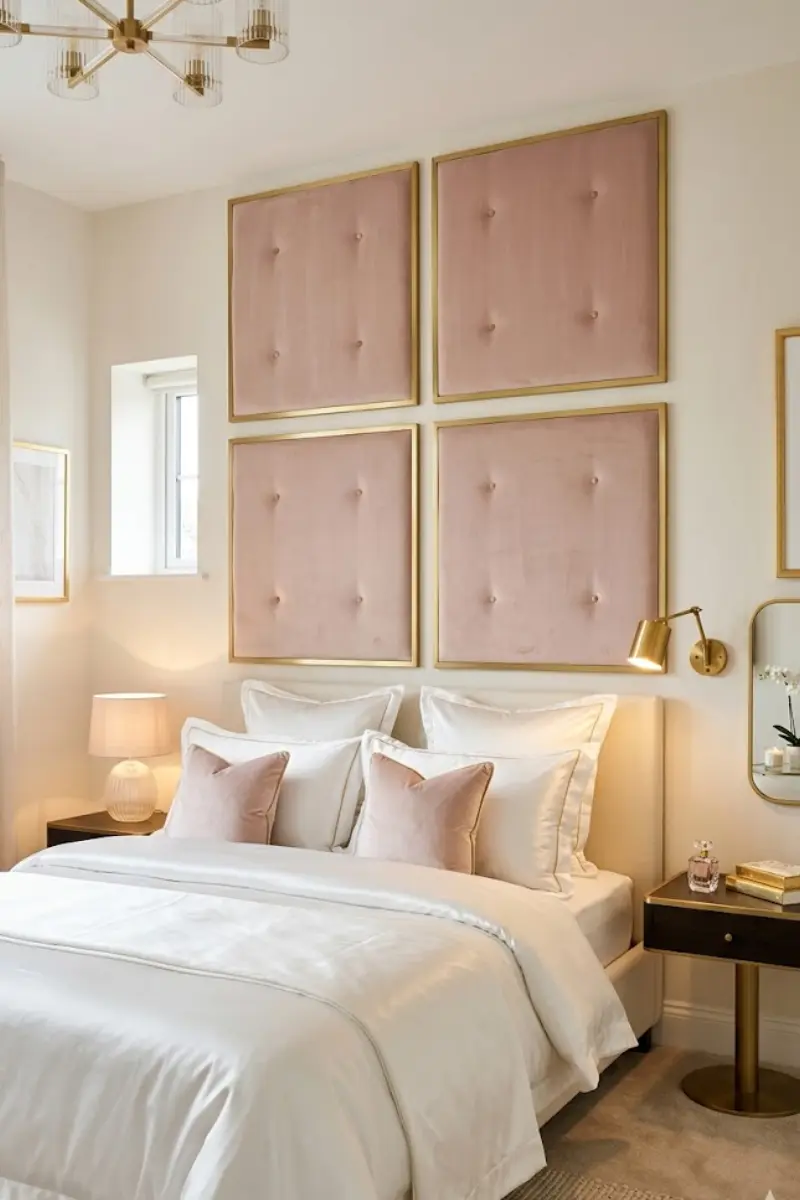
A velvet-framed gallery set above the headboard that makes the bedroom look like it was styled for a magazine.
These are not decorations.
They are design decisions.
Every type, every size rule, every style, every room, and every hanging technique you need is on this page.
So you make one decision and get it right.
Types of Wall Décor
The wall décor type you choose changes whether the room reads as styled or just full. And those two things look very different.
Canvas Wall Art
Canvas is the foundation of any gallery wall or statement hanging. Stretched canvas over a wooden frame gives the piece structure and depth. It reads as proper art, not a poster. Gallery-wrapped edges mean no frame required, though a float frame elevates it further.
Metal Wall Sculptures
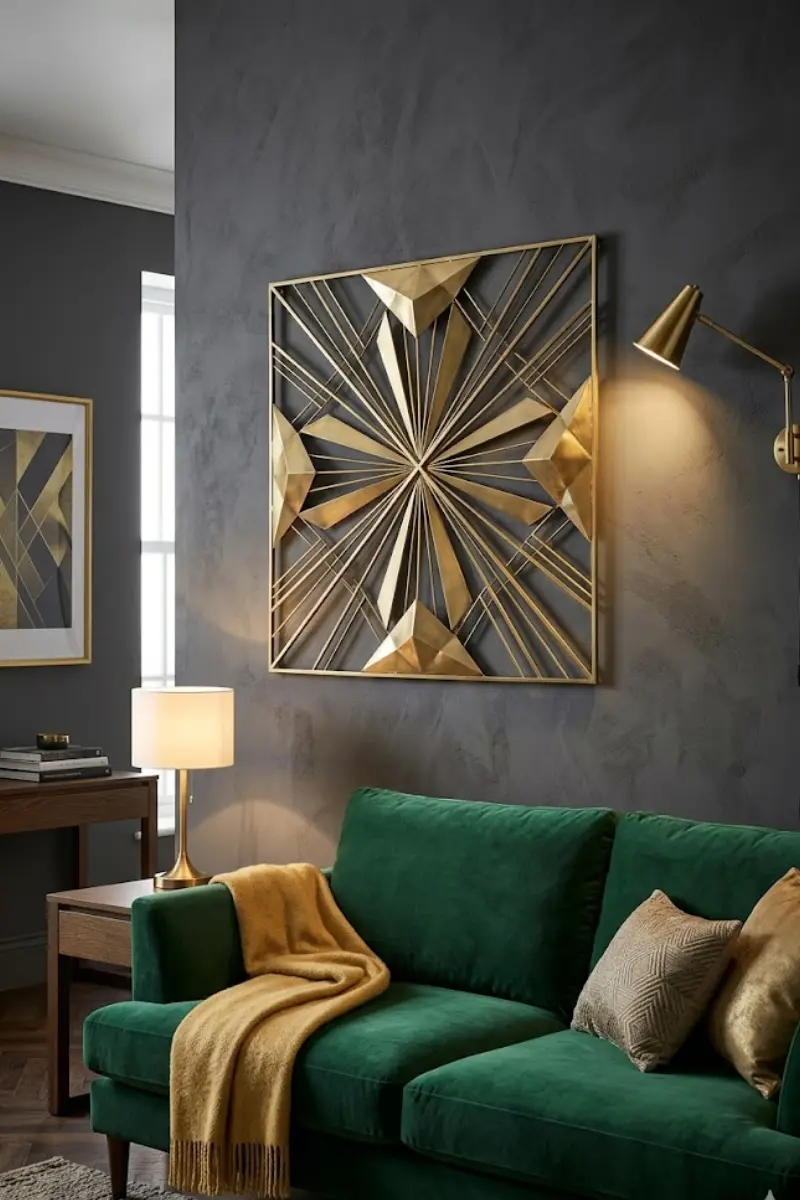
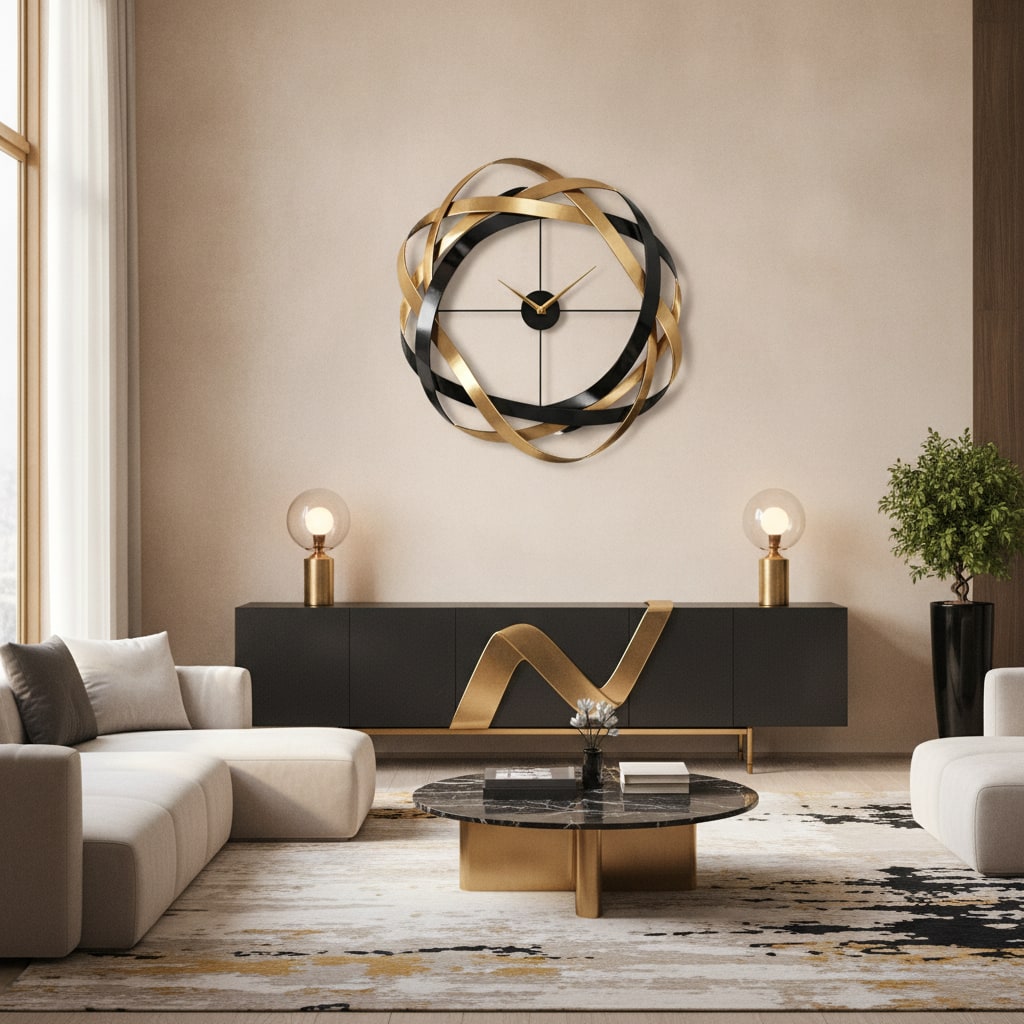
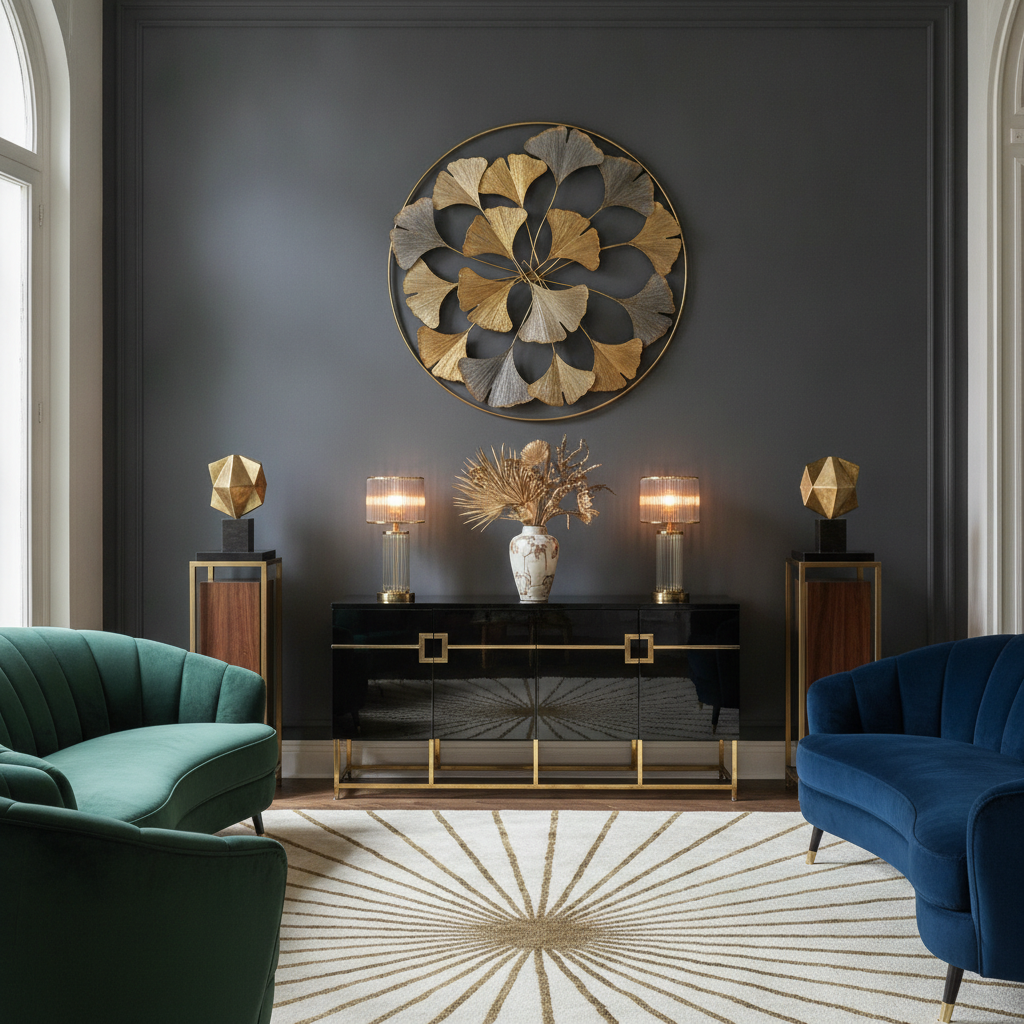
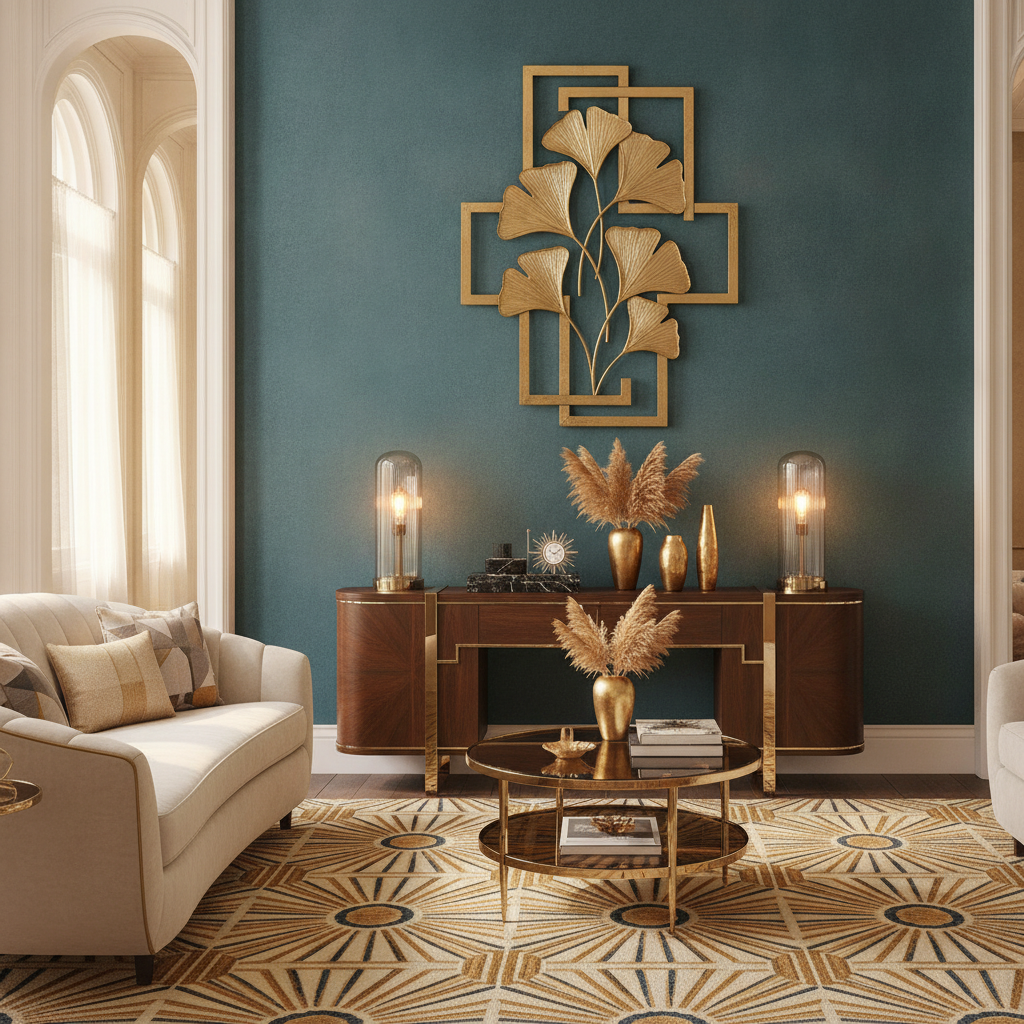
Metal wall sculptures do something canvas cannot: they interact with light. A gold leaf or brushed brass piece changes character throughout the day as ambient light shifts. Three-dimensional surface catches shadow and highlight simultaneously. This is the piece guests comment on first.
Framed Art Print Sets
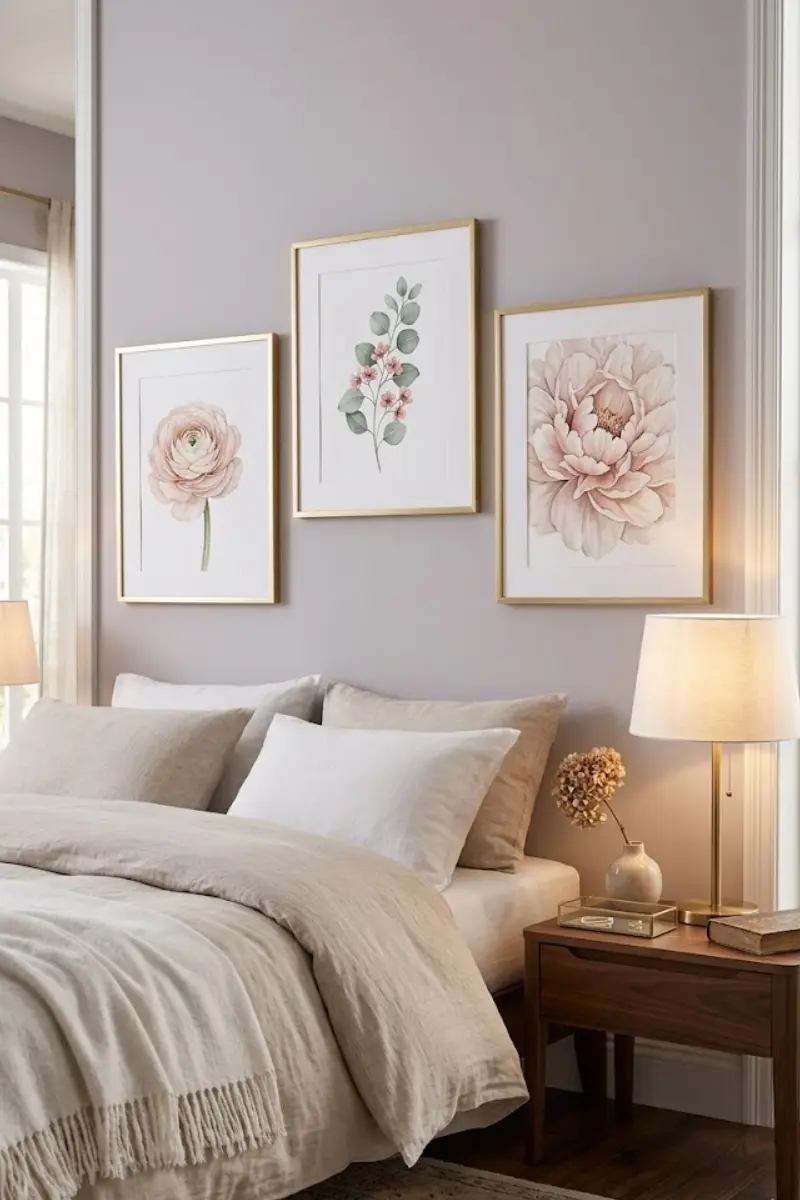
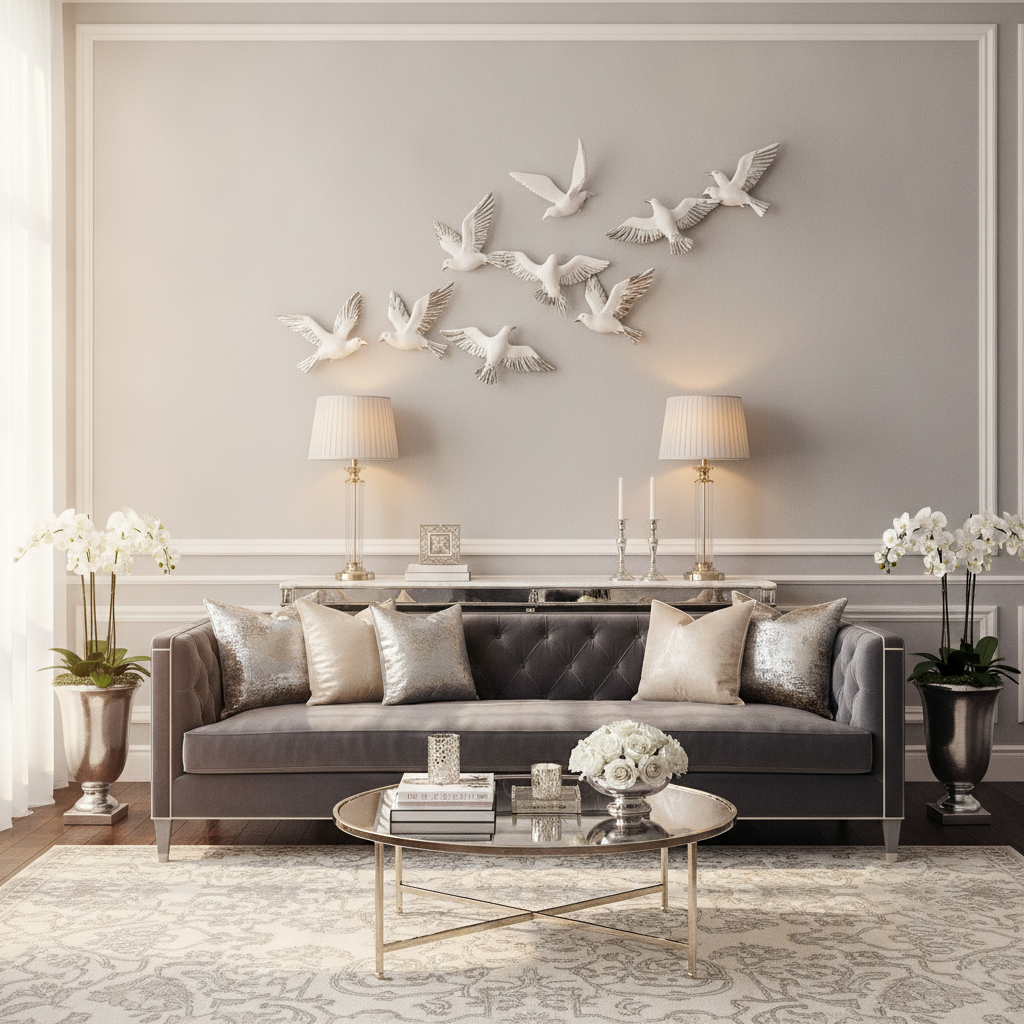
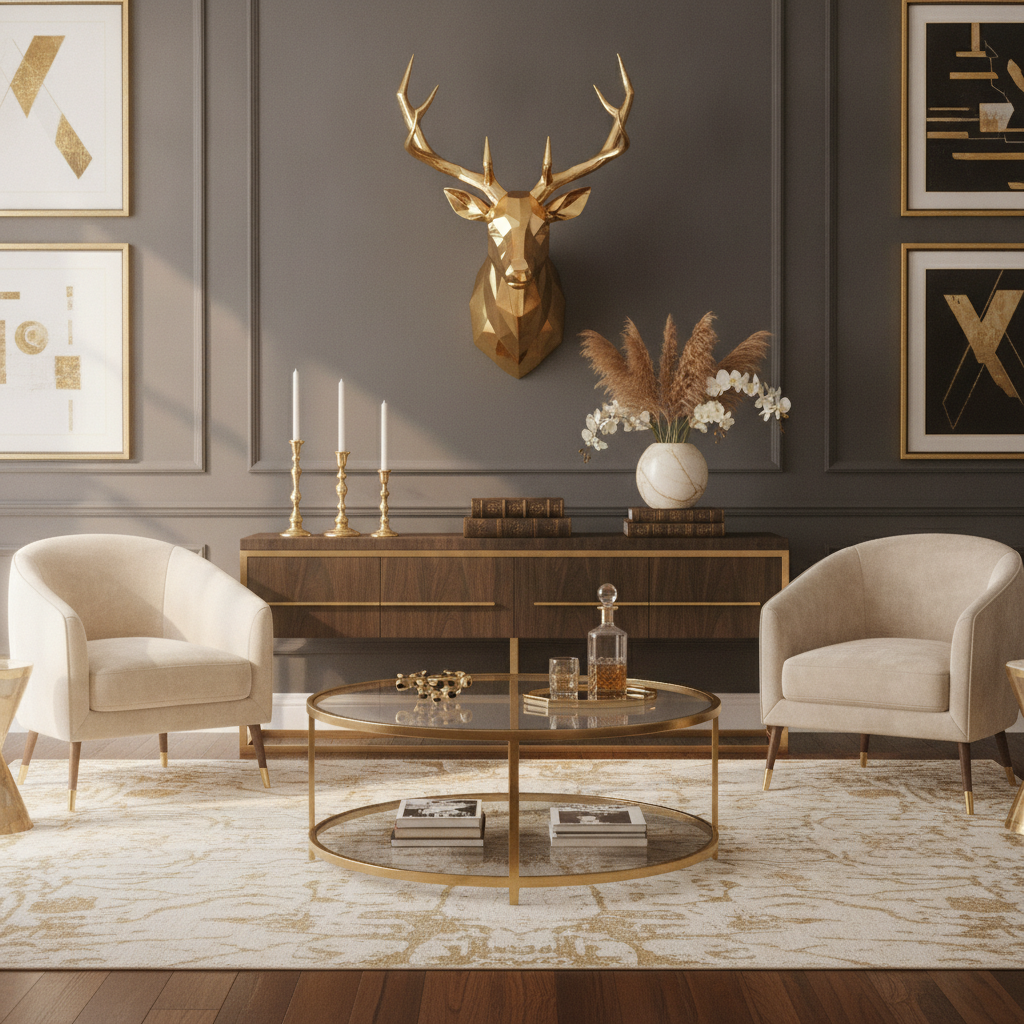
Framed print sets remove the hardest part of gallery walls. The curation. A matched set of two, three, or four prints in coordinated frames hangs as a composed unit. Gold or champagne frames pull the set into a glam aesthetic regardless of the print subject.
Gallery Wall Sets
Gallery wall sets are curated multi-piece collections designed to hang together. Unlike individually sourced pieces, they share a colour story and scale relationship. A quality gallery set at $189 and above includes frames of genuine weight. Not the lightweight versions that look cheap on the wall.
3D Metal Wall Panels
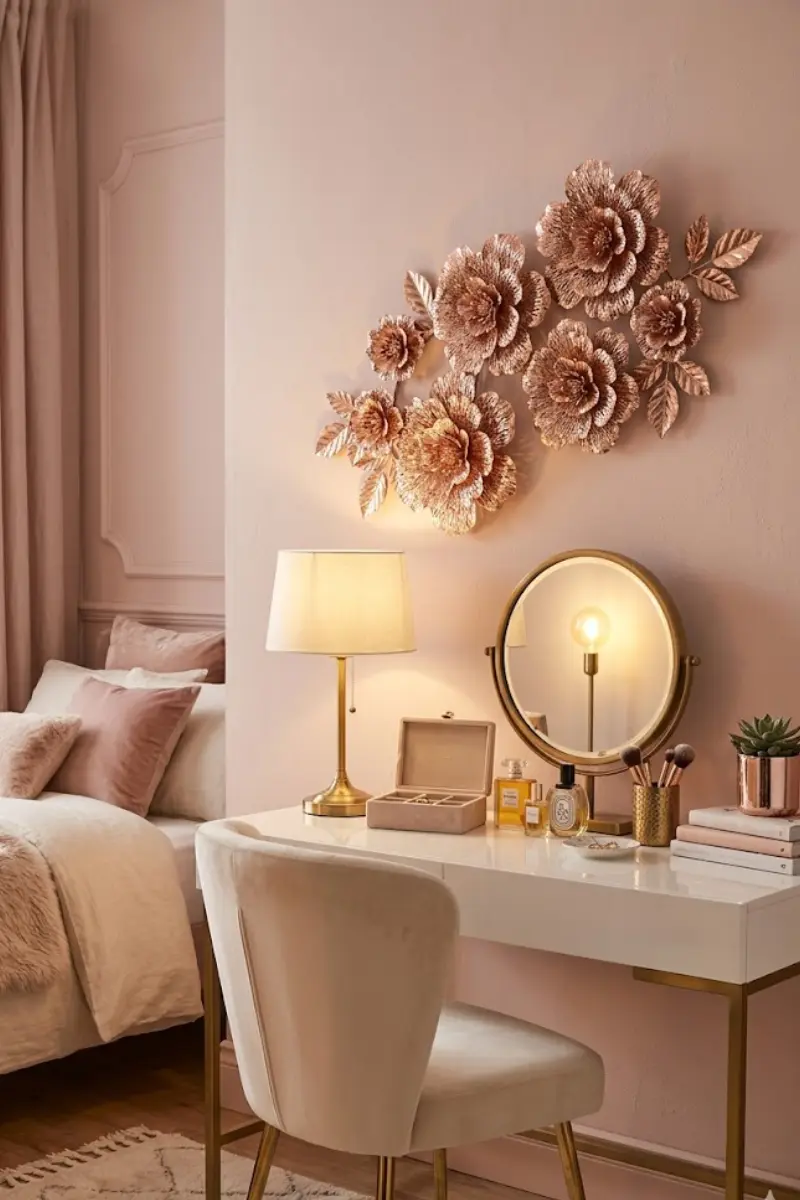
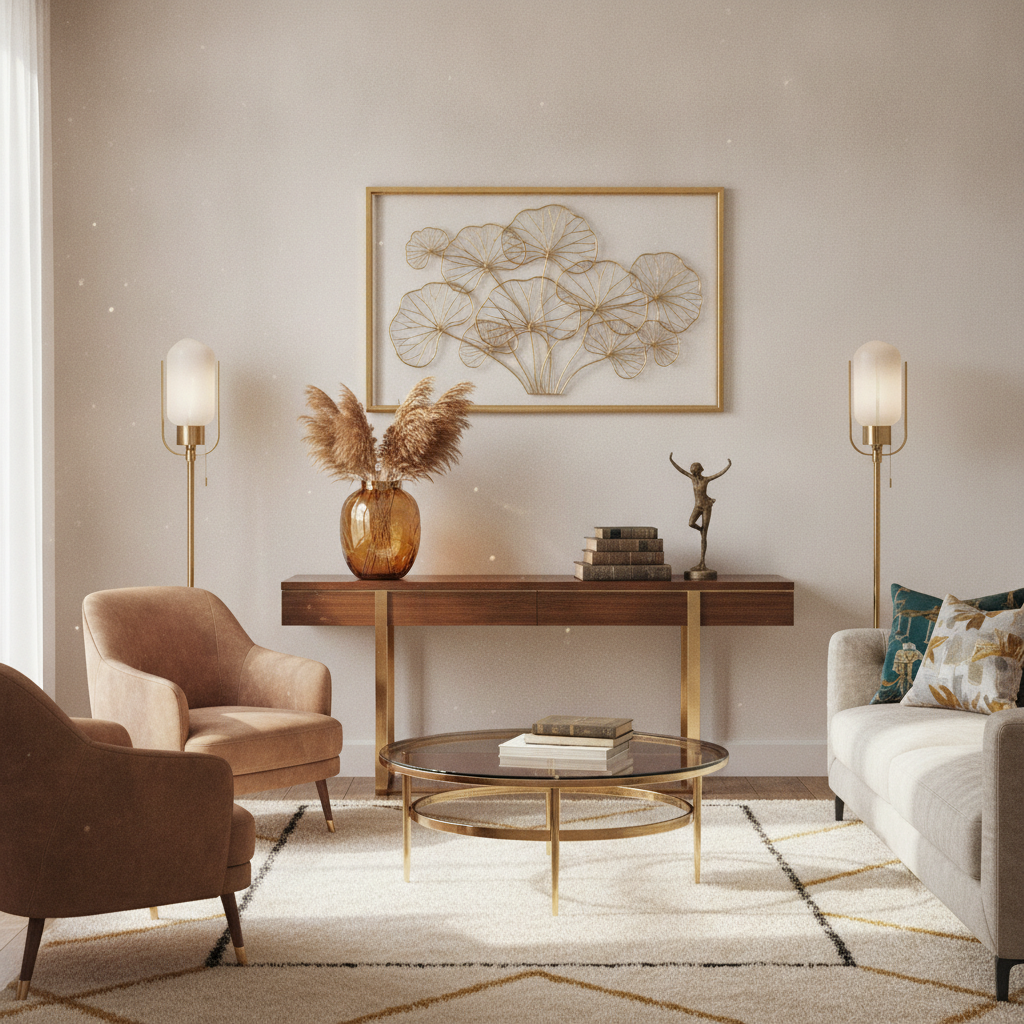
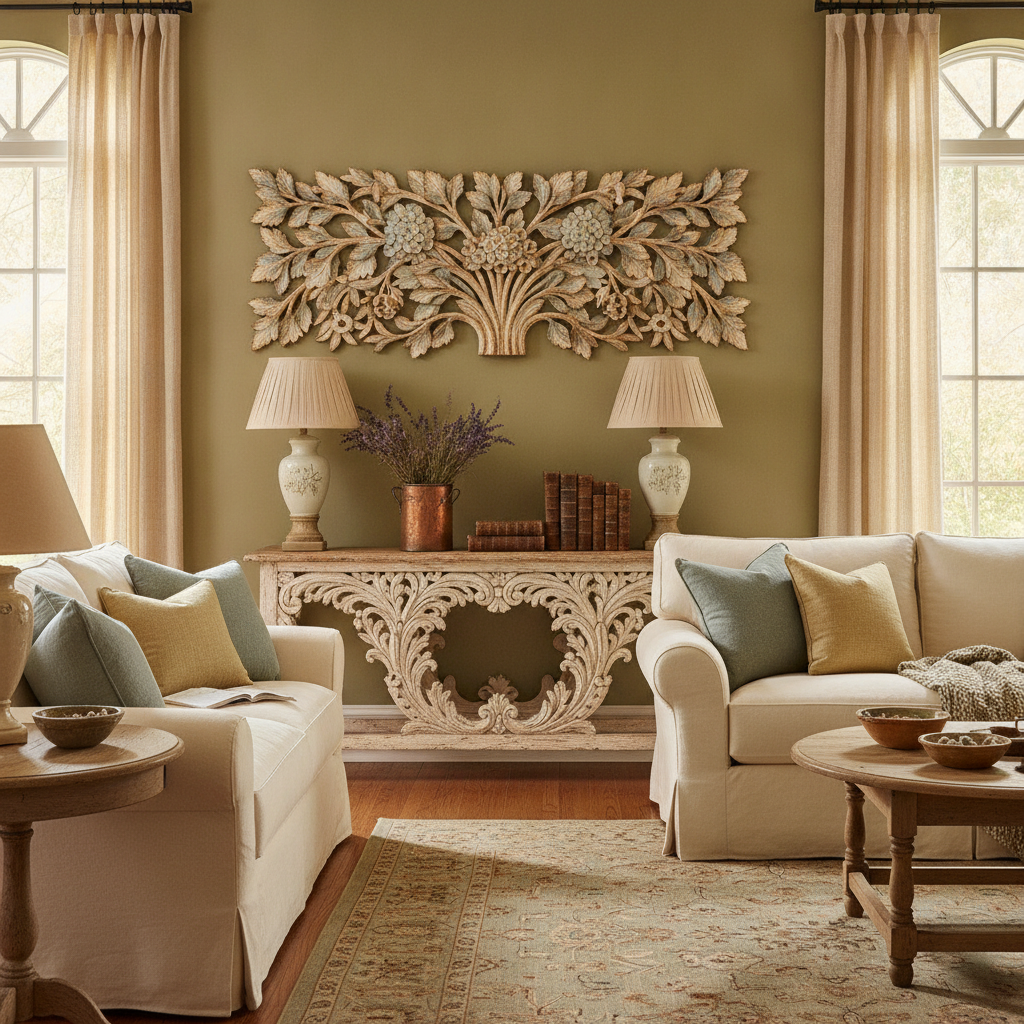
3D wall panels bring the kind of texture that flat art cannot achieve. Rose gold flower panels, geometric brass reliefs, and crystal-beaded panels all create depth against the wall surface. They work especially well on dark or wallpapered feature walls where texture-on-texture creates drama.
Wall Sculptures & Bas Relief
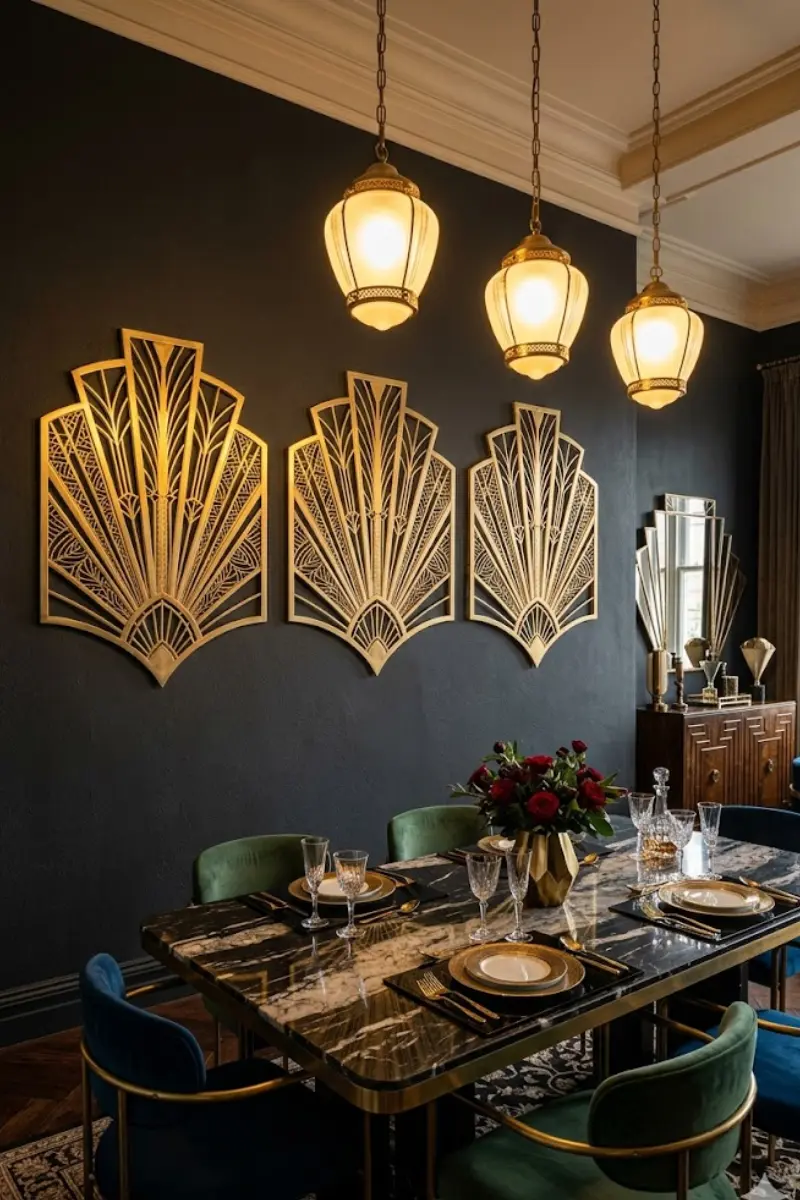
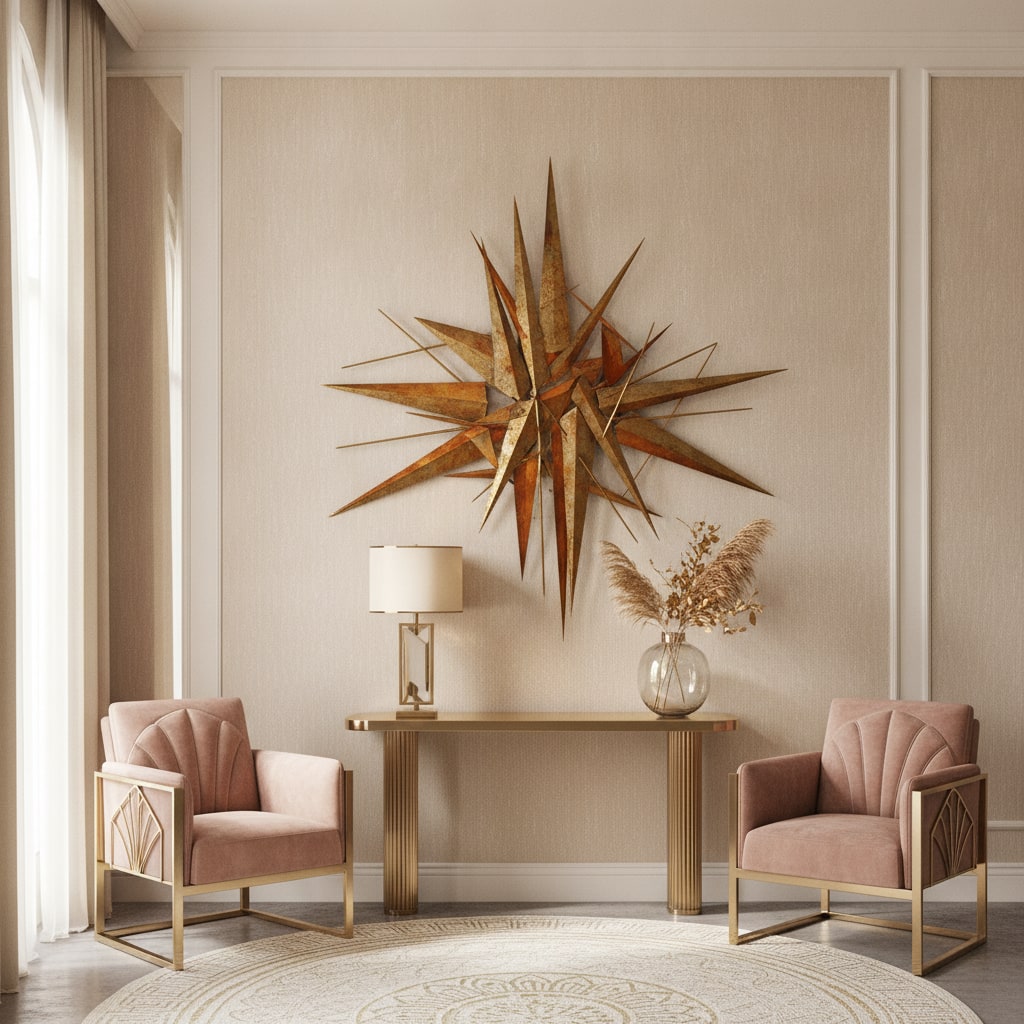
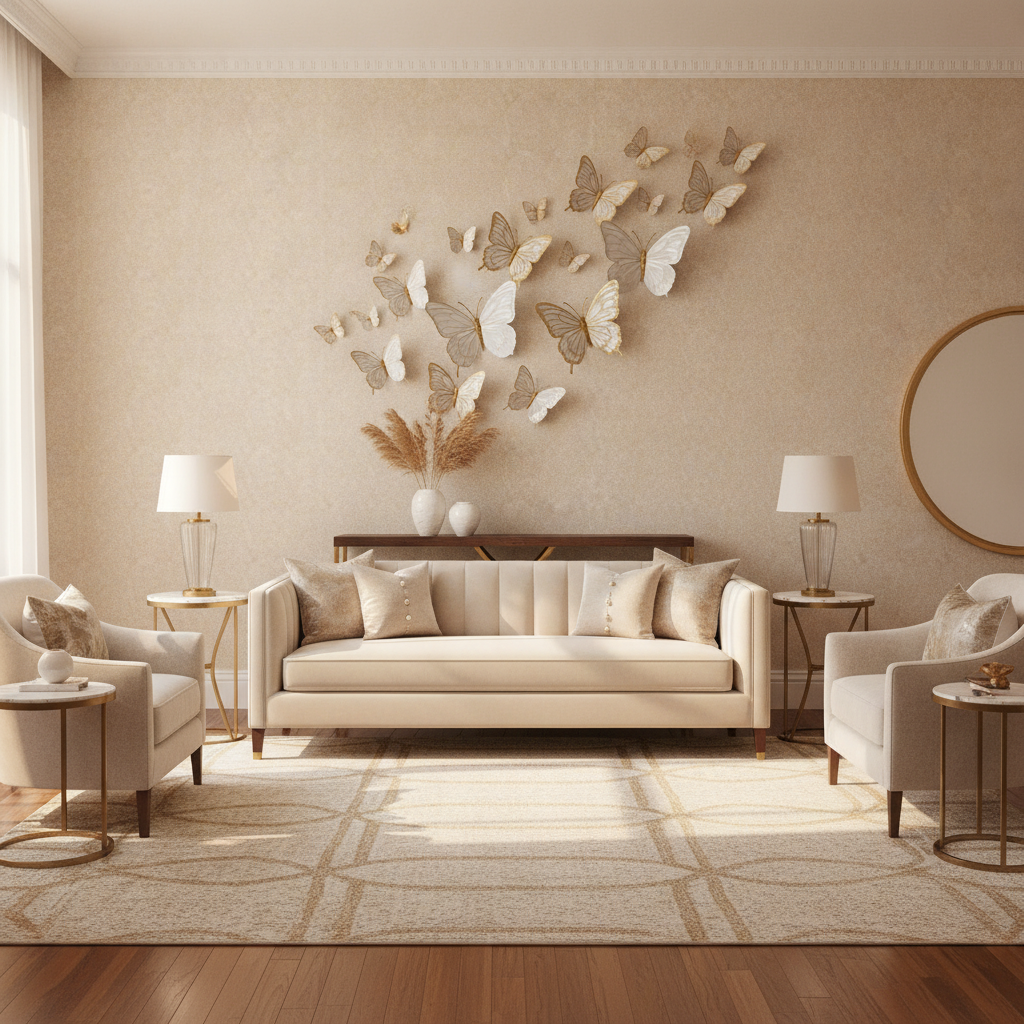
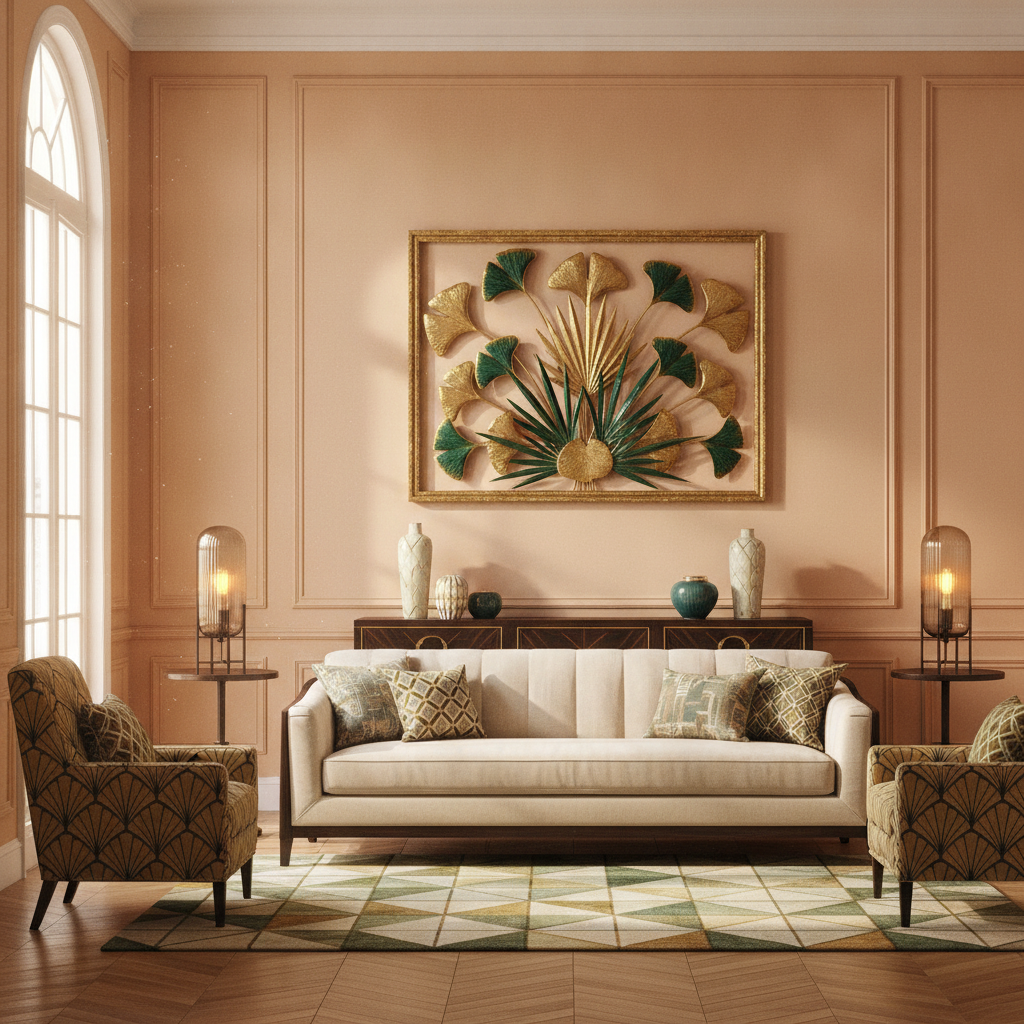
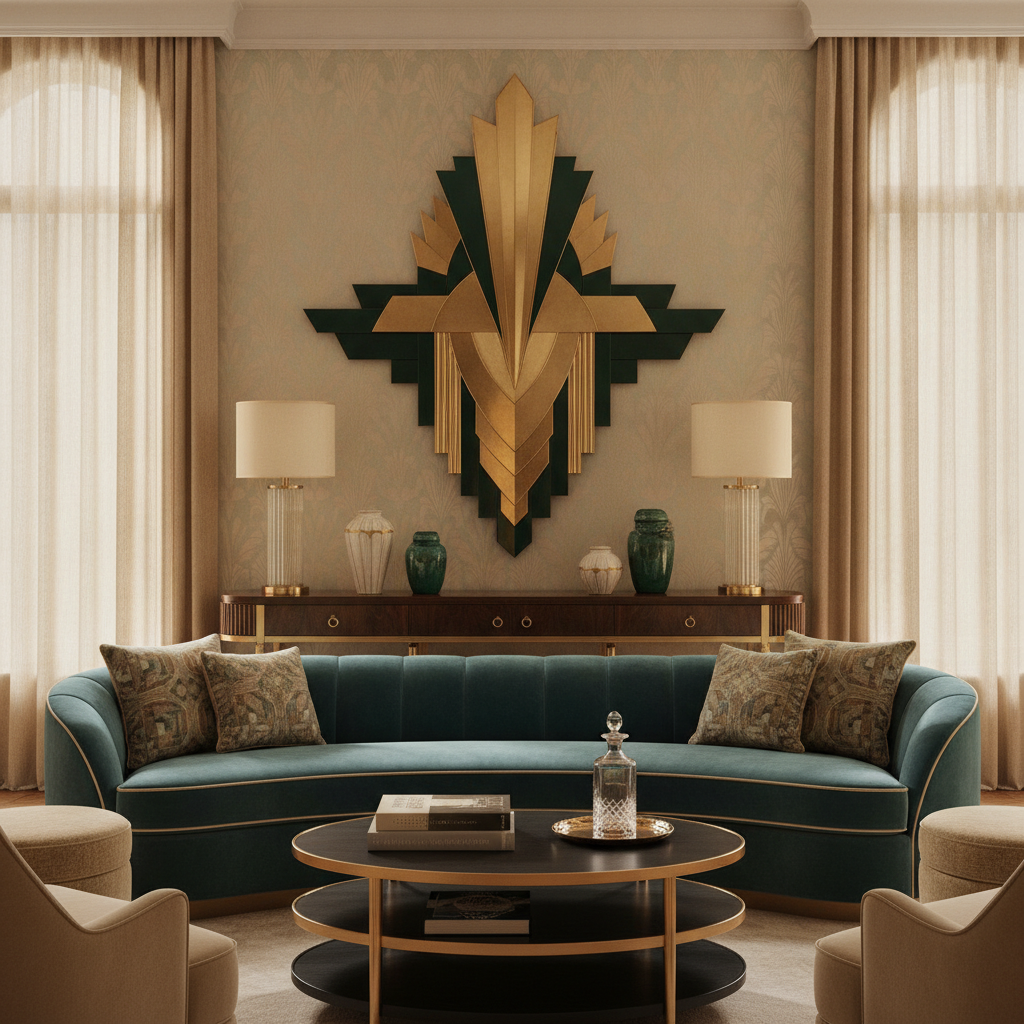
Wall sculptures that project outward, fan motifs, starburst forms, botanical reliefs, create shadow play that changes with the time of day. Art Deco geometric forms in brass or gold are the natural choice for glam interiors. Scale matters here more than any other type: a 24-inch starburst disappears on a 10-foot wall.
Textile Wall Art
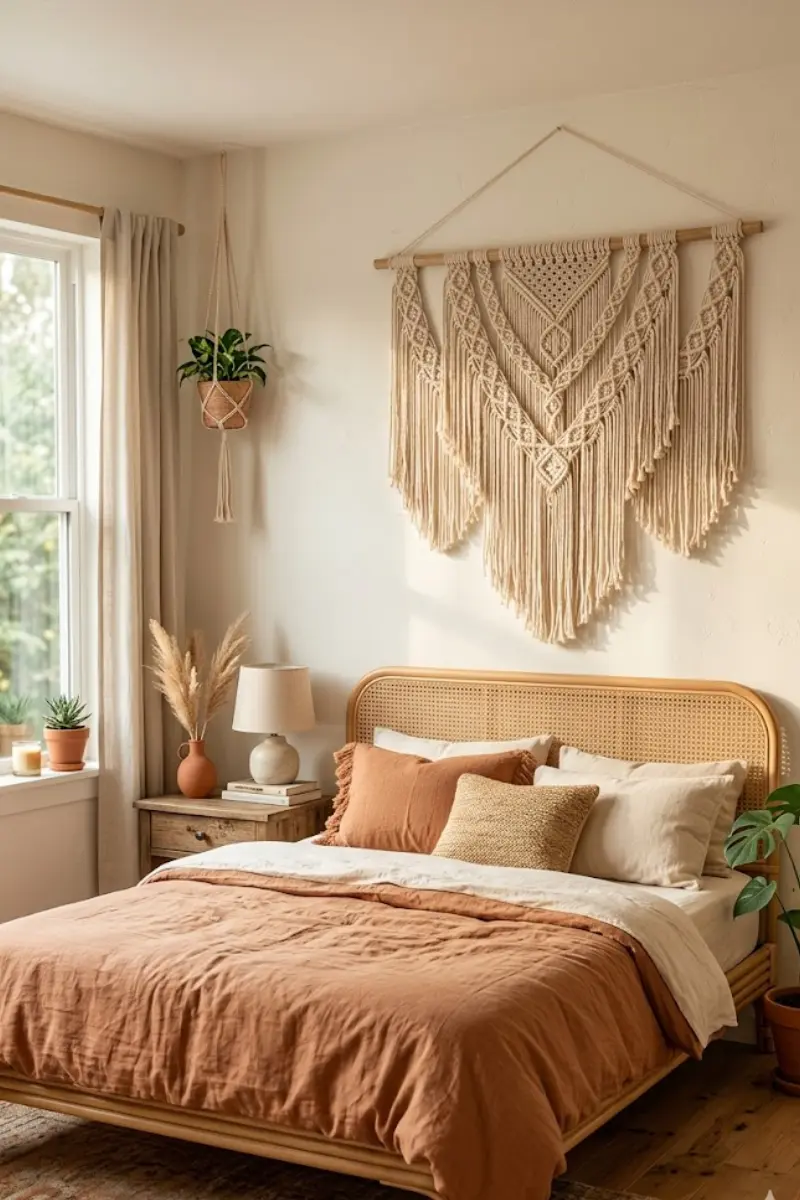
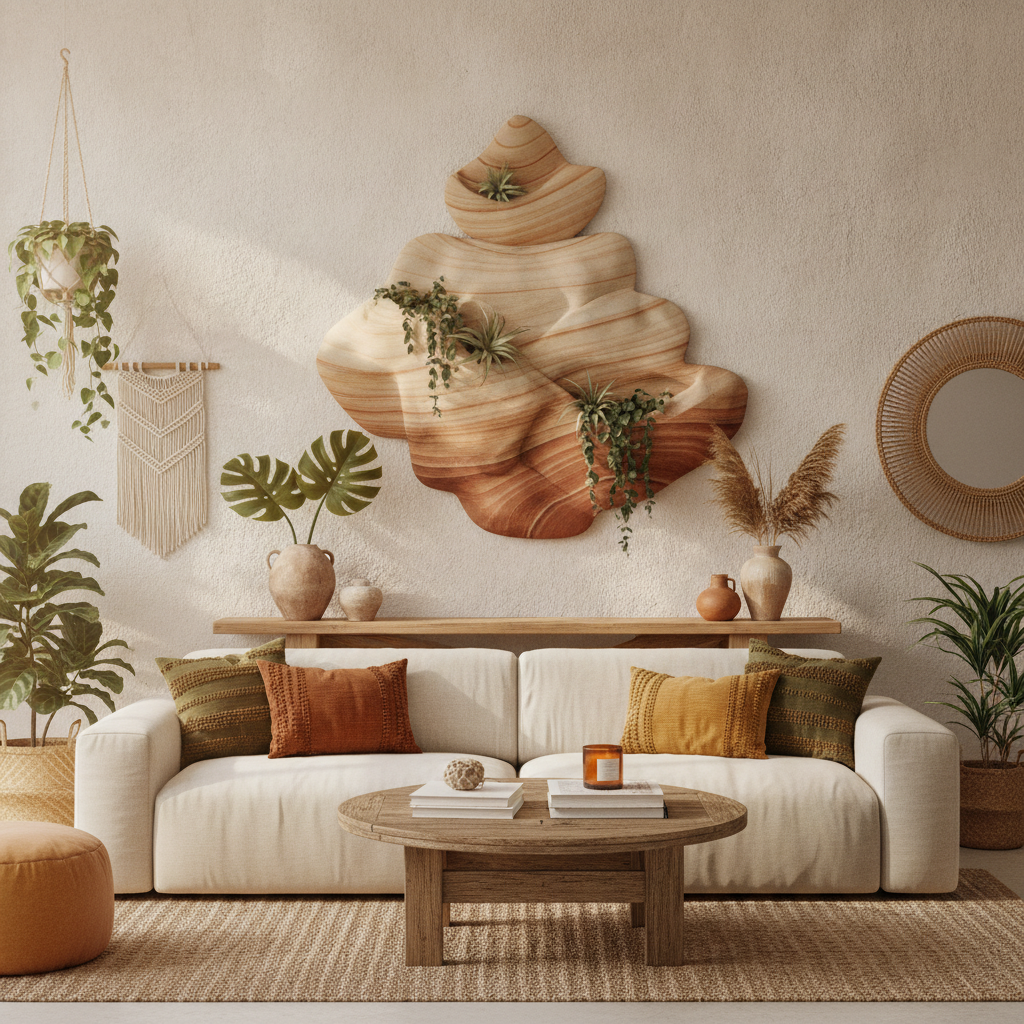
Macrame wall hangings, woven tapestries, and velvet upholstered wall panels bring softness to surfaces in a way no framed piece can. They absorb sound, add warmth, and photograph beautifully in lifestyle shots. A large macrame piece on an otherwise minimal wall is a complete visual solution.
Woven & Basket Wall Art
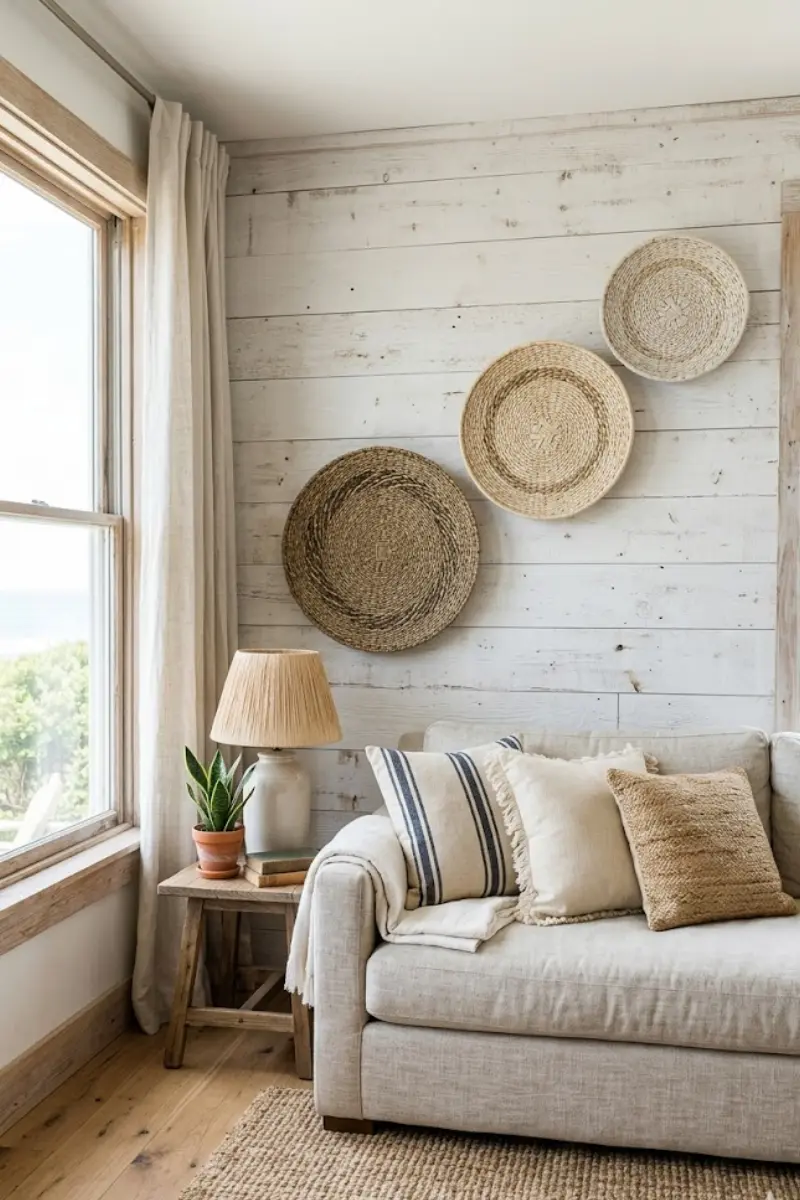
Seagrass and rattan wall baskets hung as grouped art installations are a coastal and boho design move that has staying power. A set of three to five baskets in varied sizes creates an organic arrangement that works on otherwise difficult walls. Irregular shapes, narrow spaces, awkward heights.
Velvet Upholstered Wall Panels
Upholstered wall panels do double duty: they function as oversized décor and as a soft padded surface behind the bed. Velvet in champagne, blush, or deep jewel tones adds a layer of richness that no framed art can match. They also absorb sound, making the bedroom quieter.
Shop Wall Décor
Filter by room to find art scaled and styled for your specific wall dimensions and aesthetic.


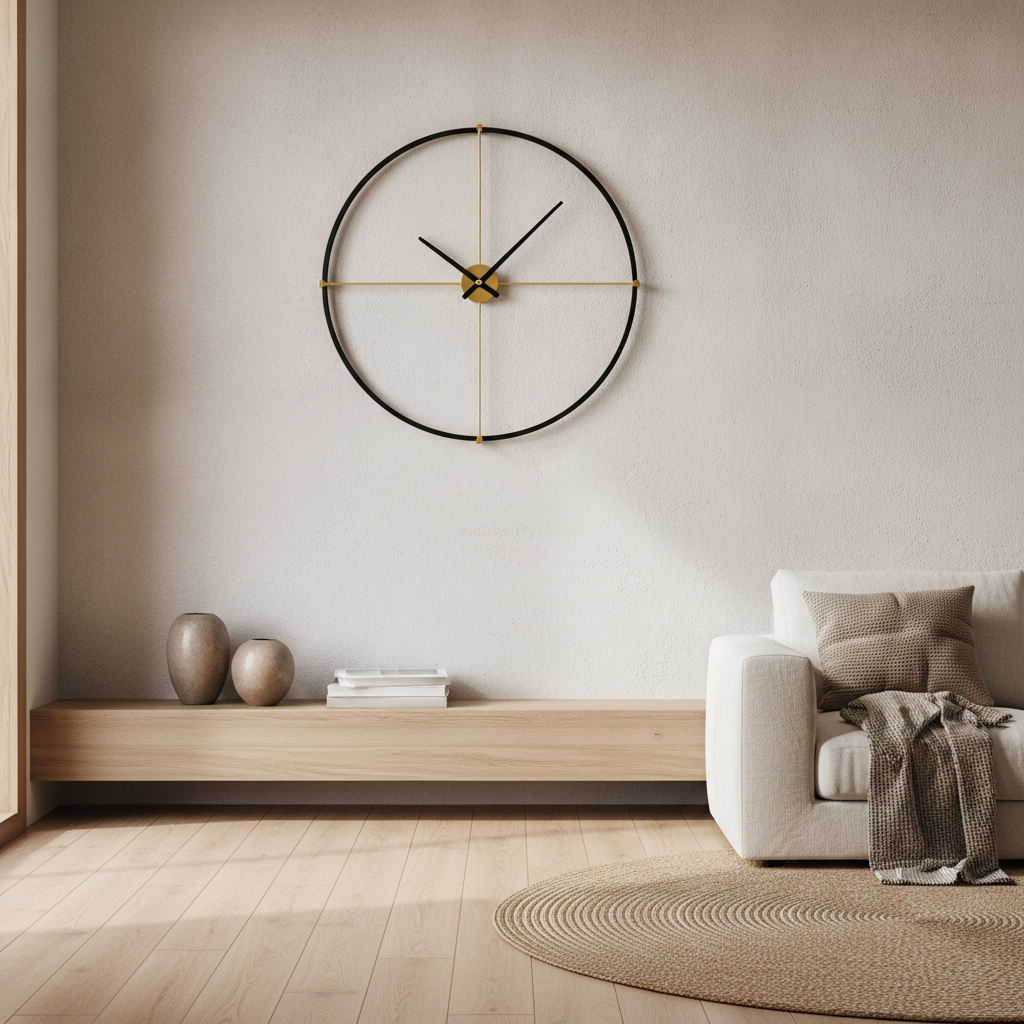
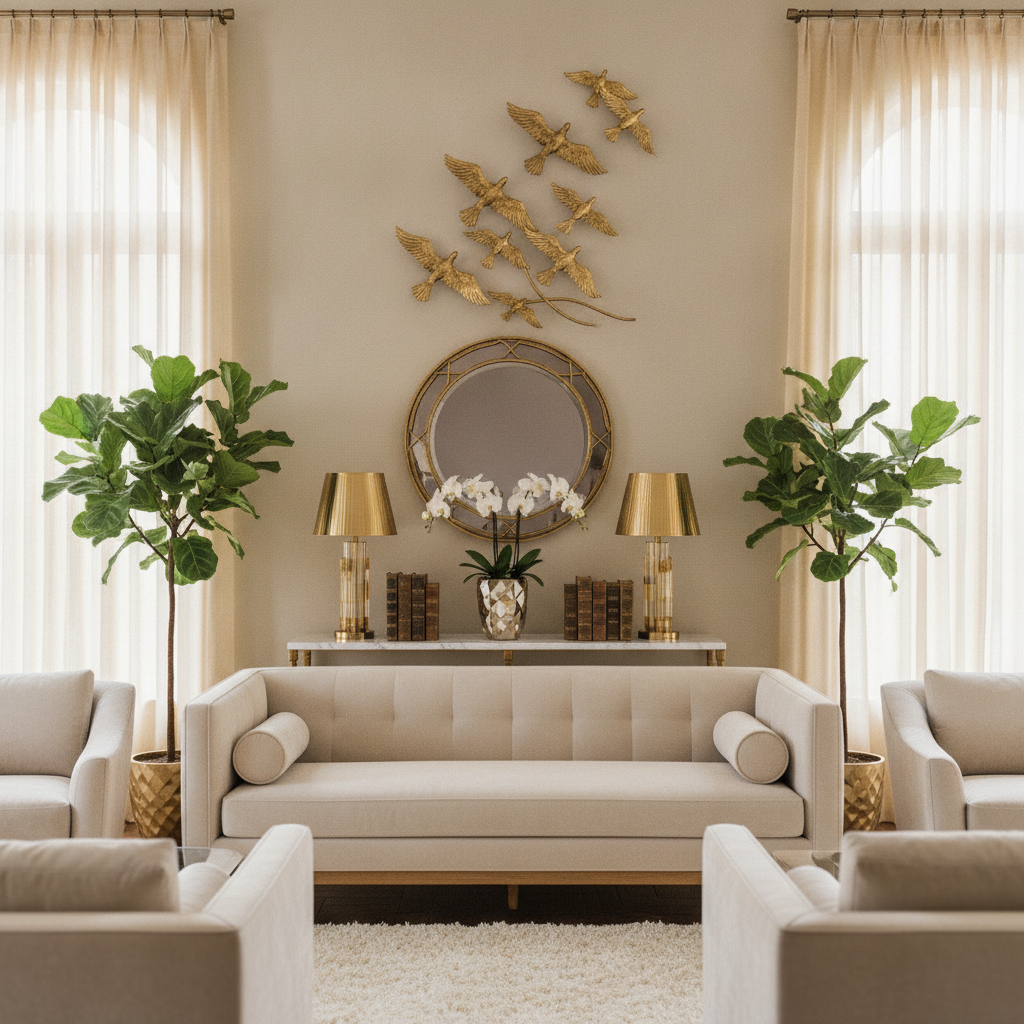
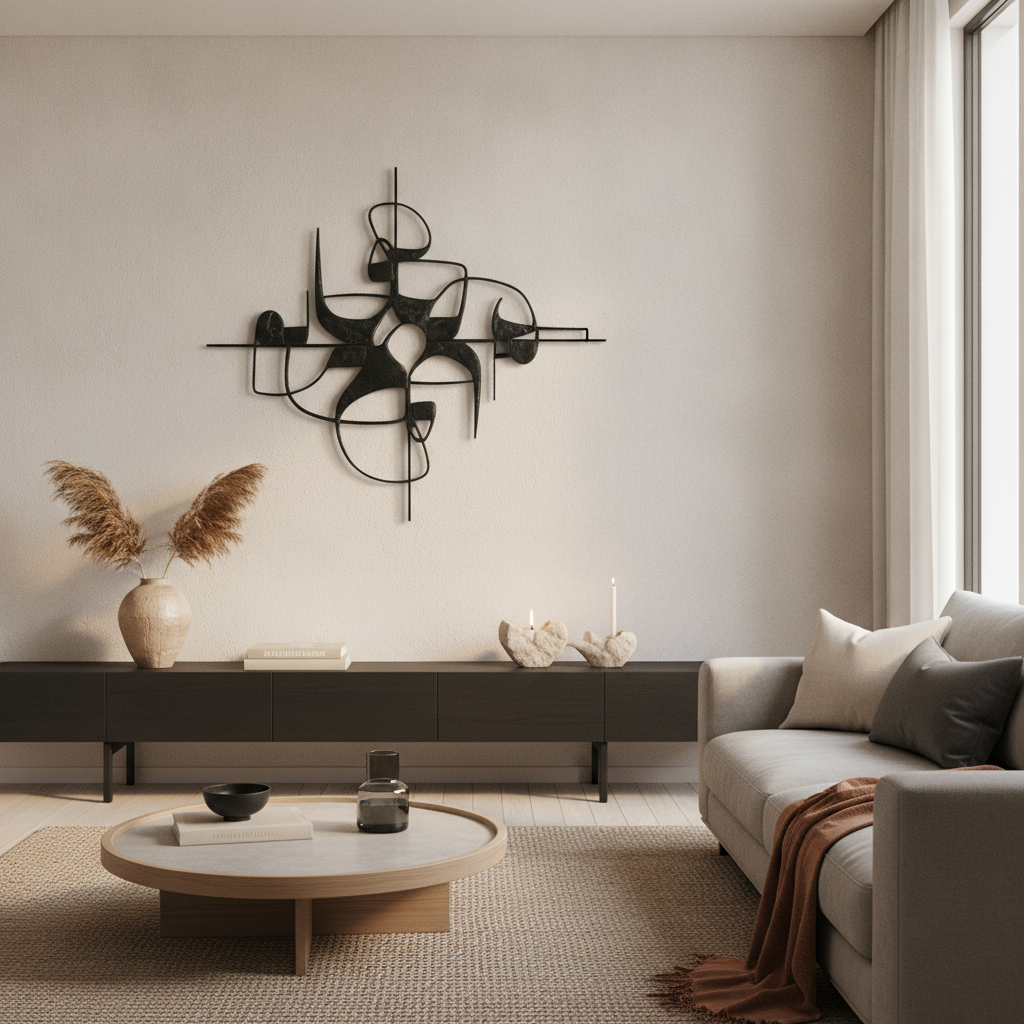
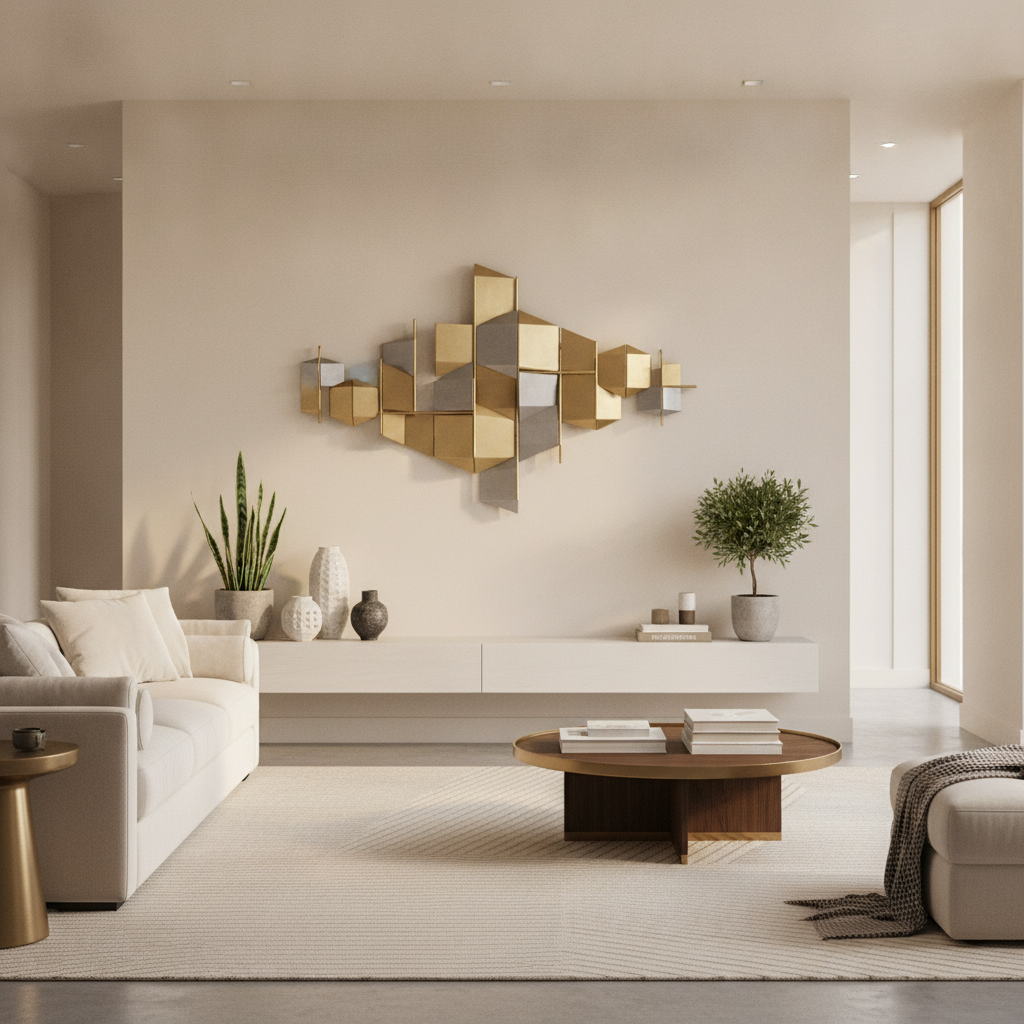
How to Choose
Hanging a piece that is too small for the wall is the single most common wall décor mistake. And it makes an expensive piece look like an afterthought.
Scale relative to the wall and furniture
A piece that is too small for the wall creates a visual imbalance that the eye notices immediately. Even if the buyer cannot name what feels wrong. The art above a sofa should span at least two-thirds of the sofa length. The art above a bed should span most of the headboard width. When in doubt, go larger.
Singular statement vs gallery grouping
Frame weight relative to room formality
3D vs flat: what your wall can handle
Hanging Height: The Rule Most Buyers Ignore
Layering art with other décor
Red Flags to Avoid
- Canvas described as ‘print on canvas’ with no mention of gallery wrap or frame. Often means it arrives as a rolled print, not a finished piece ready to hang
- Frame described as ‘wood-look’ without specifying solid wood or MDF. Lightweight MDF frames warp and chip within months, especially in humid rooms
- Metal sculpture with no weight or depth listed. Thin-gauge metal wall décor looks cheap in person and dents easily during shipping
- Gallery set where all pieces are identical sizes. A quality gallery set varies sizes intentionally for visual movement; identical sizes suggest low-effort design
- Canvas with no UV protection mentioned. Unprotected prints fade visibly within 18 months in rooms with natural light
- Hanging hardware not included or listed as ‘sawtooth hanger only’ for heavy pieces. Sawtooth hangers above 5 pounds shift and drop without warning
Wall Décor by Style
A gold abstract canvas in a Luxury Glam living room reads completely differently to the same canvas in a Minimalist space. Placement and framing change everything.
Luxury Glam
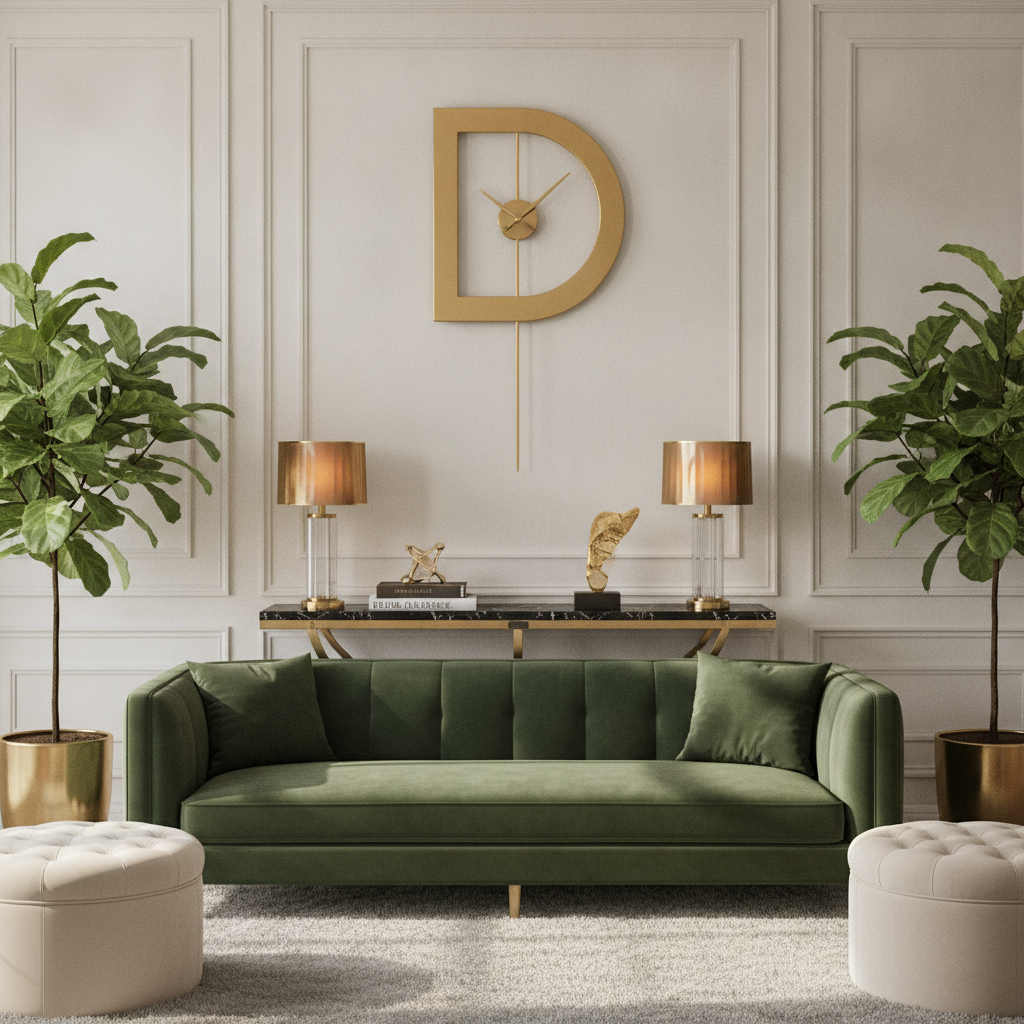
$89–$580+Luxury Glam wall décor is built on gold, crystal, and high-contrast drama. Oversized gold abstract canvases, champagne metal leaf sculptures, and crystal-beaded wall panels are the signature pieces. The wall should feel like it was designed, not decorated.
Shop Luxury Glam Wall Décor →Modern Minimalist
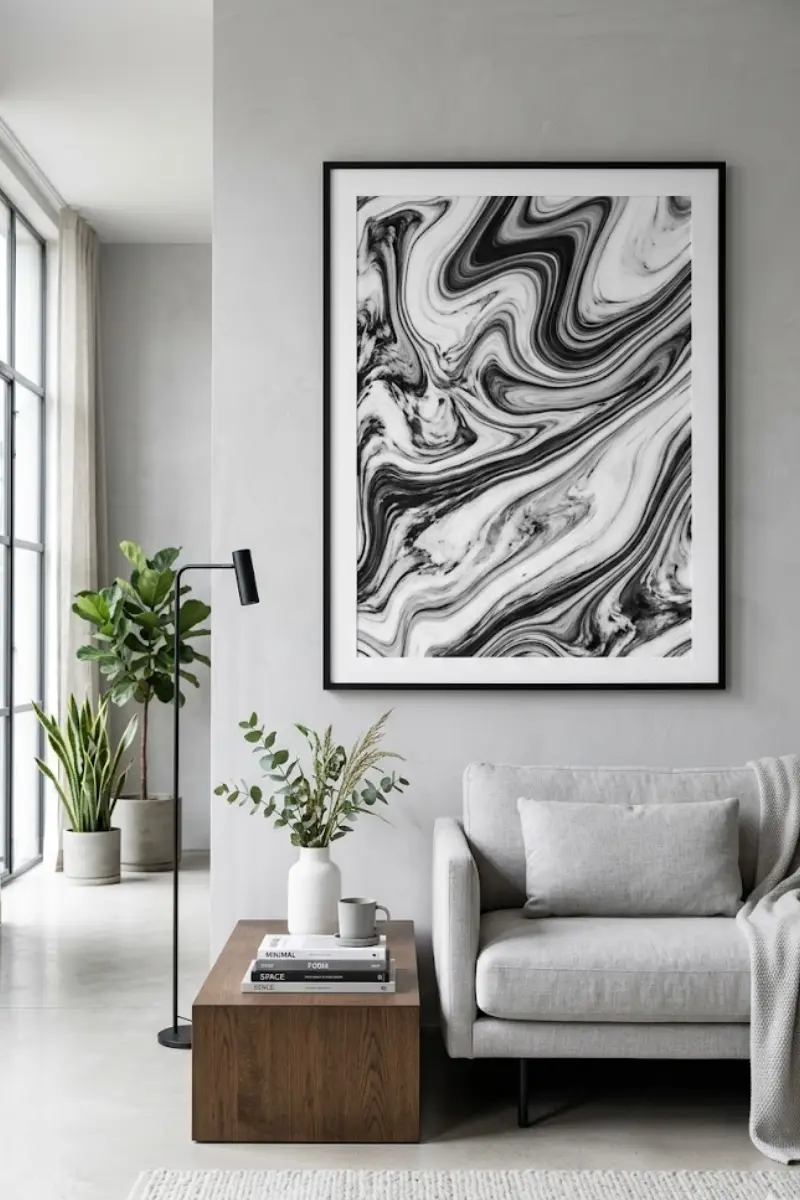
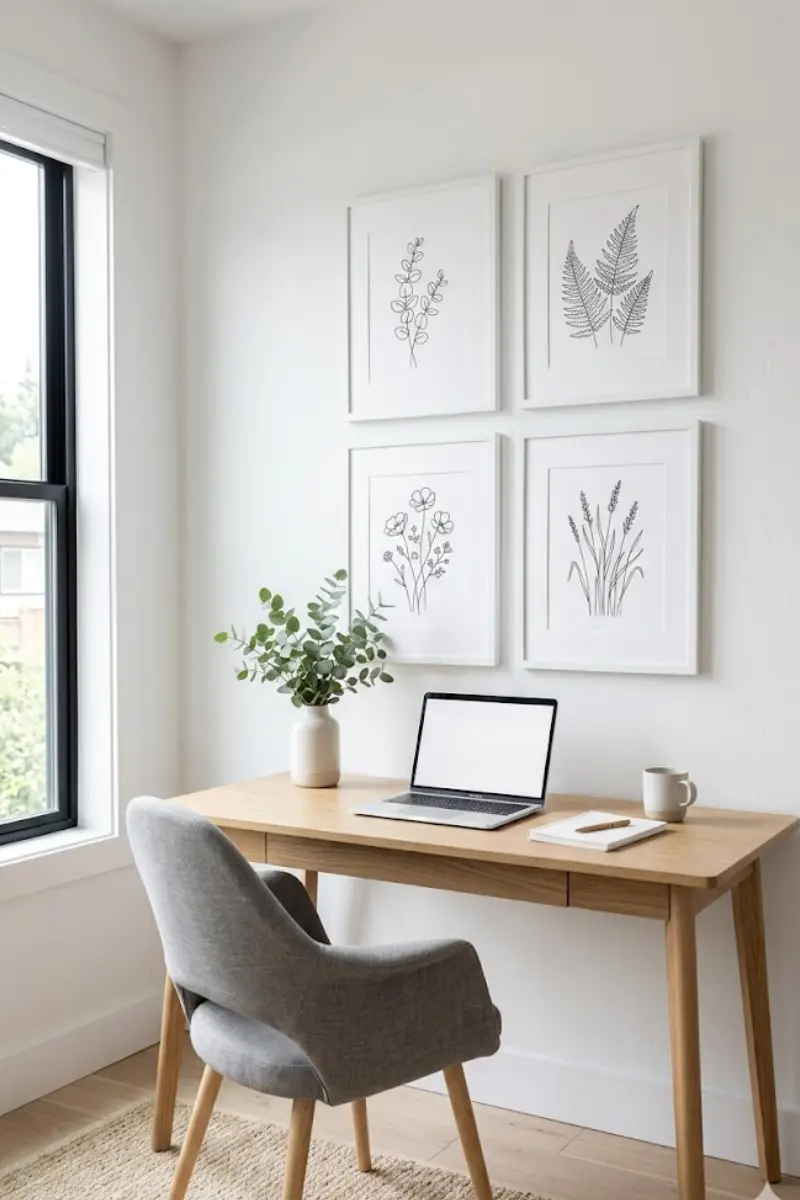
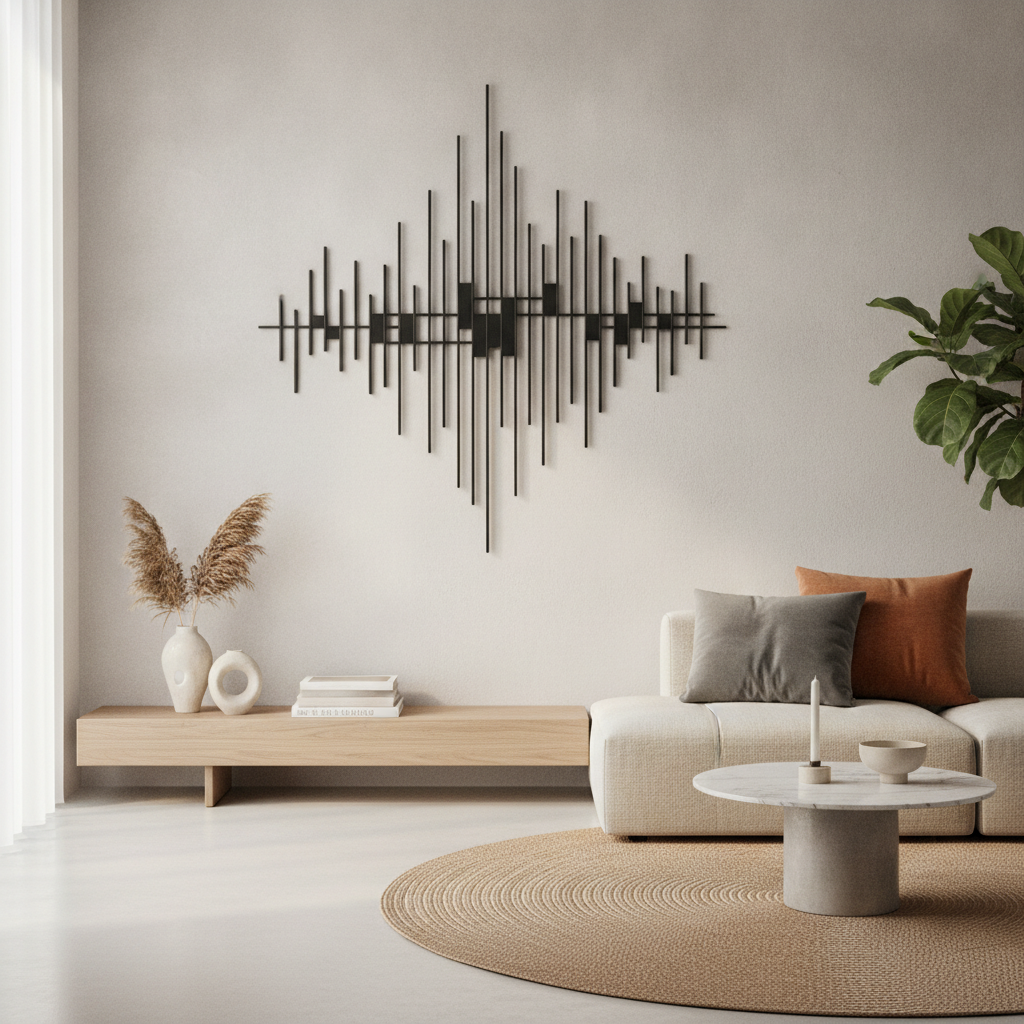
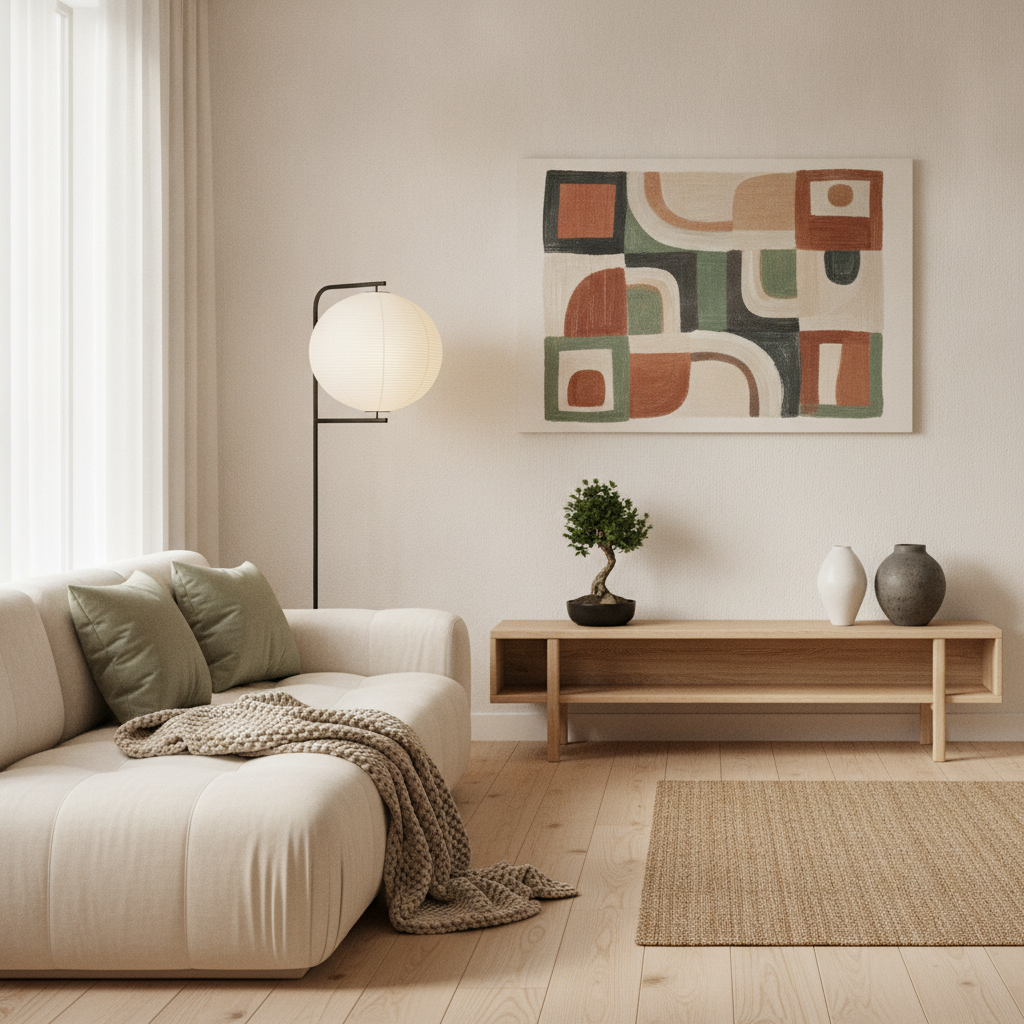
$29–$149Minimalist wall décor is about restraint. One well-chosen piece with precise placement does more than a wall covered in unrelated art. Black and white marble abstracts, simple line art sets in thin black frames, and single-canvas monochrome prints are the right moves.
Shop Modern Minimalist Wall Décor →Boho Eclectic
$45–$175Boho wall décor layers texture, fibre, and organic form. Large macrame hangings, woven seagrass basket arrangements, and earthy textile tapestries are the foundation pieces. The composition should look abundant but never chaotic. Each element relates to the others in tone and texture.
Shop Boho Eclectic Wall Décor →Art Deco
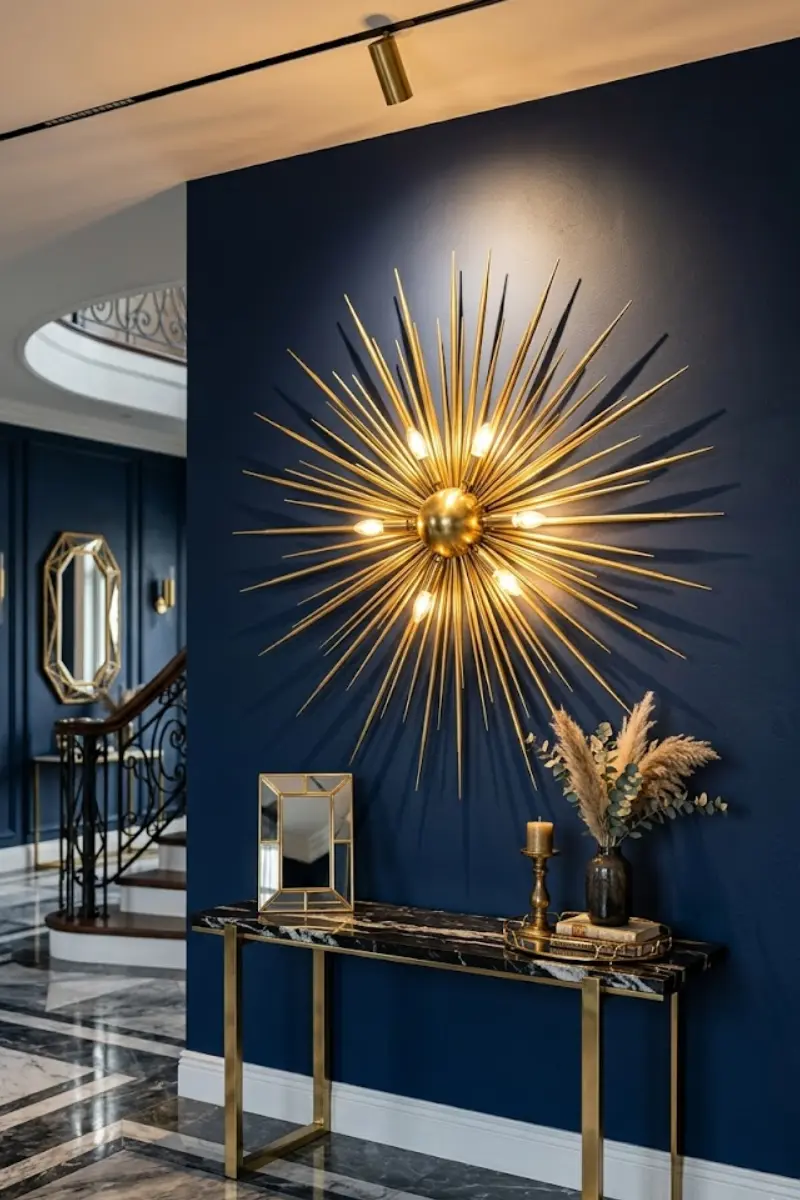
$69–$580+Art Deco wall décor centres on geometric precision and metallic finish. Fan motifs, starburst forms, and chevron-pattern metal pieces in brass or gold are the authentic moves. Dark feature walls, navy, forest green, deep teal, make brass wall sculpture read at maximum impact.
Shop Art Deco Wall Décor →Coastal
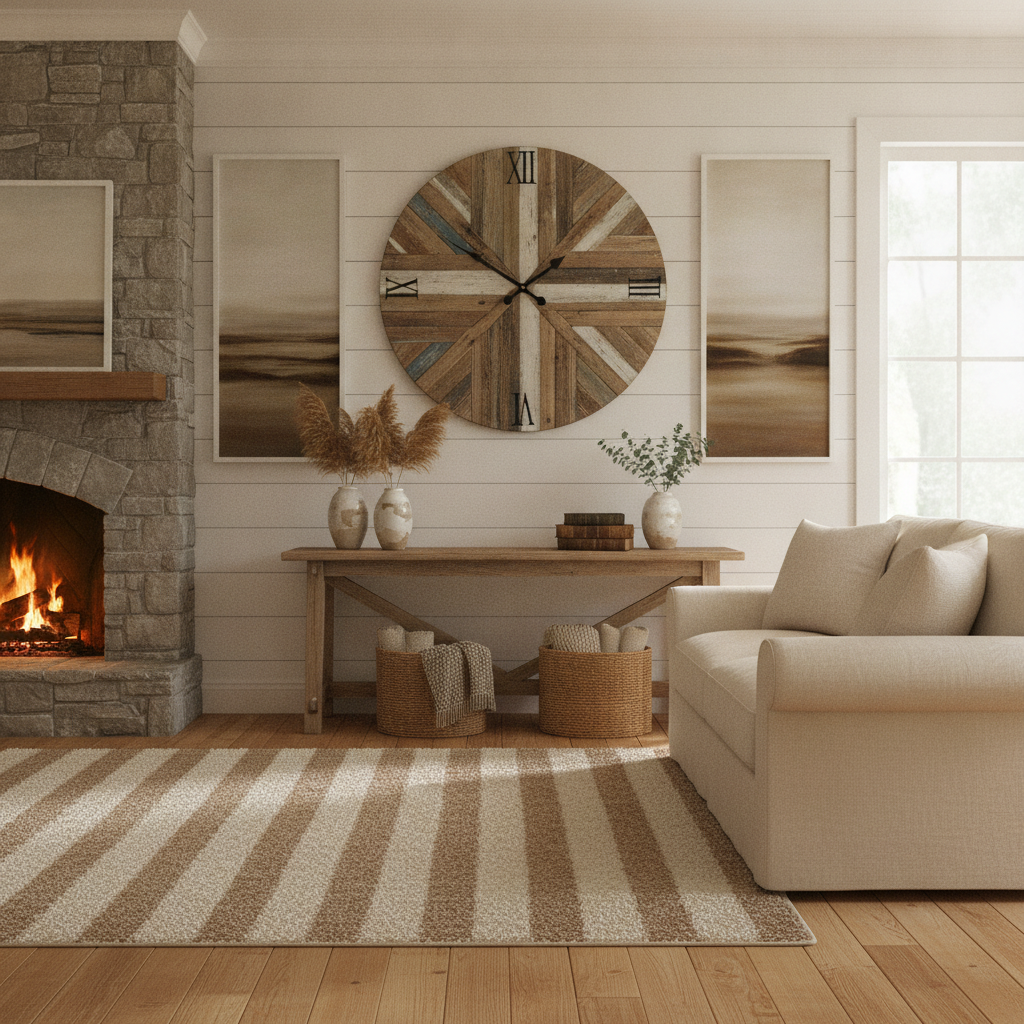
$45–$149Coastal wall décor favours natural texture and organic form over pattern. Seagrass basket groupings, whitewashed driftwood panels, and abstract ocean-toned canvas prints bring the shore inside. Frames stay light. White, bleached wood, or thin natural rattan.
Shop Coastal Wall Décor →Rustic Farmhouse
$29–$129Farmhouse wall décor layers wood, wire, and simple print subject matter. Botanical framed prints in simple black or natural wood frames, reclaimed wood panels, and metal typography are the core pieces. The overall feel should be warm, worn-in, and immediately comfortable.
Shop Rustic Farmhouse Wall Décor →Scandinavian
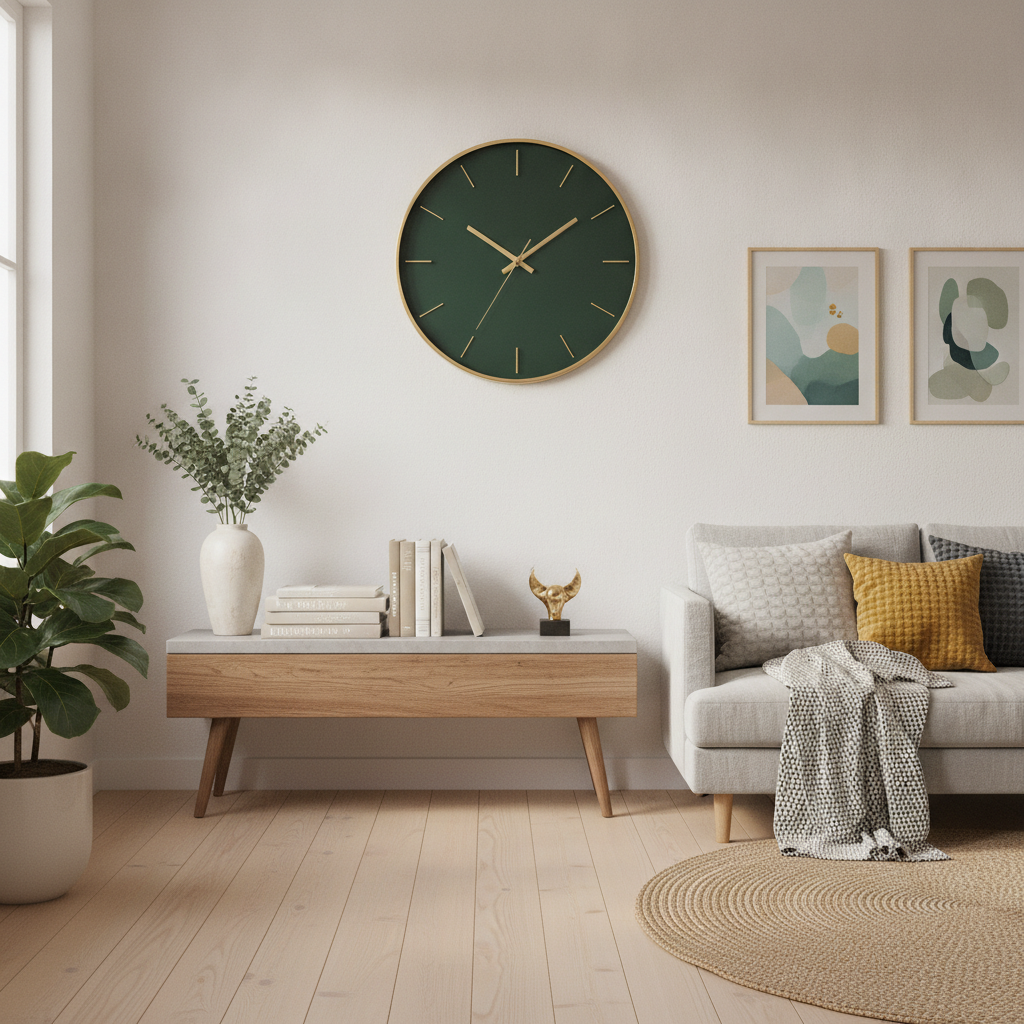
$29–$99Scandi wall décor keeps it quiet and precise. Botanical line art in simple black frames, abstract form prints in pale ink, and single oversized monochrome canvas pieces are the go-to. One piece, centred and well-hung, is always better than a wall full of competing elements.
Shop Scandinavian Wall Décor →Traditional
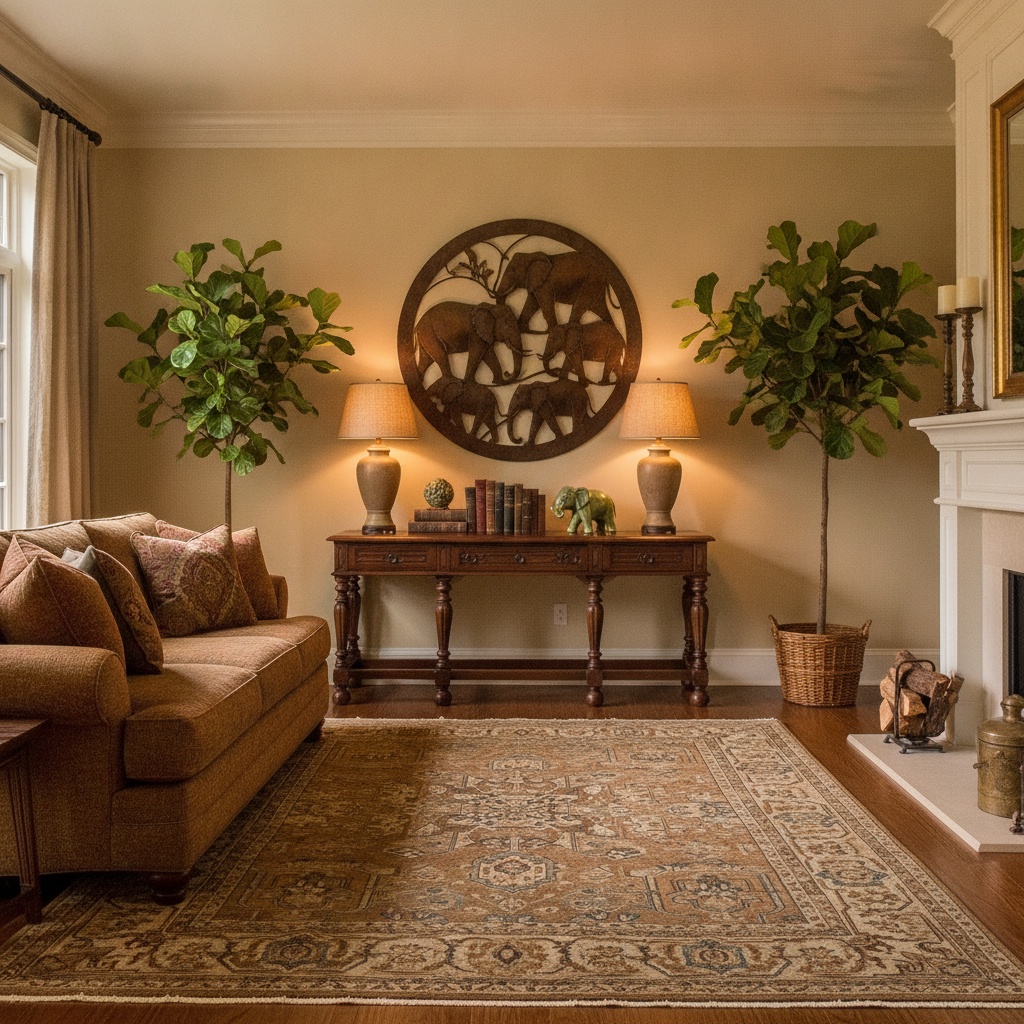
$55–$580+Traditional wall décor is characterised by ornate gold or gilded frames, formal symmetry, and subject matter with classical weight. Landscapes, botanicals, portraiture. Pieces hang in deliberate arrangements: matched pairs flanking a focal point, or a formal grid above a mantle.
Shop Traditional Wall Décor →Industrial
$45–$399Industrial wall décor leans into raw material and graphic form. Black metal geometric sculptures, high-contrast monochrome photography in thin black frames, and oversized typography pieces sit well against exposed brick and concrete. The aesthetic rewards large-scale pieces over grouped small ones.
Shop Industrial Wall Décor →Wall Décor by Room
Wall height, natural light, and furniture scale all change what works per room. A piece that commands a living room can disappear in a high-ceilinged entryway.
Living Room
Best choice: The living room wall above the sofa needs to be the largest piece in your collection. A triptych or single oversized canvas in the 60-inch-plus range, or a large metal sculpture, fills the scale requirement. Smaller pieces here look lost no matter how beautiful they are individually.
See all for Living Room →Bedroom
Best choice: Above the bed headboard is the most visible wall in the bedroom. A matched gallery set or a single wide canvas that spans most of the headboard width creates a composed, intentional look. Velvet-framed sets in blush, champagne, or jewel tones are the natural fit for glam bedrooms.
See all for Bedroom →Dining Room
Best choice: The dining room rewards a single dramatic statement. A large metal sculpture, an oversized framed print, or a bold abstract canvas. The piece should relate to the table size: a 6-seat table needs art at least 40 inches wide to hold visual weight across the room.
See all for Dining Room →Entryway
Best choice: The entryway wall above the console table is the most important first-impression moment in the home. A single dramatic piece, a large metal sculpture, a round or sunburst form, or an oversized framed canvas, sets the room's tone immediately. This is not the place for small groupings.
See all for Entryway →Home Office
Best choice: The home office needs art that works as a background in video calls without being distracting, while still feeling intentional when you are sitting in the room. A single framed print set or one clean canvas in neutral tones to the side of the desk is the right call.
See all for Home Office →Bathroom
Best choice: Bathrooms need humidity-resistant pieces. Canvas over paper, metal over wood, closed-back frames over open-back. A single small framed print above the toilet or a simple metal sculpture beside the vanity mirror is often all the room needs to feel finished.
See all for Bathroom →Top Picks: Living Room
Wall Art Sizing Guide
Art that is sized correctly for the wall and furniture below it transforms a room; art that is sized incorrectly makes an expensive piece look wrong.
Substrates, Frames & Finishes Guide
The substrate and frame determine how the piece ages. A quality canvas with the right frame still looks premium in ten years; a cheap print in a flimsy frame looks wrong within one.
Canvas: Gallery Wrap vs Framed
Metal Sculptures: Gauge and Finish
Frames: Solid Wood, MDF, and Resin
Three frame materials cover almost everything on the market:
- Solid wood - the benchmark: holds mitre joints cleanly, maintains weight, ages well
- MDF - acceptable for prints and lightweight canvas if well-made with a quality gesso finish, but not suitable for humidity or heavy canvas
- Resin - used for ornate and detailed moulding (traditional and Art Deco styles); avoid it for clean contemporary frames where sharp edges matter
Print paper and archival quality
Textile and beaded wall art
What Signals Quality
- Canvas weight listed. 300 GSM or above for quality canvas; anything below 200 GSM is thin and shows texture poorly
- Frame joined at corners with wood dowels or metal fasteners, not just glue. Check the product photos for corner detail
- Metal sculpture with a D-ring or keyhole hanger rated for the stated weight. Not just adhesive strips or a wire across the back
- Gallery sets where dimensions of each piece are listed individually. Sellers hiding dimensions often means sizes are smaller than they appear
- UV-resistant coating or UV-protective glazing mentioned. Indicates the seller has considered longevity
Care + Maintenance
Dusting canvas and framed prints
Cleaning metal wall sculptures
Maintaining macrame and textile pieces
Protecting canvas in high-light rooms
Re-levelling and checking fixings
Check all wall fixings twice a year. Particularly for heavier metal sculptures. Plaster walls expand and contract with seasonal temperature changes, and screws can loosen over 12 to 18 months. Pull each piece gently to test resistance. If there is any movement, re-anchor with the correct wall plug for your wall type.
The Visual Language of a Styled Wall
Most buyers choose art they like and then wonder why the wall still does not look right. The issue is almost never the art itself, it is how it relates to everything around it.
The 57-inch rule
The two-thirds rule for art above furniture
Visual weight and balance
The vignette principle
A wall piece alone is a picture. A wall piece above a surface with objects on it is a vignette. The difference in perceived quality is significant. The styling formula:
- One tall element (art or mirror)
- One medium element (vase, lamp)
- One small element (candle, small object)
- One flat element (book, tray)
Vary the heights so no two objects are the same level. This is how interiors photographers style every shot.
Price Guide: Every Budget
In wall art, price buys substrate quality and frame construction. The difference between a print that fades in two years and one that looks museum-quality for a decade.
At this level you are buying original or limited-edition pieces, hand-crafted metal sculptures with heavy gauge construction, or large-scale canvas with artist-quality archival giclée printing. These are pieces that anchor a room permanently and appreciate in perceived value over time.
The serious buyer's range. Quality gallery-wrapped canvas with UV coating, heavy-gauge metal sculptures in powder-coat finishes, and multi-piece gallery sets with solid or MDF frames of real weight. Pieces that look bought, not ordered online.
Strong value for single framed prints, two-piece canvas sets, and smaller metal wall sculptures. The material quality is good; the difference from the tier above is typically size and frame specification. This is the right range for bedrooms and home offices.
Accent-scale pieces only. A single small framed print, a miniature metal sculpture, or a basic canvas print. A complete living room or bedroom wall solution under $50 will look exactly like what it cost. Spend the extra money on one good piece rather than three cheap ones.
Frequently Asked Questions
How high should you hang wall art?
What size art goes above a sofa?
How do you make a gallery wall look intentional rather than random?
What wall art is best for a bedroom above the bed?
Is canvas or metal wall art better for a living room?
What wall art works in a bathroom?
How do you hang art without damaging walls?
What is a triptych and does it work as a single piece?
How do you style a wall with a console table?
Can you mix metal and canvas art in the same room?
Shop by Room
Looking for wall décor for a specific room? Browse our dedicated room guides:
Ideas & Inspiration
Three home office wall decor picks starting under $50: minimalist line art, a marble …
Read guide →
Canvas reads bold and gallery-scale with no glass glare. Framed prints read more polished …
Read guide →
Real Art Deco wall decor means one geometric brass statement piece, not a room of matching …
Read guide →