You have the right sofa.
The rug is down.
The coffee table is styled.
And the sofa still looks like no one made a decision about it.
Six matching cushions in the same fabric, the same size, the same colour.
Bought as a set, arranged in a line, looking exactly like the product photo they came from.
The room is furnished.
It is not designed.
Throw pillows are the layer that signals that someone with taste lives here.
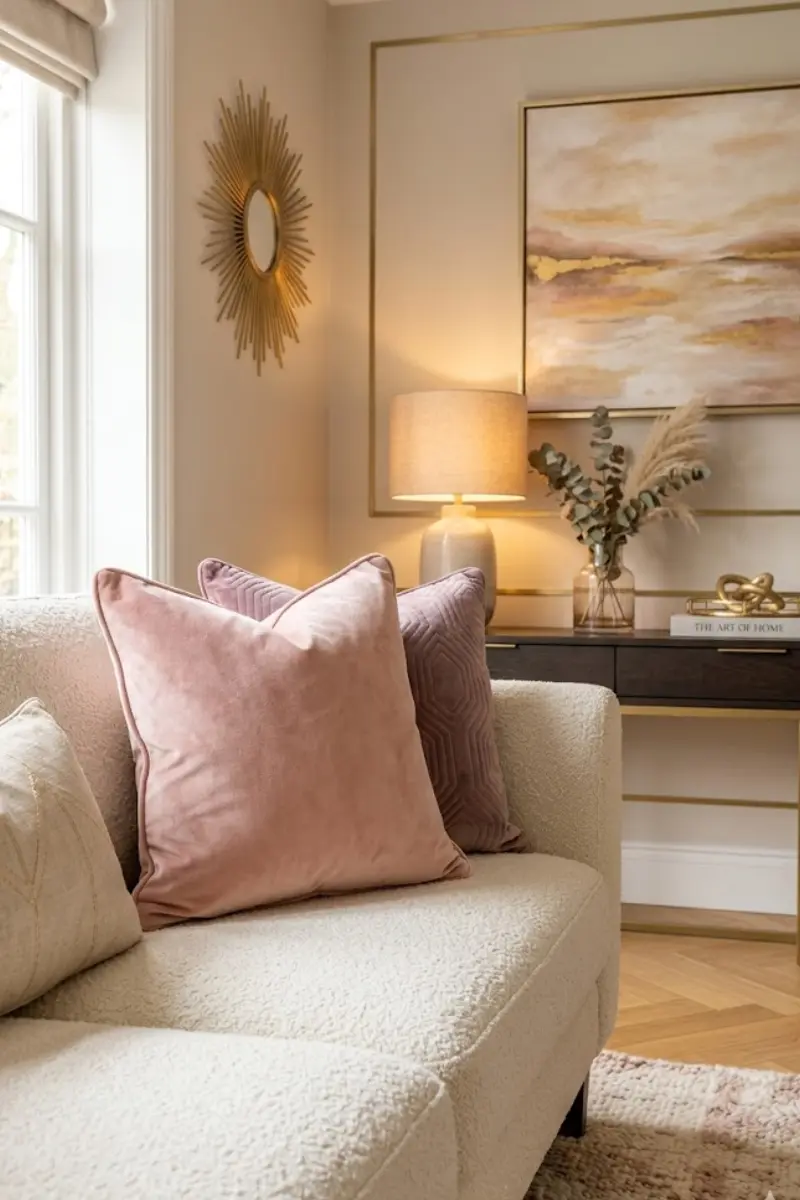
A jewel-tone velvet set beside a gold embroidered pair and a single champagne satin lumbar tells a complete visual story in five pieces.
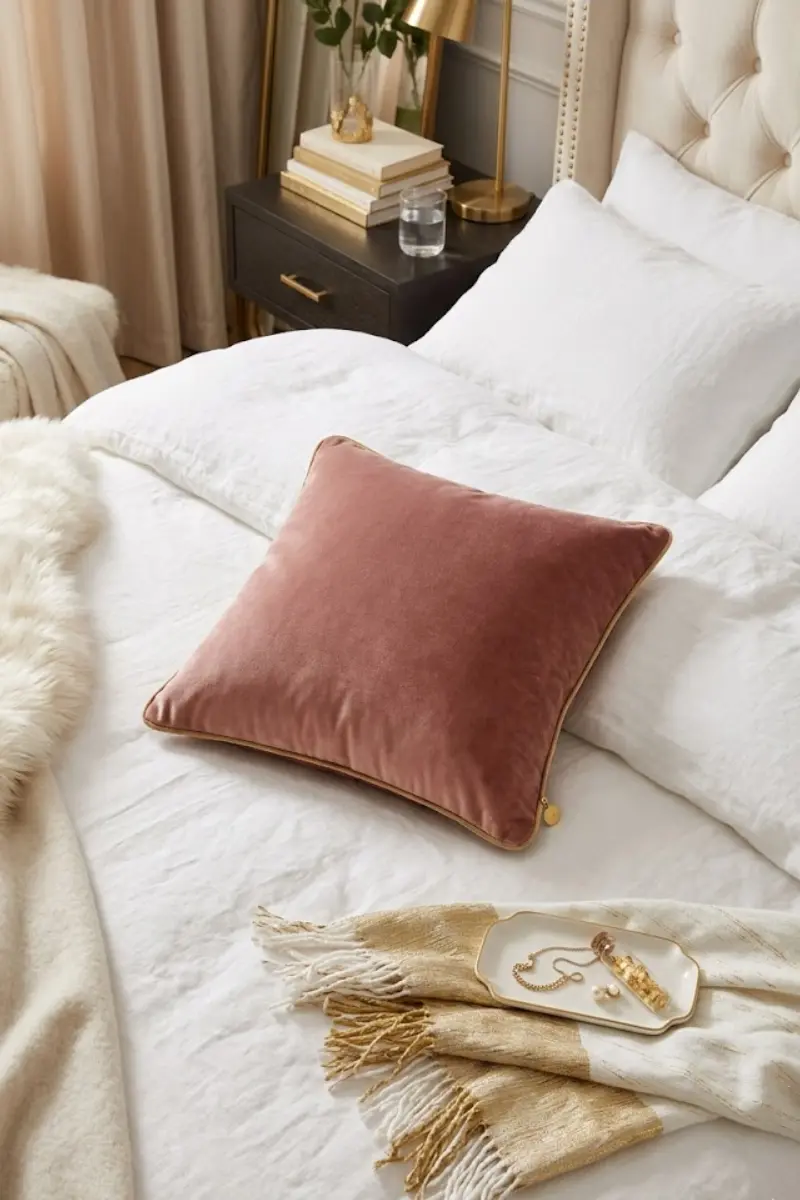
A crystal button-tufted velvet against ivory faux fur on a champagne bed makes the bedroom look like a boutique hotel and costs less than a new headboard.
Every type, every texture combination, every size rule, and every arrangement formula for every room is here.
So you buy exactly what you need and style it right the first time.
Types of Throw Pillows
The pillow type you reach for first changes the entire mood of the arrangement. A lumbar does not do what a square does, and neither does what a faux fur does.
Square Throw Pillows
Square pillows are the backbone of every sofa and bed arrangement. The standard sizes, 18x18, 20x20, and 22x22, each read differently at scale. Larger squares (22x22 and above) work for deep sofas and king beds. Smaller squares get lost on large furniture.
Lumbar Pillows
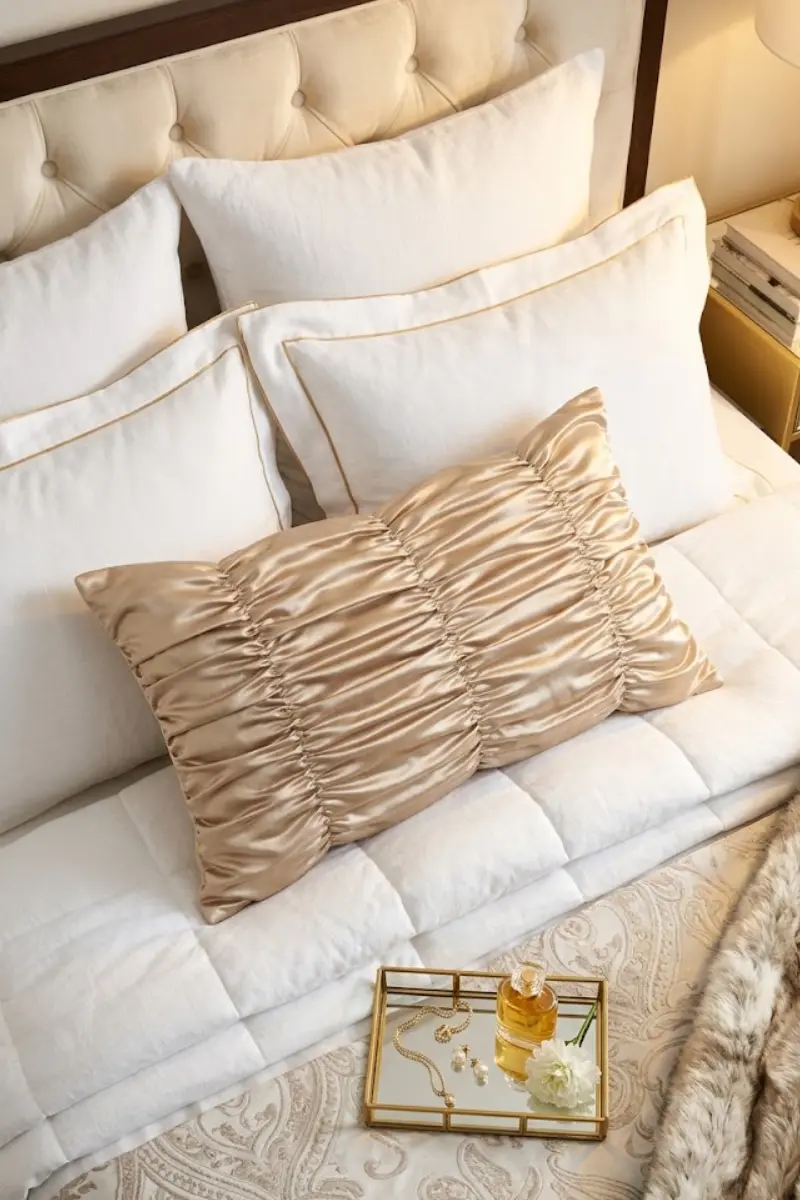
The lumbar is the finishing touch in any arrangement. It sits at the front of the sofa or centred across the bed and completes the composition. A single lumbar in a contrasting texture or a richer fabric pulls the whole grouping together. Without it, a styled arrangement often reads as unfinished.
Velvet Throw Pillows
Velvet is the fabric that photographs best and feels most luxurious in hand. Cut velvet holds a clear sheen under warm light. Crushed velvet creates a directional shimmer that changes with every shift of the pile. Both read as premium against neutral furniture. They are the natural default for glam interiors.
Sequin & Metallic Pillows
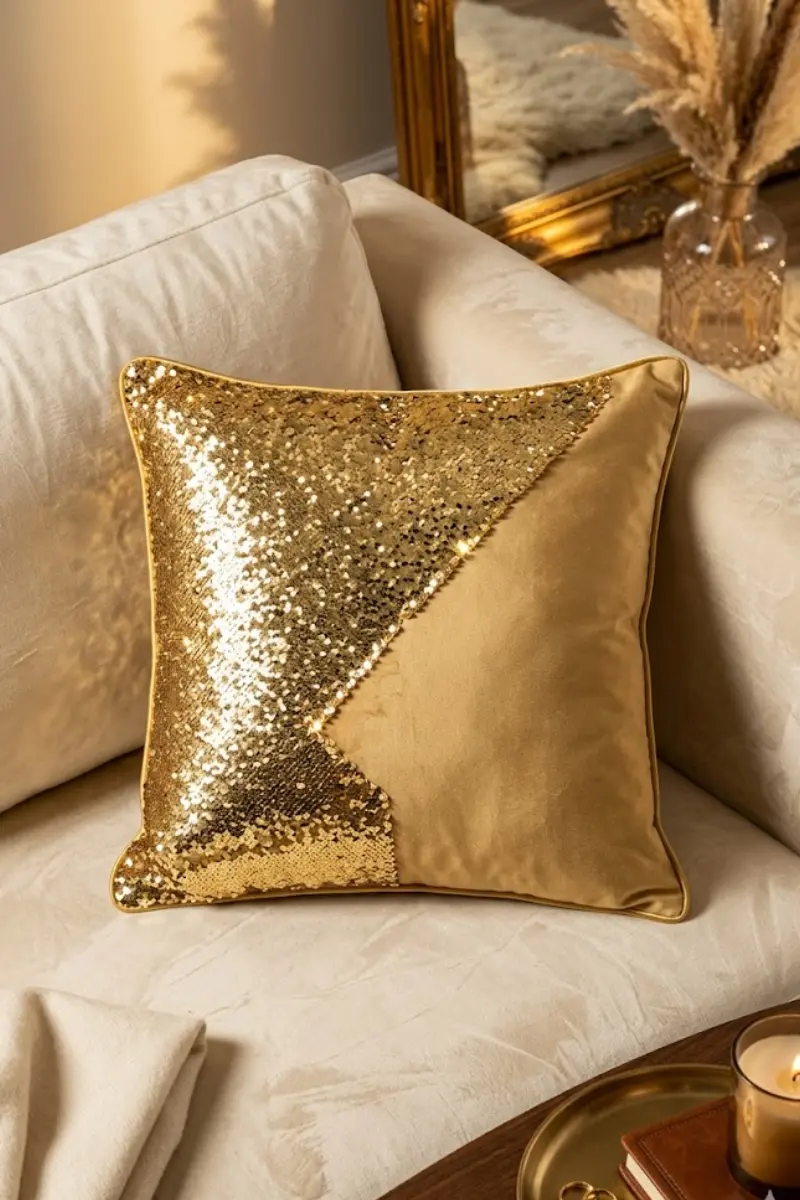
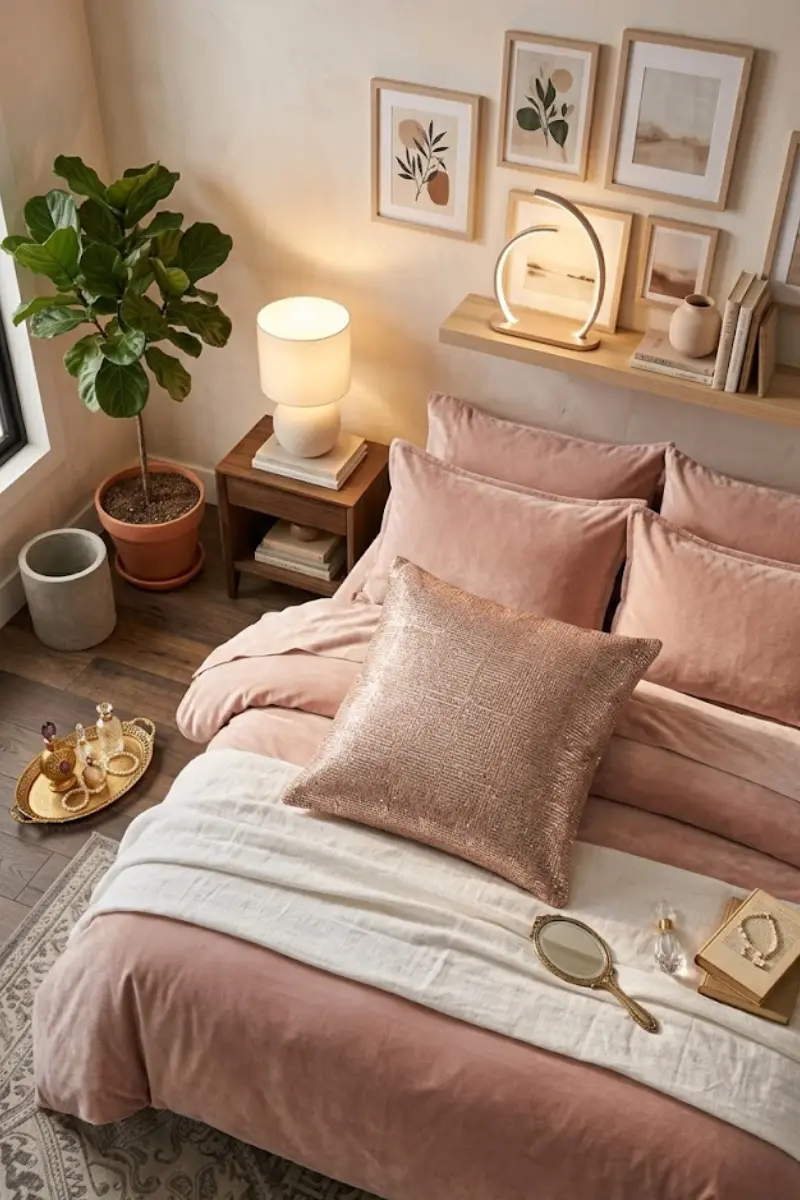
Sequin pillows do something no other fabric can. They catch and scatter light across the room. A single gold or rose gold sequin pillow beside two velvet squares adds a level of shimmer that reads as deliberately styled. Reversible sequin pillows (one metallic side, one solid) are the most versatile version.
Faux Fur Pillows
Faux fur pillows are the texture contrast that makes a velvet-heavy arrangement interesting. An oversized ivory faux fur against a dark velvet sofa or a jewel-tone bed creates exactly the kind of tactile layering that makes a room look styled by someone who knows what they are doing.
Lumbar Ruched & Satin Pillows
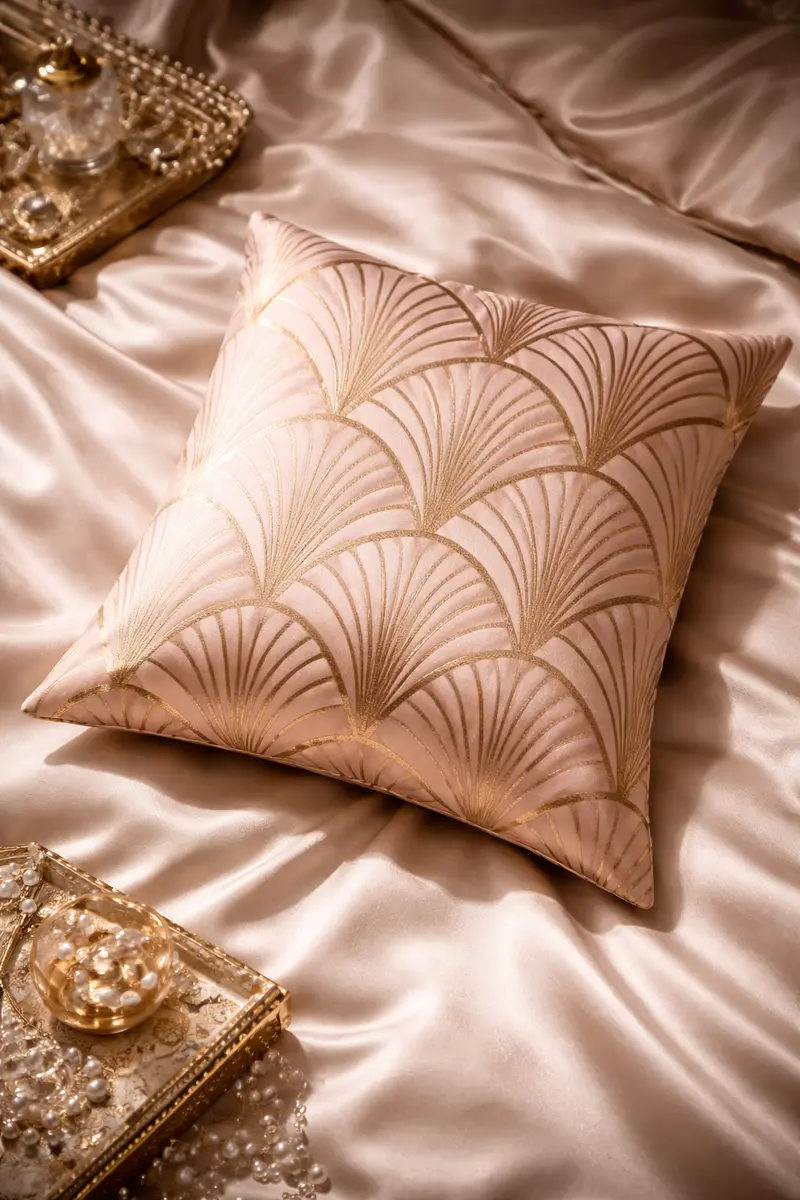
Ruched and pleated satin pillows bring a couture quality to a bed or sofa. The gathered fabric catches light in multiple directions, creating a dimensional surface that looks more expensive than the price reflects. Champagne and blush are the strongest colourways for glam interiors.
Embroidered & Jacquard Pillows
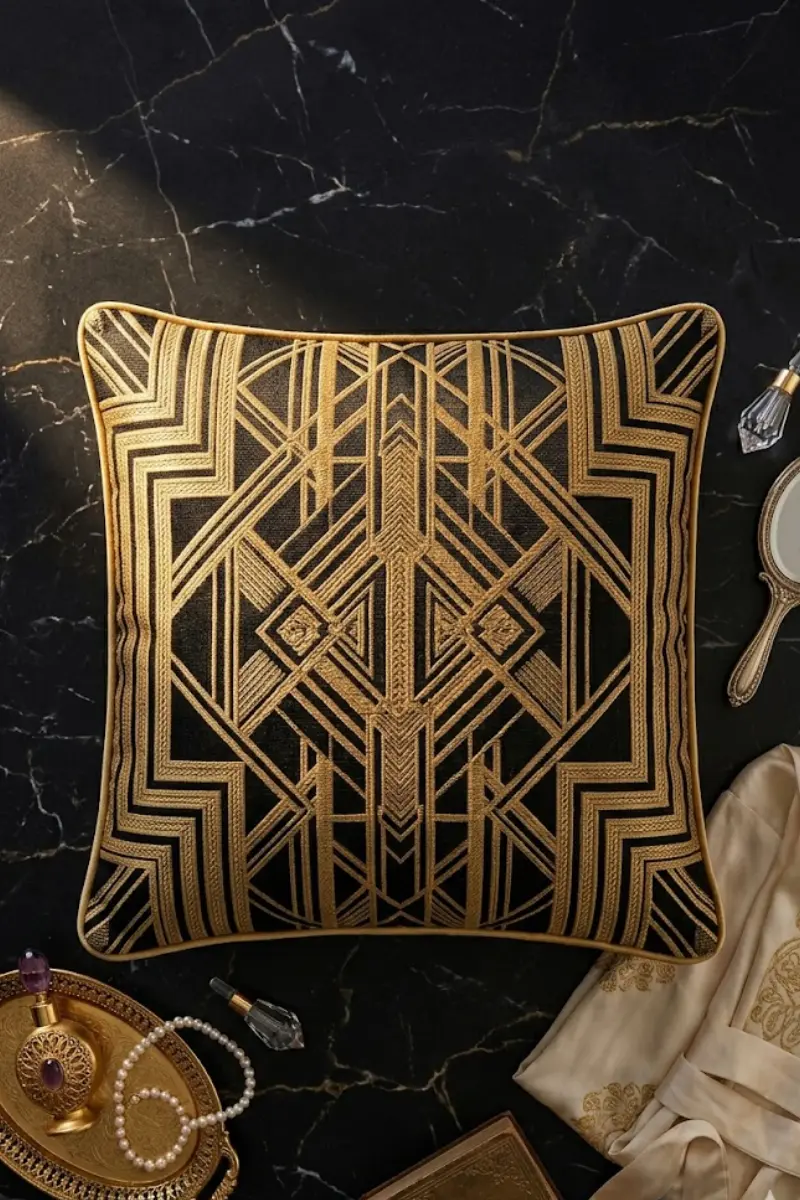
Embroidered and jacquard pillows carry their own pattern and do not need additional styling elements to make an impact. Gold embroidery on black or navy velvet reads as genuinely luxurious. Art Deco geometric jacquard in gold and ivory is one of the most versatile patterned pillows for glam spaces.
Chunky Knit & Textured Pillows
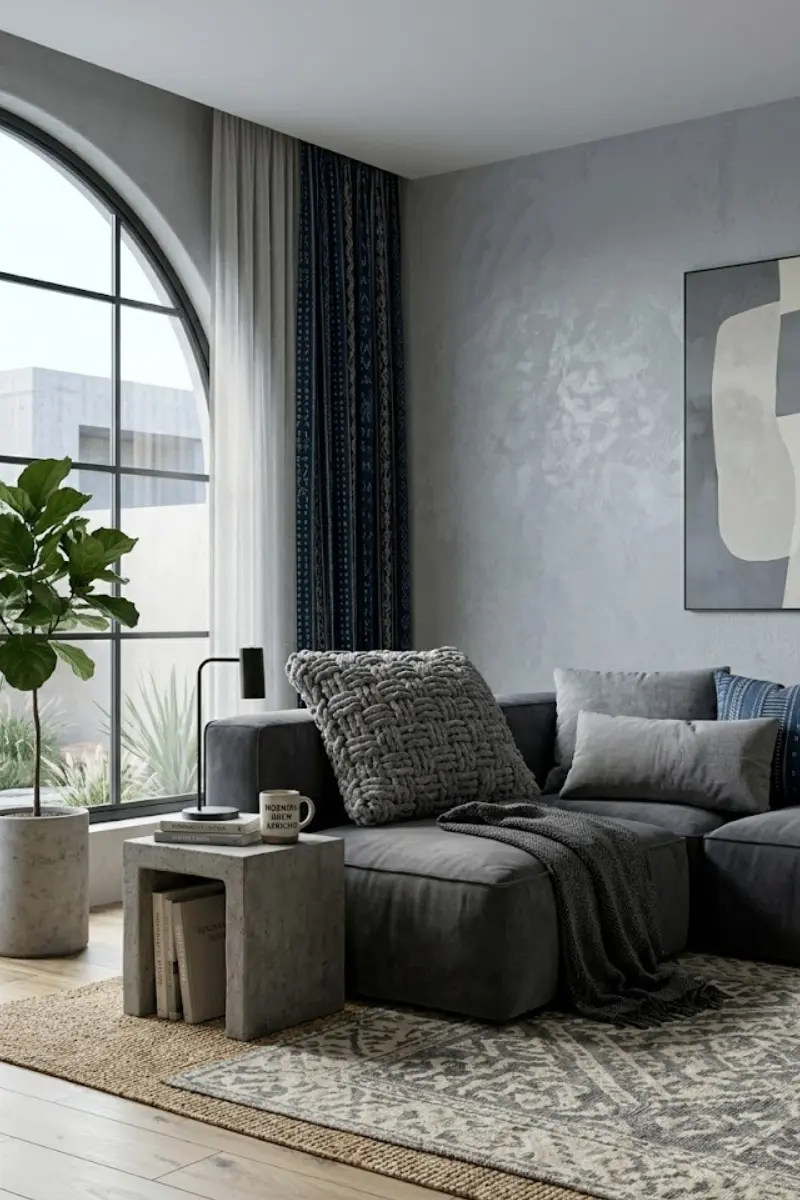
Chunky knit pillows bring warmth and tactile depth to rooms that lean neutral. An oversized grey knit beside blush velvet squares creates a texture contrast that photographs well and feels genuinely inviting. The key is scale. Chunky knit needs to be large (22x22 or bigger) or it reads as filler.
Boho & Natural Fibre Pillows
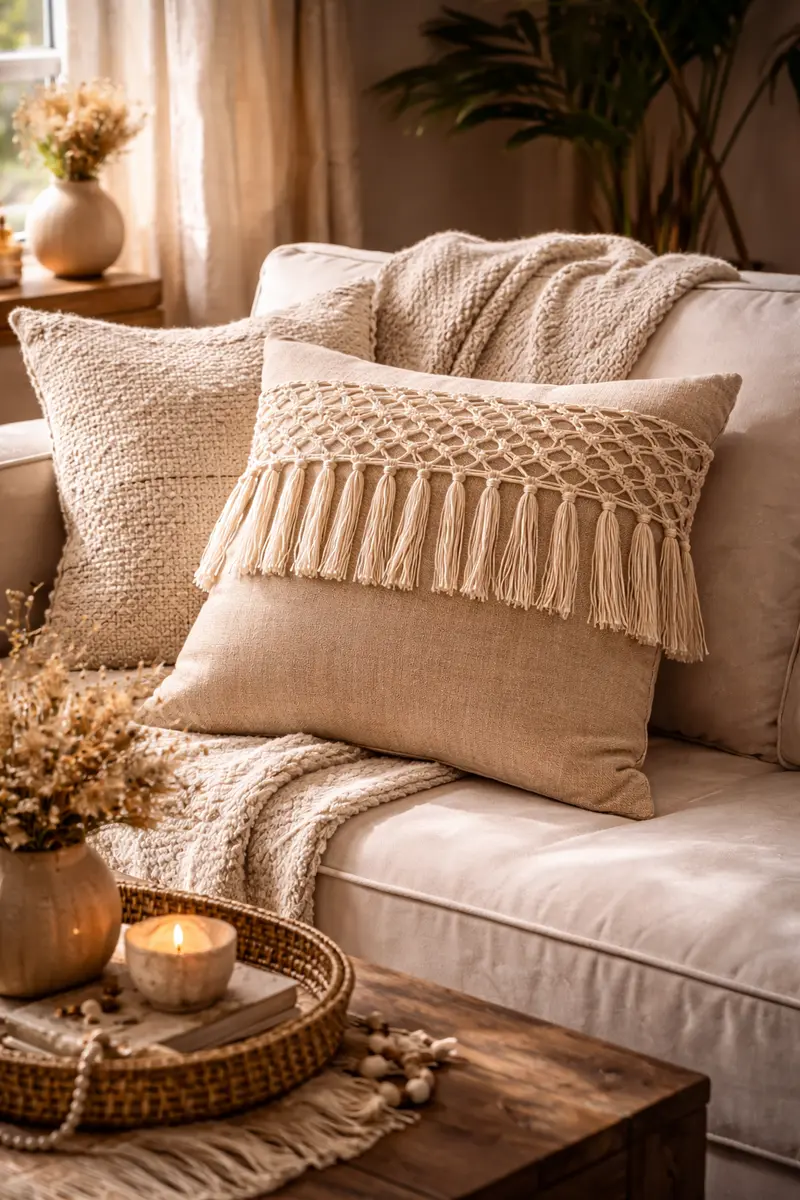
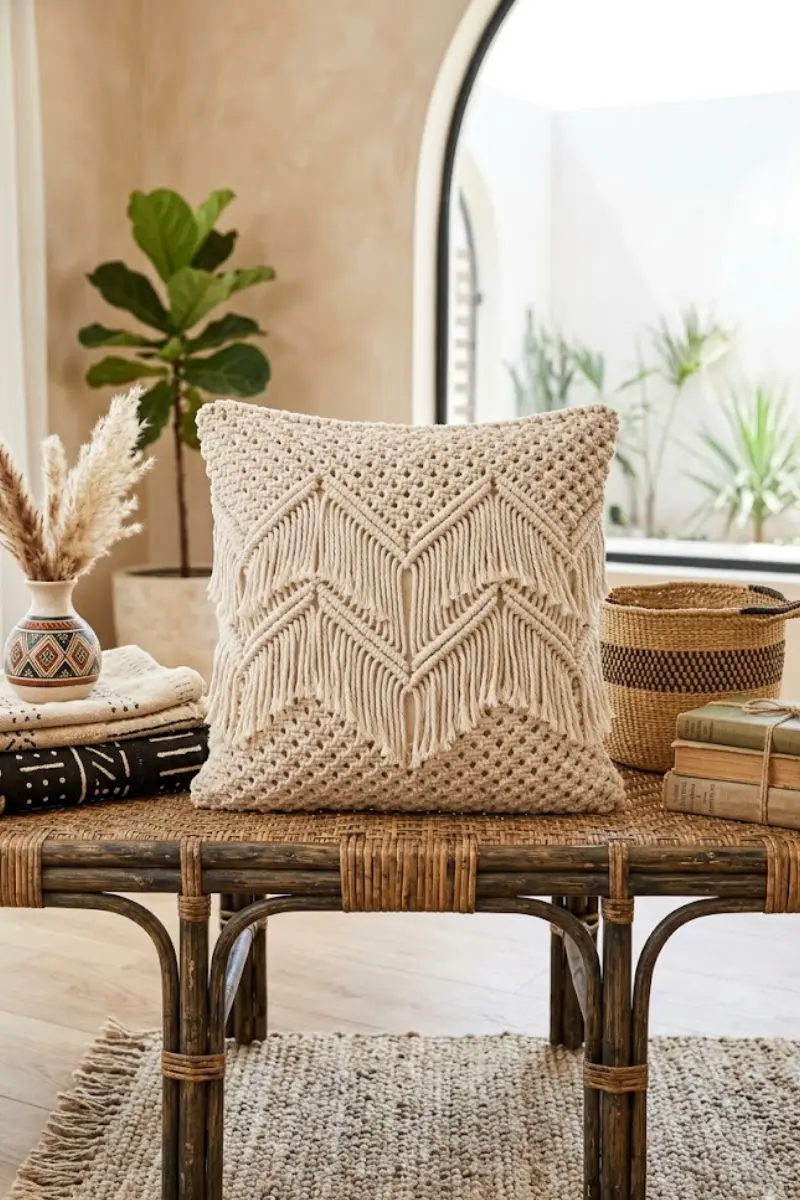
Macrame woven, tassel-fringe, and natural cotton pillows bring the organic texture that defines a Boho or eclectic interior. They work as contrast elements in glam spaces too. One macrame piece in an otherwise velvet-heavy bed arrangement adds an unexpected tactile layer that keeps the room from looking one-dimensional.
Shop Throw Pillows
Filter by room to find pillow sizes and textures scaled for your specific sofa, bed, or chair.


How to Choose
The most common throw pillow mistake is buying five matching pillows in the same size, same fabric, and same colour. It looks like a product display, not a home.
The rule of odd numbers and varied sizes
Texture is the move, not colour
The lumbar is always the finishing piece
Cover-only vs insert included
Pillow covers without inserts are significantly cheaper per piece. But the insert quality determines whether the whole arrangement looks expensive or flat. Buying a cheap insert with a quality cover defeats the purpose.
Scale relative to furniture
A 12-inch pillow on a full-size sofa looks like a child placed it there. A 26-inch Euro square on a narrow armchair looks oversized and makes the chair look small. Match the pillow to the furniture:
- Large sofas: 22-inch and above
- Standard sofas: 18 to 20-inch squares
- Accent chairs: 16 to 18-inch
- Dining chairs: 14 to 16-inch
How many pillows is too many
Red Flags to Avoid
- Fill weight not listed for a pillow sold with insert. Below 400 grams fill weight for a 20x20 will look flat from day one
- Velvet described as ‘100% polyester velvet’ with no pile weight or density. Low-pile-density polyester velvet flattens within weeks and cannot be revived
- Sequin pillow with no mention of backing fabric. Cheap sequin pillows use rough netting backing that scratches skin and snags on upholstery
- Cover listed at 18x18 with an 18x18 insert. Covers should be one size smaller than the insert to achieve a full, plump look
- Faux fur with no listed pile height. Faux fur under 2 inches pile height looks thin and matted almost immediately after first use
- No care instructions listed for a velvet or embroidered pillow. Quality velvet covers include dry-clean or cold delicate instructions; their absence signals low-quality construction
Throw Pillows by Style
Blush velvet reads differently in a Luxury Glam bedroom than in a Coastal living room. The same colour, completely different feeling depending on what surrounds it.
Luxury Glam
$55–$249Luxury Glam pillows lead with velvet, crystal detailing, and metallic thread. Black velvet with gold embroidery, blush velvet with crystal button tufting, and champagne satin ruched lumbars are the signature pieces. The arrangement should feel curated. Three to five pieces maximum, varied in size and texture.
Shop Luxury Glam Throw Pillows →Modern Minimalist
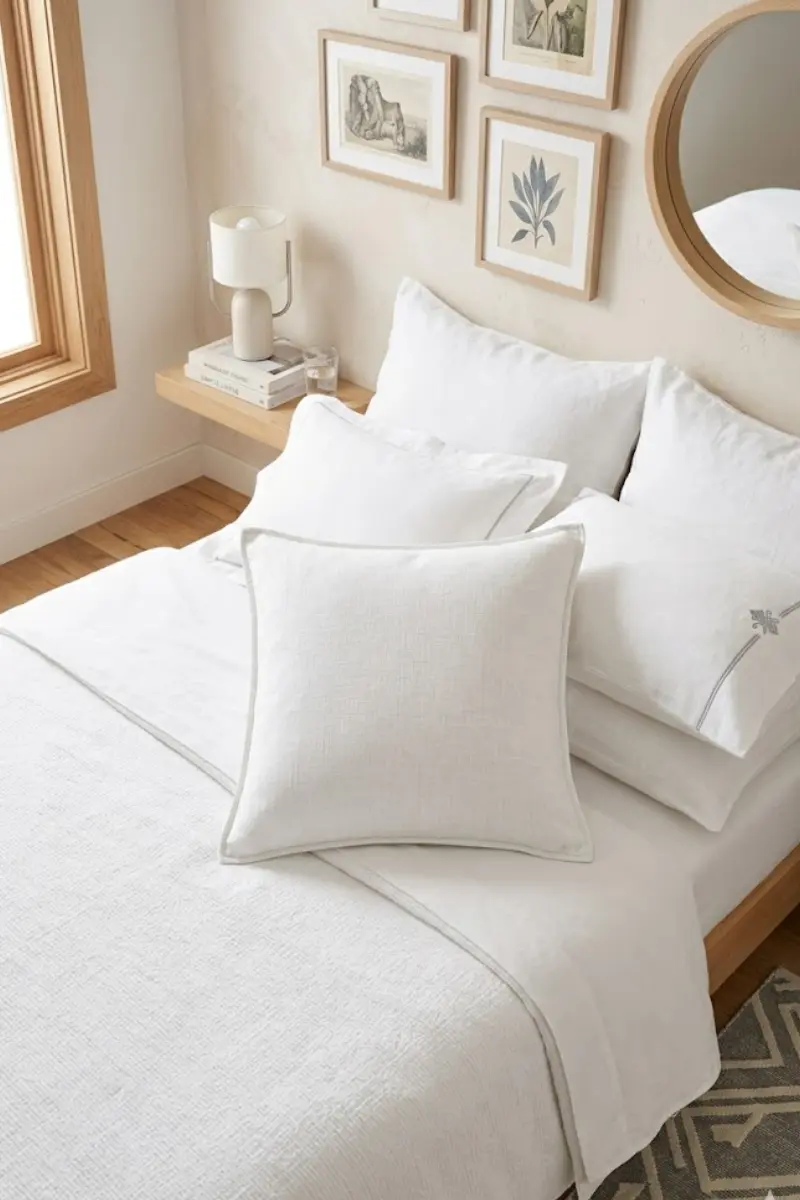
$22–$89Minimalist pillows stay neutral in colour and restrained in detail. White linen square pillows, grey chunky knit, and simple cotton covers in warm sand tones. Arrangements stay small. Two to three pillows maximum. The fabric texture does the work; pattern and embellishment stay absent.
Shop Modern Minimalist Throw Pillows →Boho Eclectic
$24–$89Boho pillows celebrate layered texture and natural fibre. Macrame woven covers, tassel-fringe cotton pillows, and hand-block-printed cotton in earthy tones are the core pieces. Arrangements are intentionally abundant. Five to seven pillows in varied shapes, textures, and sizes is correct here, not excessive.
Shop Boho Eclectic Throw Pillows →Art Deco
$49–$99Art Deco pillows are about geometric precision and high contrast. Gold and black jacquard patterns, fan motif silk-touch covers, and boldly structured shapes in navy, black, and gold are the right moves. Two matching Art Deco pillows flanking a plain velvet pair creates the formal symmetry the aesthetic requires.
Shop Art Deco Throw Pillows →Coastal
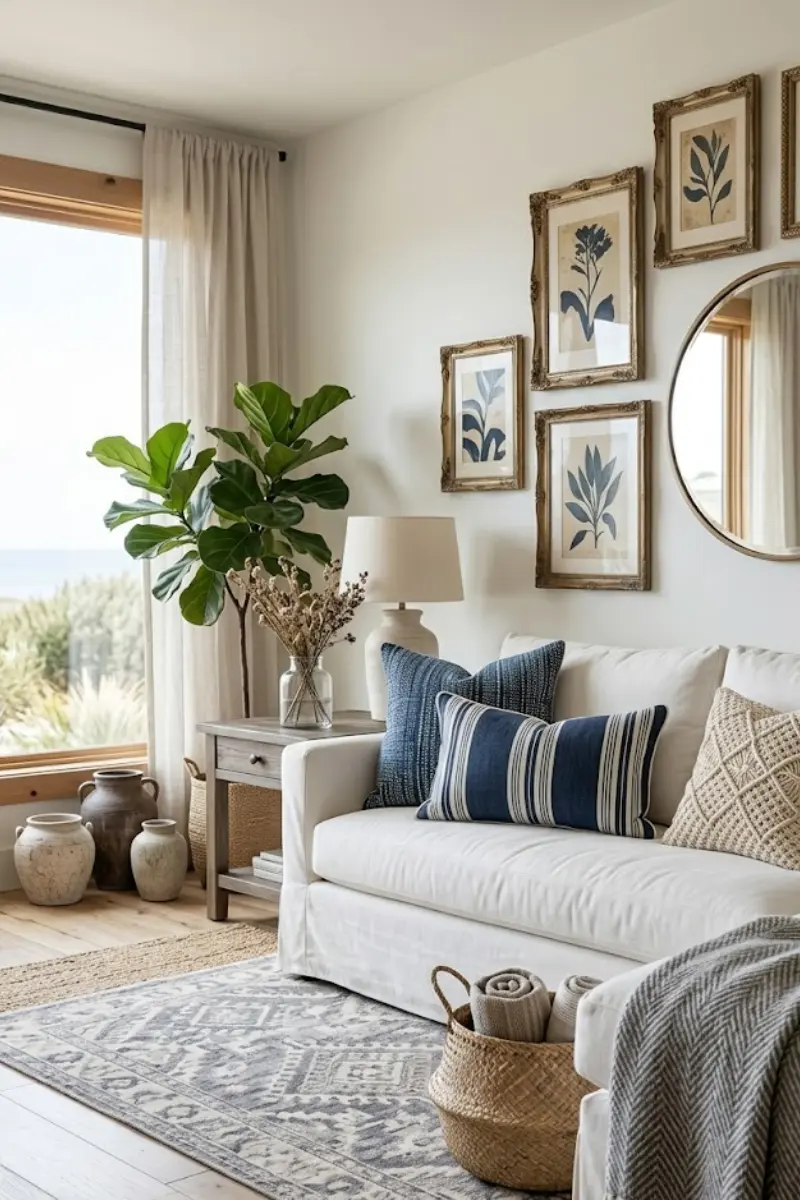
$22–$65Coastal pillows keep it simple and light. Navy and white stripe linen lumbars, washed cotton covers in bleached sand or sea glass blue, and natural rattan or jute-backed cushions are the right choices. Arrangements stay casual and unfussy. The room does the work, the pillows stay relaxed.
Shop Coastal Throw Pillows →Rustic Farmhouse
$22–$89Farmhouse pillows favour classic utility patterns. Buffalo check, ticking stripe, and simple grain-sack prints in cream, black, and tan. Chunky knit pillows in natural off-white add warmth to a farmhouse sofa arrangement. Nothing here should look like it required effort to style.
Shop Rustic Farmhouse Throw Pillows →Scandinavian
$22–$89Scandi pillows stay within a tight palette. White, off-white, pale grey, and warm sand. Simple geometric patterns in muted tones, plain woven linen covers, and oversized chunky knit pillows are the core. Three pillows on a sofa is generous for this aesthetic. The arrangement should feel effortless.
Shop Scandinavian Throw Pillows →Traditional
$49–$165Traditional pillows lean on damask, paisley, and toile patterns in jewel tones, emerald, burgundy, navy, with formal fringing or cord trim. They are arranged in symmetrical pairs. One patterned pair flanking a solid centre pillow is the foundational traditional arrangement.
Shop Traditional Throw Pillows →Industrial
$24–$79Industrial pillows stay graphic and low-key. Dark grey canvas, charcoal linen, and metallic woven lumbars sit well against leather, dark metal, and exposed brick. Arrangements are minimal. Two to three pillows maximum. No frill, no fringe, no crystal detailing.
Shop Industrial Throw Pillows →Throw Pillows by Room
Pillow scale, count, and texture all shift by room. A bed arrangement and a sofa arrangement follow entirely different rules.
Living Room
Best choice: A standard 84-inch sofa takes five pillows well: two larger squares at each end, two smaller squares inside those, and one lumbar centred at the front. Vary the textures. A velvet pair, a satin or embroidered pair, and a faux fur or sequin lumbar create an arrangement that looks styled rather than uniform.
See all for Living Room →Bedroom
Best choice: A king bed takes a generous arrangement. Two Euro squares (26x26) against the headboard, two standard squares in front of those, and one or two lumbars laid across the top of the duvet. The lumbars and the front squares are the styling elements; the Euro squares are the structure.
See all for Bedroom →Dining Room
Best choice: Chair cushions and occasional accent pillows on dining chairs or a dining bench give the room warmth without adding visual noise. A pair of matched pillows on a dining bench, or a single accent cushion on a carver chair at the head of the table, is enough. Over-filling a dining room with pillows makes the seating look impractical.
See all for Dining Room →Home Office
Best choice: A single pillow on the reading or accent chair in a home office adds warmth without turning the space into a living room. One well-chosen square in a neutral texture, linen, cotton, or low-pile velvet, is the correct amount. It should feel like a considered detail, not a styling exercise.
See all for Home Office →Entryway
Best choice: An entryway bench with two or three pillows gives the space warmth and signals that the rest of the home is styled with the same intention. Keep the fabrics practical for high-traffic. Avoid long fringe that tangles, very light colours in a busy entry, and high-pile that traps dust and dirt.
See all for Entryway →Bathroom
Best choice: A vanity stool or chaise in a luxury bathroom takes one or two small pillows as finishing details. Velvet and satin work well because they do not absorb ambient moisture the way cotton and linen do. Keep them away from direct shower splash zones. Decorative-only placement only.
See all for Bathroom →Top Picks: Living Room
Throw Pillow Sizing Guide
Pillow size relative to the furniture is the detail that separates a styled room from one that looks like the pillows were chosen in a hurry.
Pillow Fabric & Fill Guide
The fabric on the outside determines how the room looks; the fill inside determines whether the pillow holds that look for one season or ten years.
Velvet: Cut vs Crushed
Satin and silk-touch fabrics
Linen and washed cotton
Fill: Feather Down vs Down-Alternative
Faux fur and chunky knit
What Signals Quality
- Cover fabric weight stated in GSM. 280 GSM or above for velvet covers is dense enough to resist compression marks
- Insert fill weight listed in grams. 500 GSM or above for a 20x20 down-alternative insert delivers proper loft
- Hidden zip closure on velvet and embroidered covers. Exposed zips on the back face snag on upholstery and signal cheap construction
- Double-stitched or serged seam allowances in cover construction. Visible in product photos showing the interior of the cover
- Fill listed as down cluster percentage for feather-down inserts. 85%+ down cluster is the quality threshold
Care + Maintenance
Washing velvet and satin covers
Turn velvet covers inside out before washing. Machine wash on the delicate cycle, cold water only. Remove promptly from the machine and either air-dry flat or tumble dry on the lowest setting for no more than 10 minutes before air-finishing. If a velvet cover needs pressing, hold a steam iron 2 inches above the surface and brush the pile back with a soft cloth.
Reviving crushed velvet pile
Fluffing and reshaping pillow inserts
Storing seasonal pillows
Cleaning macrame and woven covers
The Pillow Arrangement Formula
Most buyers choose pillows they like individually and then wonder why the arrangement on the sofa or bed still does not look styled. Individual taste and composition are two different skills.
The texture hierarchy
Every styled pillow arrangement has a texture hierarchy:
- Primary fabric - covers the majority of the arrangement (usually velvet or linen)
- Secondary texture - for two pieces in the arrangement (embroidery, jacquard, or sequin)
- Accent texture - for the lumbar or a single standout piece (faux fur, ruched satin, or chunky knit)
This three-level system is what makes a sofa or bed arrangement look deliberate.
Front-to-back layering
Colour rule for glam palettes
When to break the arrangement
Price Guide: Every Budget
In throw pillows, price buys fabric weight and fill quality. The difference between a pillow that holds its shape for years and one that goes flat and lumpy in weeks.
At this level you are looking at genuine silk covers, hand-embroidered pieces with significant needle-work hours, or premium designer cushions with certified fill. The construction standard is noticeably different in hand. A quality that reads from across the room.
Sets of four or five quality velvet covers with real weight, individually crafted embroidered pieces, and premium faux fur with dense pile are all in this range. This is the right investment level for a sofa or bed arrangement that will be the room's focal point.
Single quality velvet covers, crystal button-tufted pieces, and satin lumbars in this range look as good as the tier above in practice. This is the most value-dense range for building a complete arrangement. Two pieces here plus one standout piece from the tier above is the smart approach.
Individual accent pieces only at this price. A simple linen cover, a small cotton tassel pillow, or a single sequin accent. A complete sofa or bed arrangement from the under-$50 tier will look and feel cheap within one season.
Frequently Asked Questions
How many throw pillows should a sofa have?
What is the best pillow arrangement for a king bed?
Should throw pillows match or contrast the sofa?
What size throw pillows are best for a sofa?
What fill is best for throw pillows?
How do you style throw pillows on a bed?
Can you mix different pillow patterns on a sofa?
How do you keep throw pillows looking plump?
What throw pillow fabrics work in a glam bedroom?
Shop by Room
Looking for throw pillows for a specific room? Browse our dedicated room guides:
Ideas & Inspiration
One real coastal pillow and a neutral texture pairing build a genuine coastal palette for …
Read guide →
Seven real bedroom throw pillows starting under $30, from velvet to linen to boho macrame …
Read guide →
Velvet reads richer and holds color better, linen reads relaxed and shows less wear. The …
Read guide →