You spend money on the sofa.
You find the perfect curtains.
You hang the art.
And something is still off.
The room looks assembled but not designed.
Nine times out of ten, it is the floor.
A rug that is the wrong size, the wrong pile, or the wrong pattern for the room undermines everything above it.
And most guests feel it before they can name it.
Getting the rug right changes the room in a way no other single piece can.
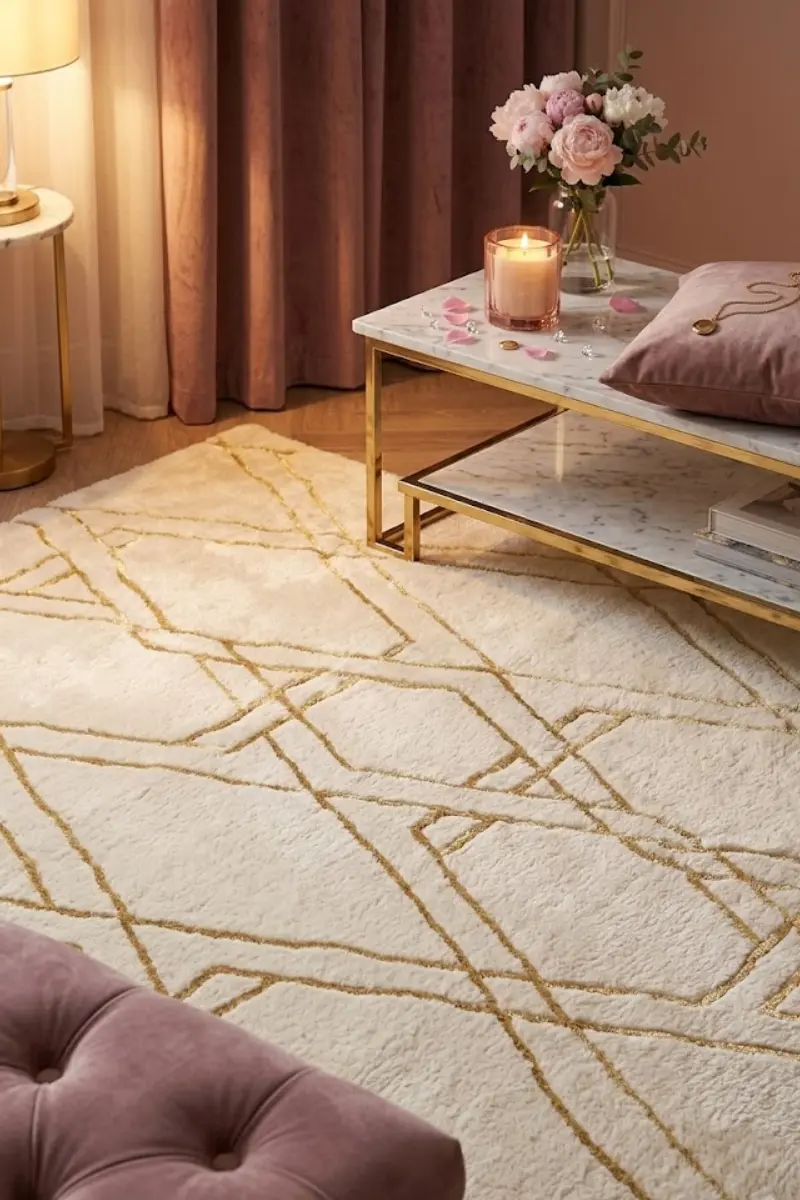
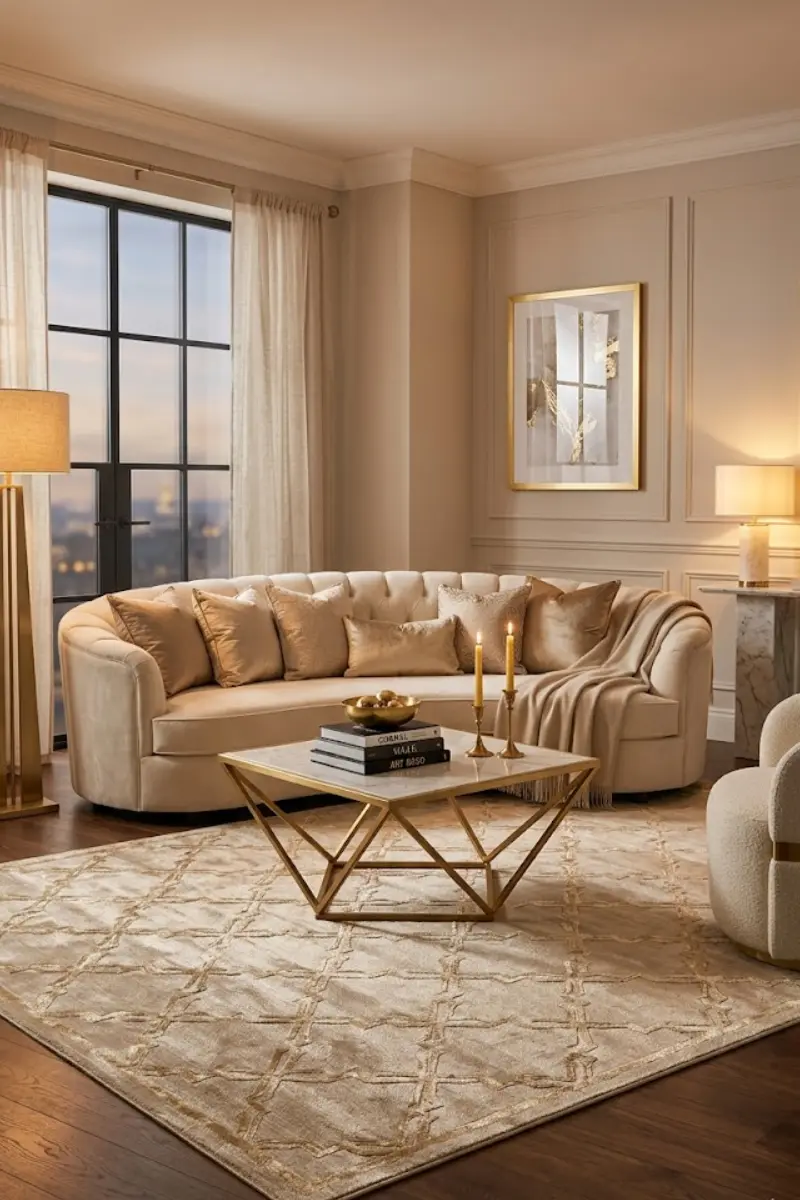
A champagne gold trellis rug under a neutral sofa anchors the seating group and adds warmth to the whole space in one move.
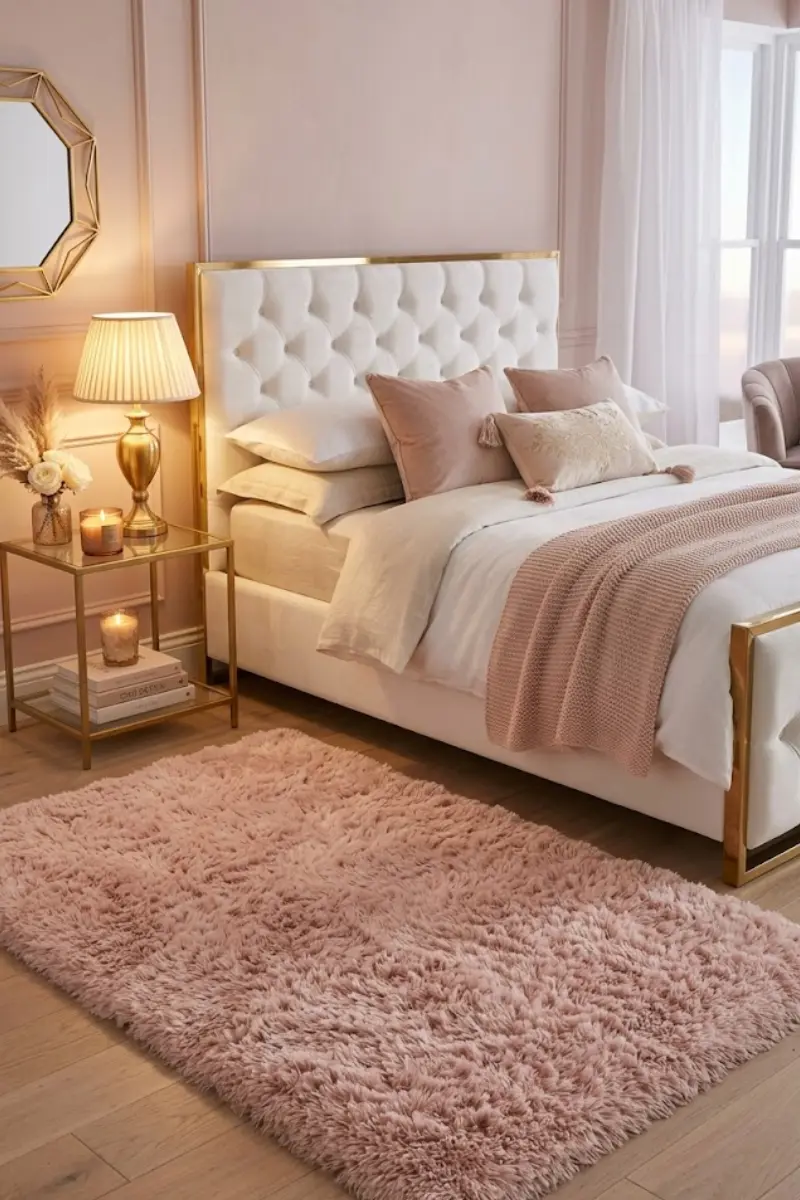
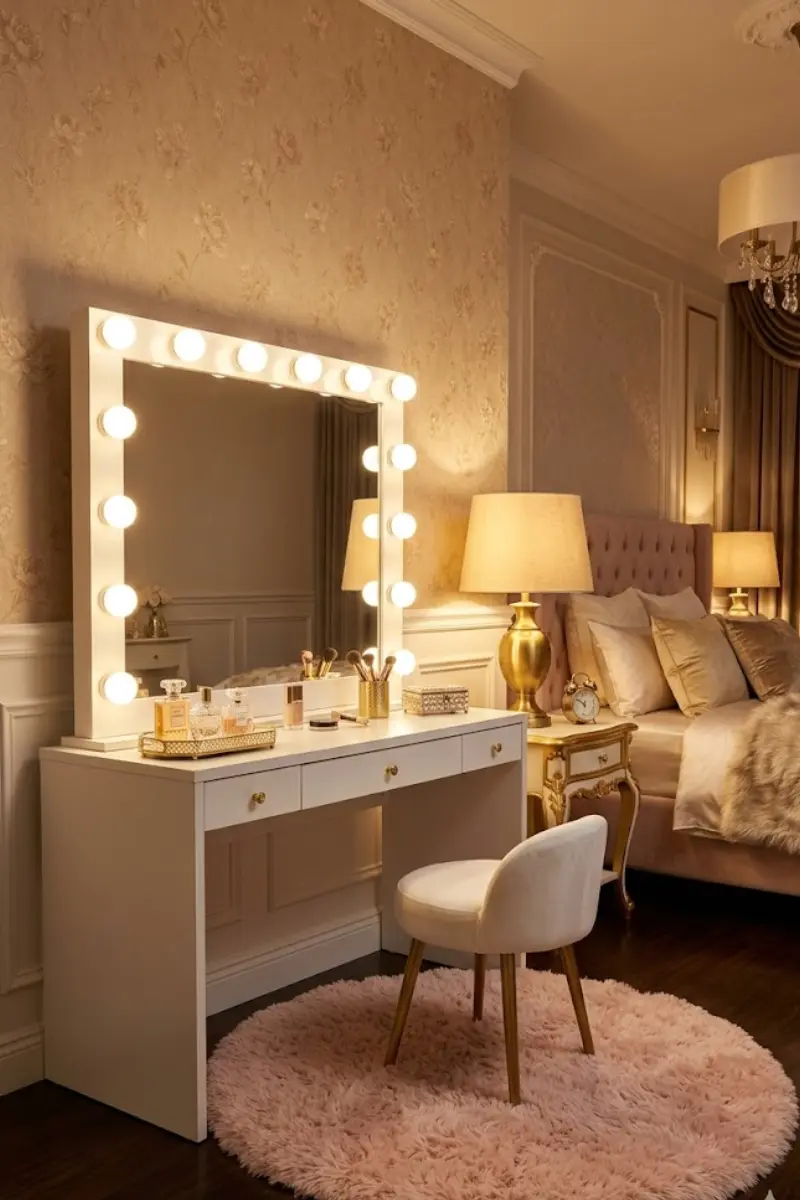
Blush velvet pile beside the bed turns a simple bedroom into something that feels considered.
Ivory faux fur against natural wood brings the contrast that makes both elements read better.
Every rug type, every style, every room, and every size rule you need.
This guide covers the full picture so you buy the right rug once.
Types of Rugs & Carpets
The rug type you choose defines how the room feels underfoot, not just how it photographs. And those are very different things.
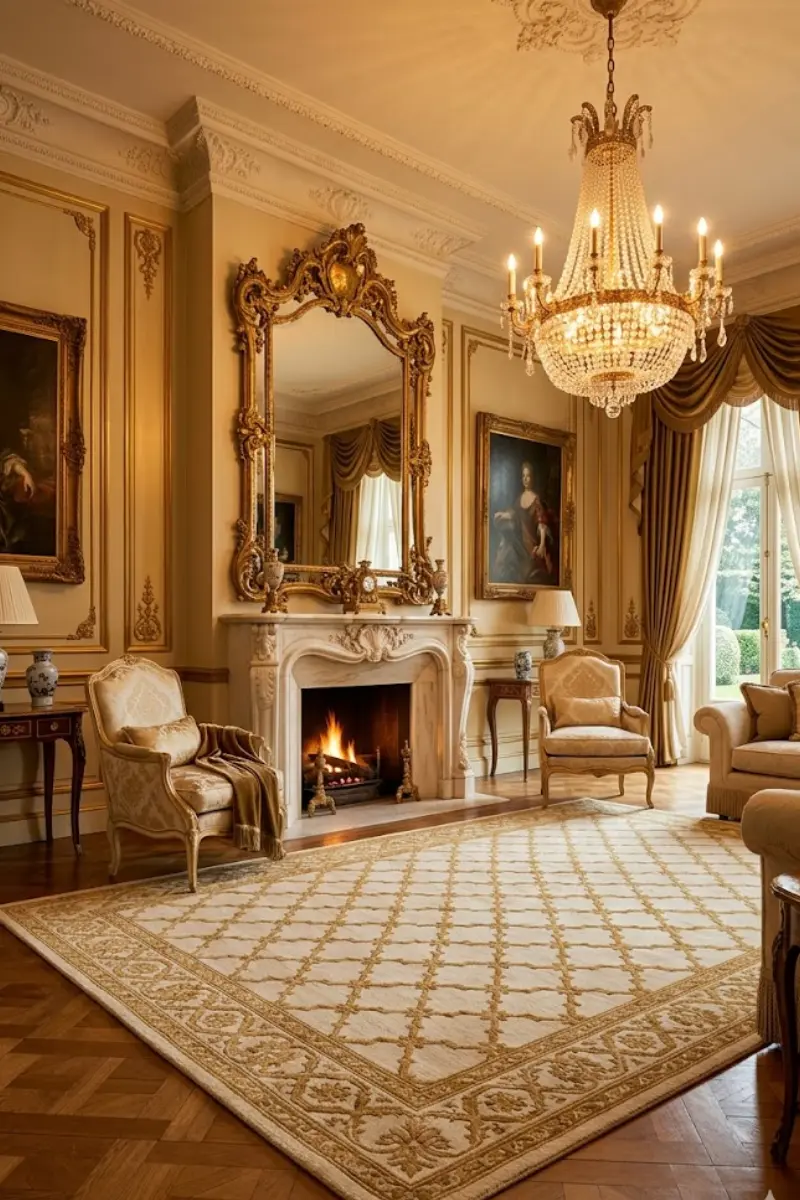
Area Rugs
Area rugs are the foundation of every styled room. They define zones, anchor furniture, and set the scale of the space. The right area rug makes a large room feel intentional instead of scattered.
View More Details →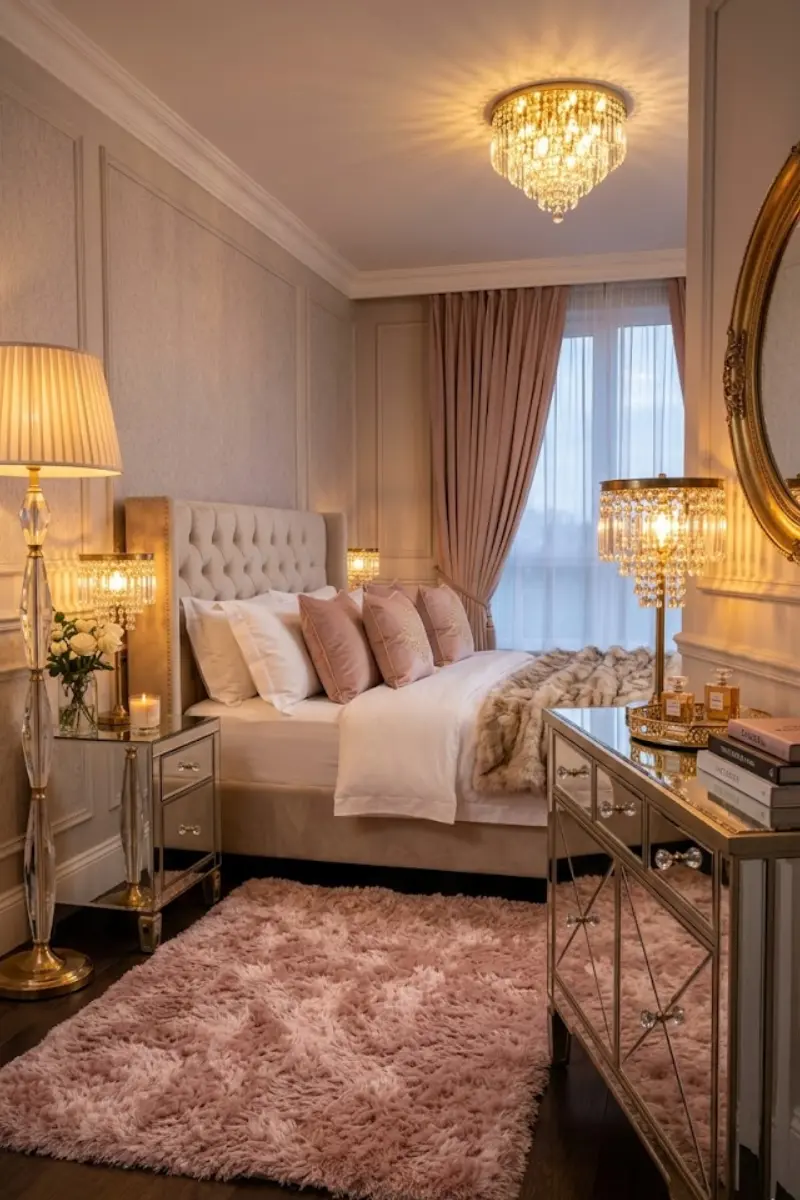
Shag Rugs
High-pile shag rugs are the texture play that makes a bedroom feel like a boutique hotel. That first barefoot step in the morning is the whole point. Pile height of 1.5 inches or more gives you the sink-in softness that reads as luxury.
View More Details →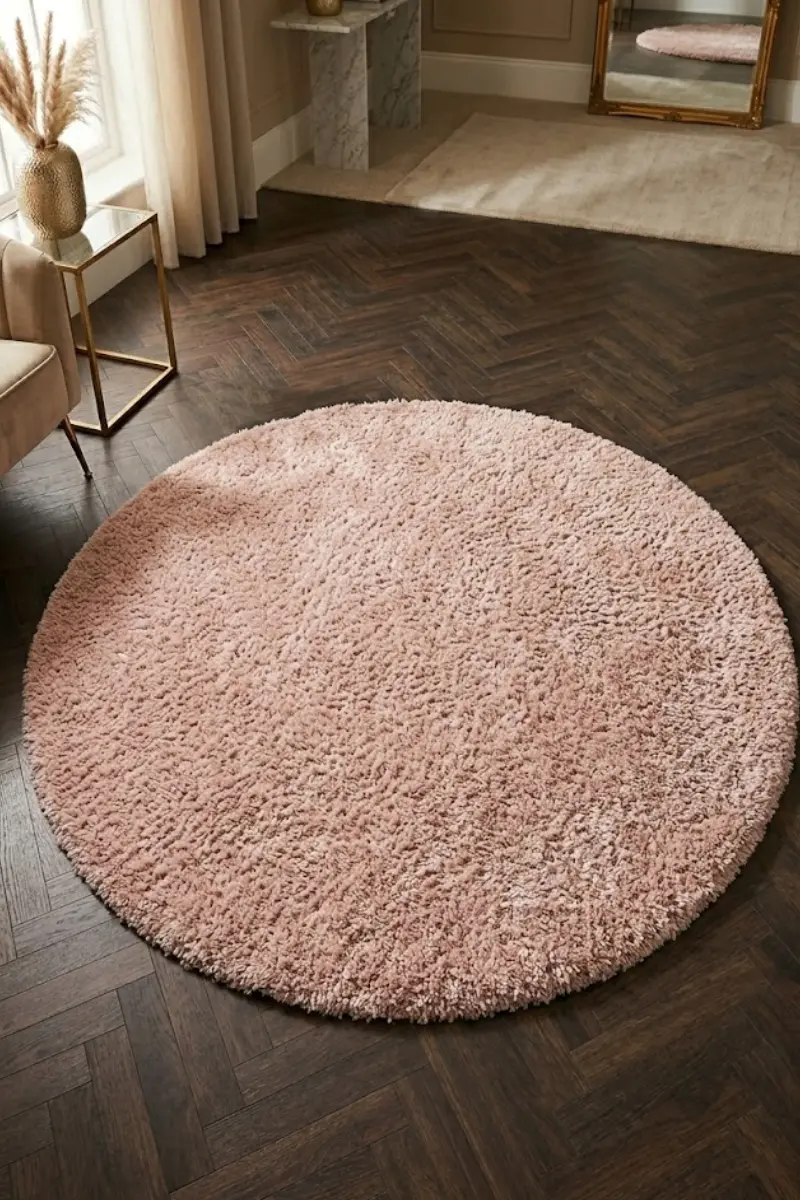
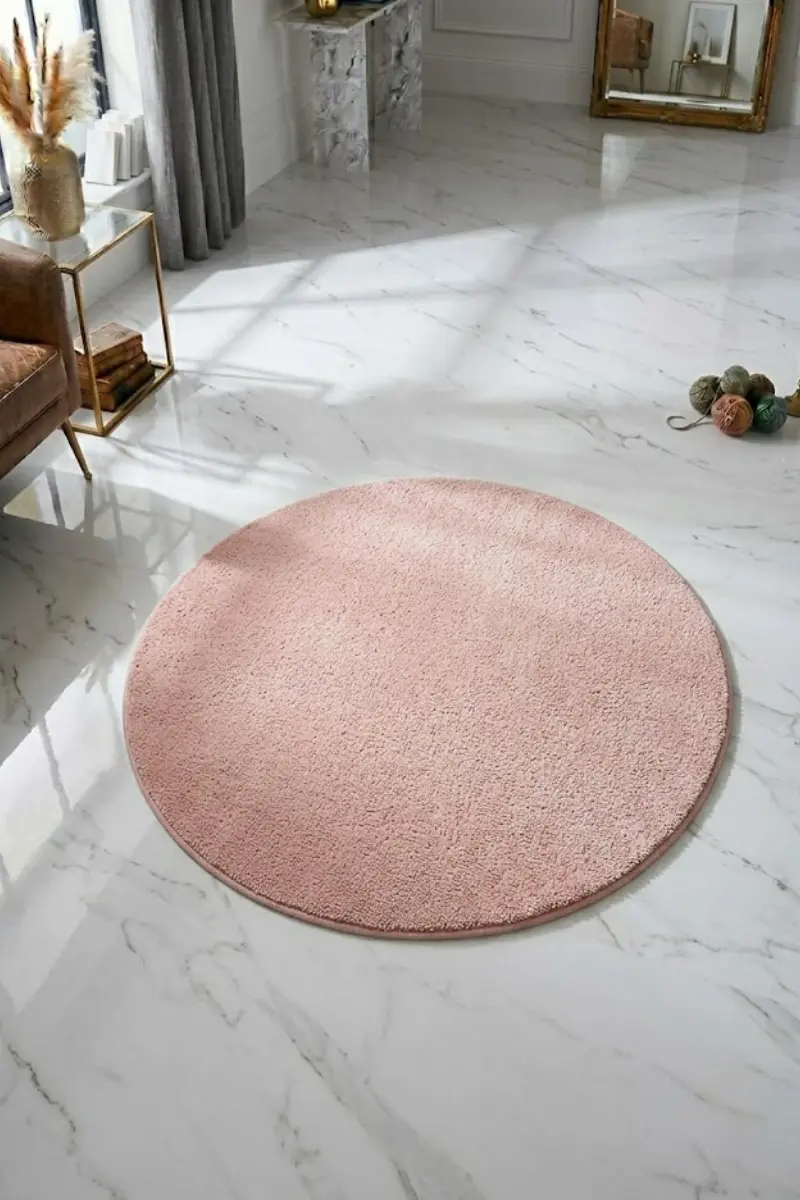
Round Rugs
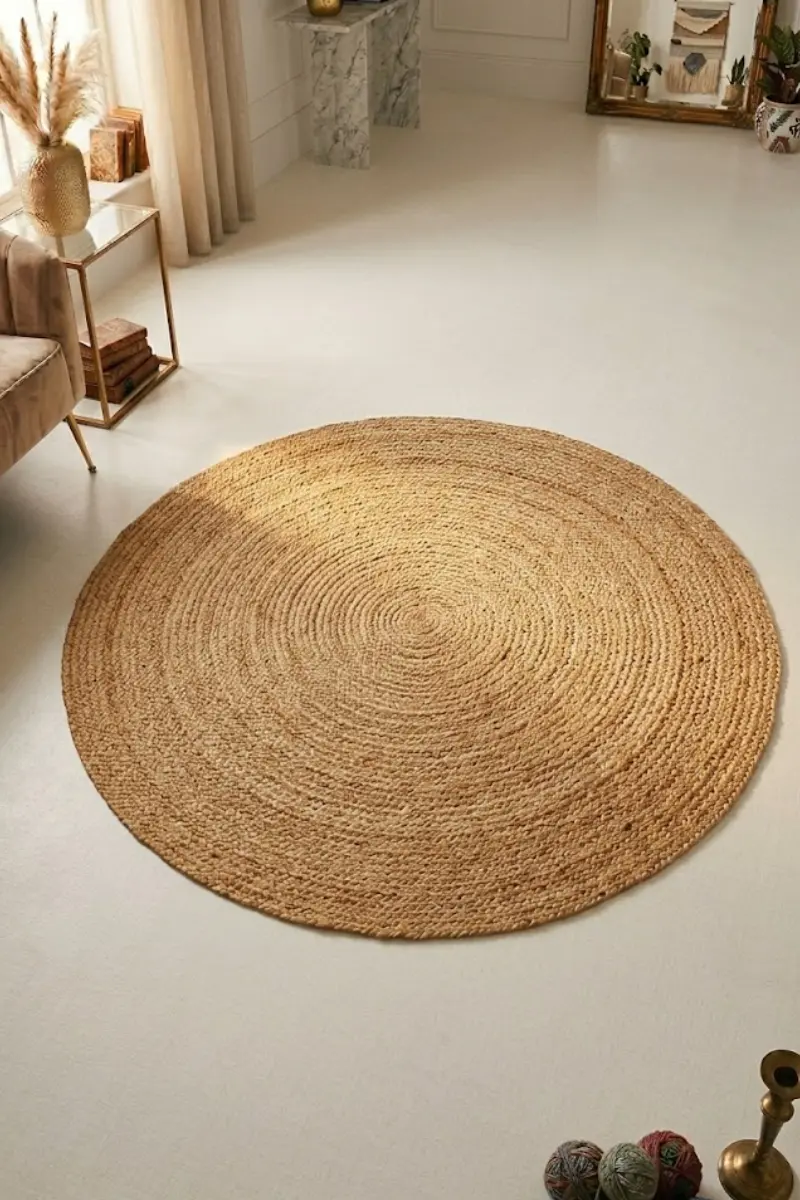
Round rugs work in corners, under circular tables, and beside beds where a rectangle would cut off awkwardly. They soften spaces that have too many hard angles. A round rug under a round dining table is one of those design moves that looks obvious in retrospect.
View More Details →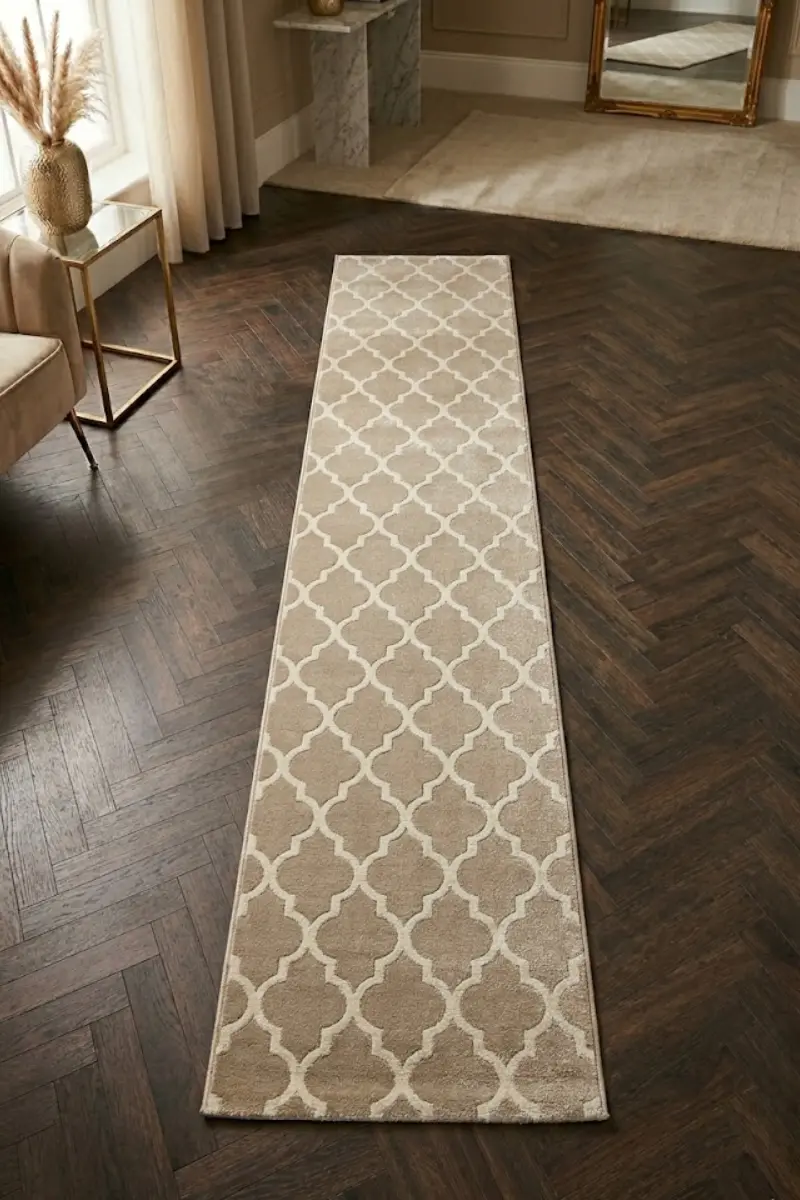
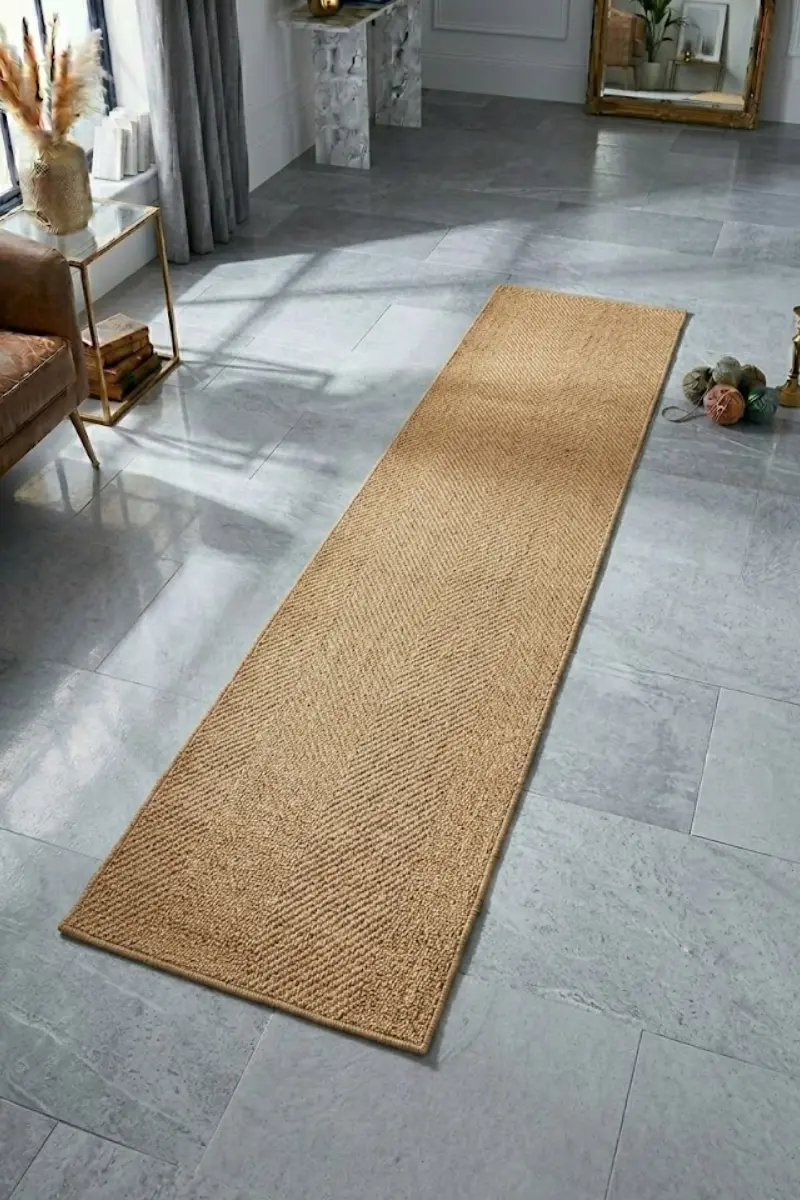
Runner Rugs
Runners do two things well: they protect high-traffic flooring and they make long, narrow spaces feel finished. An entryway without a runner looks unfinished. A hallway with the right runner looks designed. Standard runner width is 2 to 2.5 feet. Anything wider starts looking like a small area rug.
View More Details →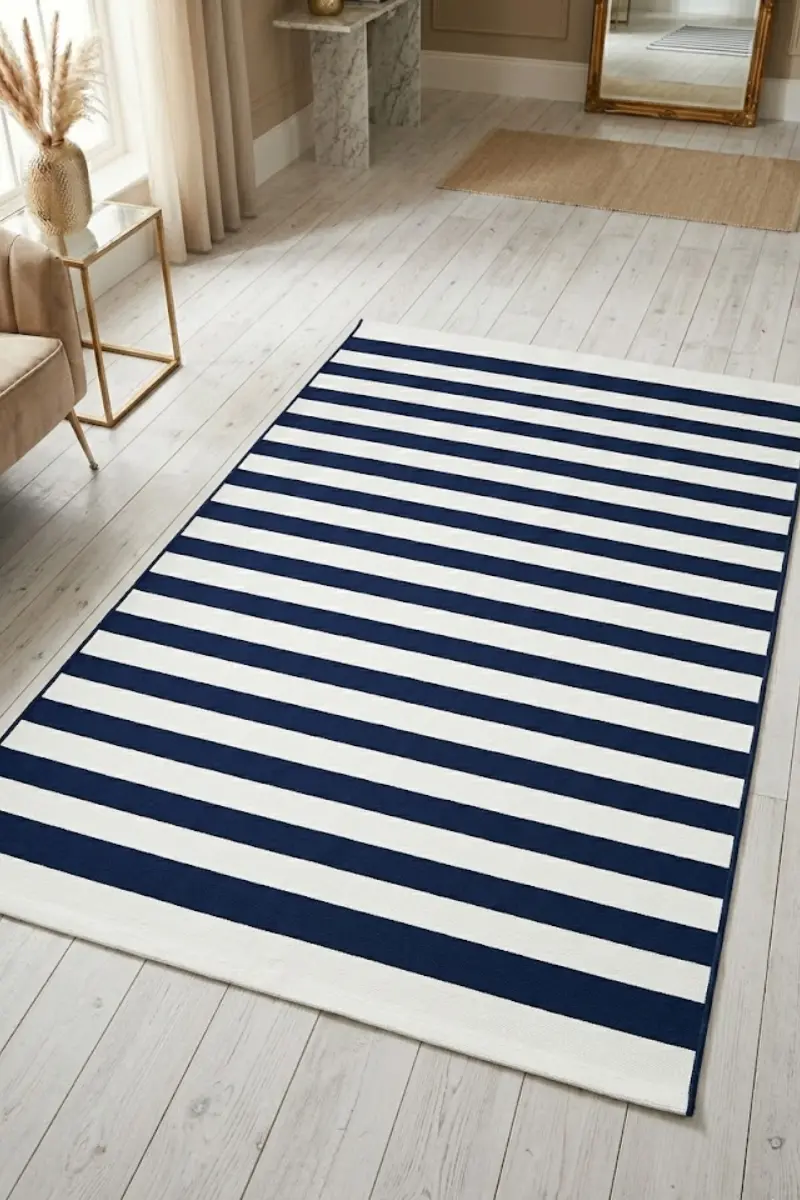
Flatweave Rugs
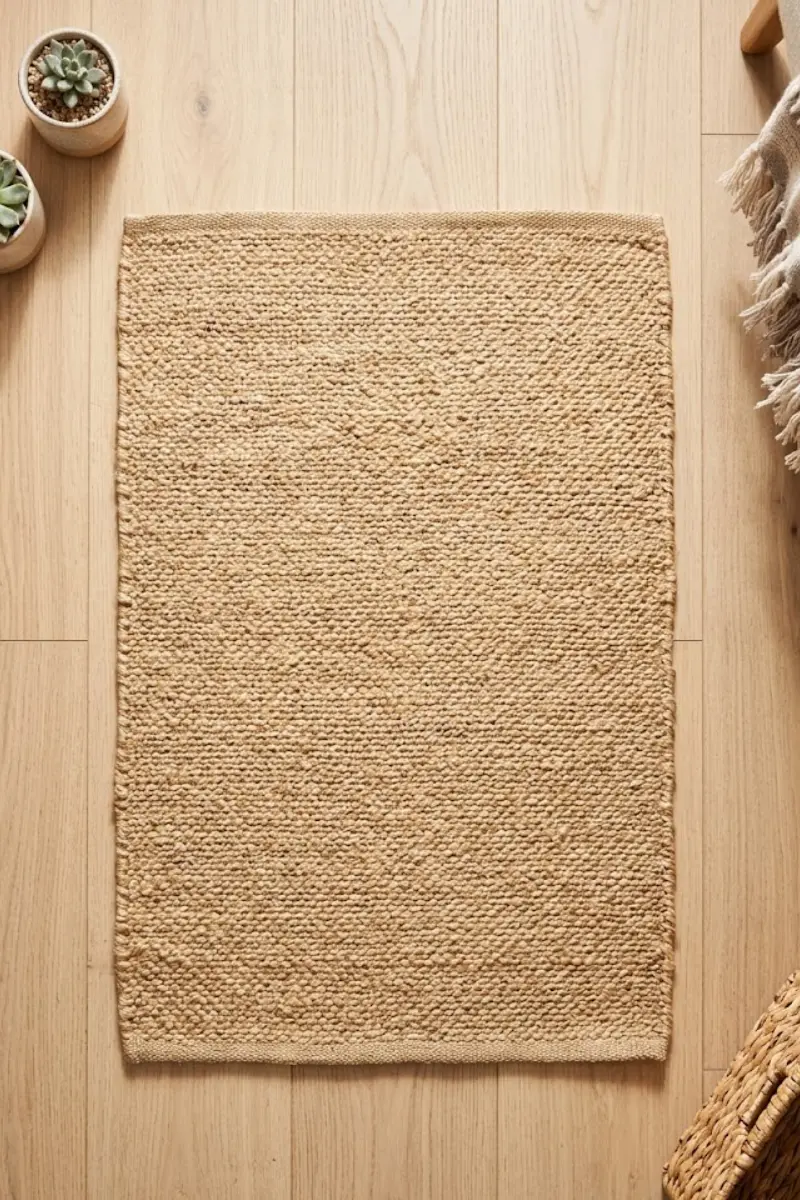
Flatweave rugs have no pile. They lay completely flat, making them the easiest to clean and the most practical for high-traffic zones. Jute, cotton, and kilim-style flatweaves bring texture without adding height. They work especially well under furniture because chair legs do not snag.
View More Details →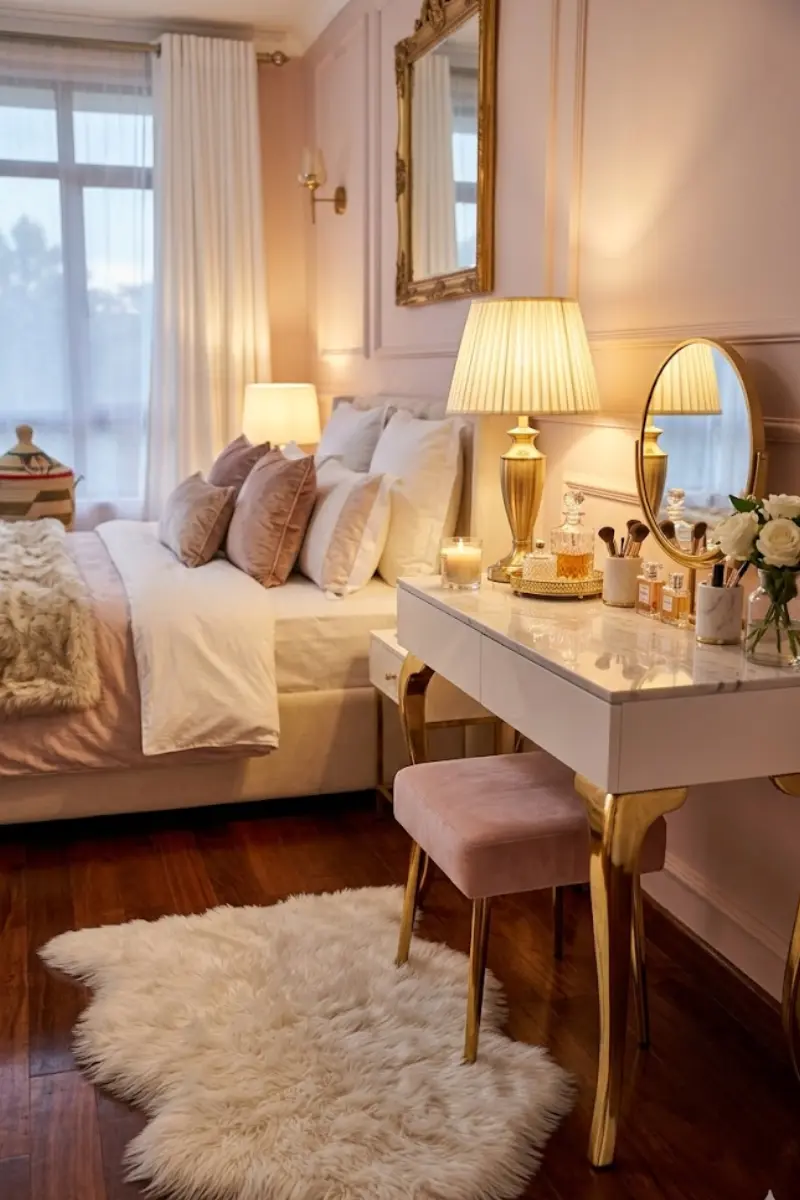
Faux Fur Rugs
Faux fur rugs are a pure luxury texture statement. They are not meant to anchor a whole room. They are meant to be one deliberate moment in it. Beside the bed, in front of a vanity, or layered over a flatweave, they add a level of softness that photographs beautifully.
View More Details →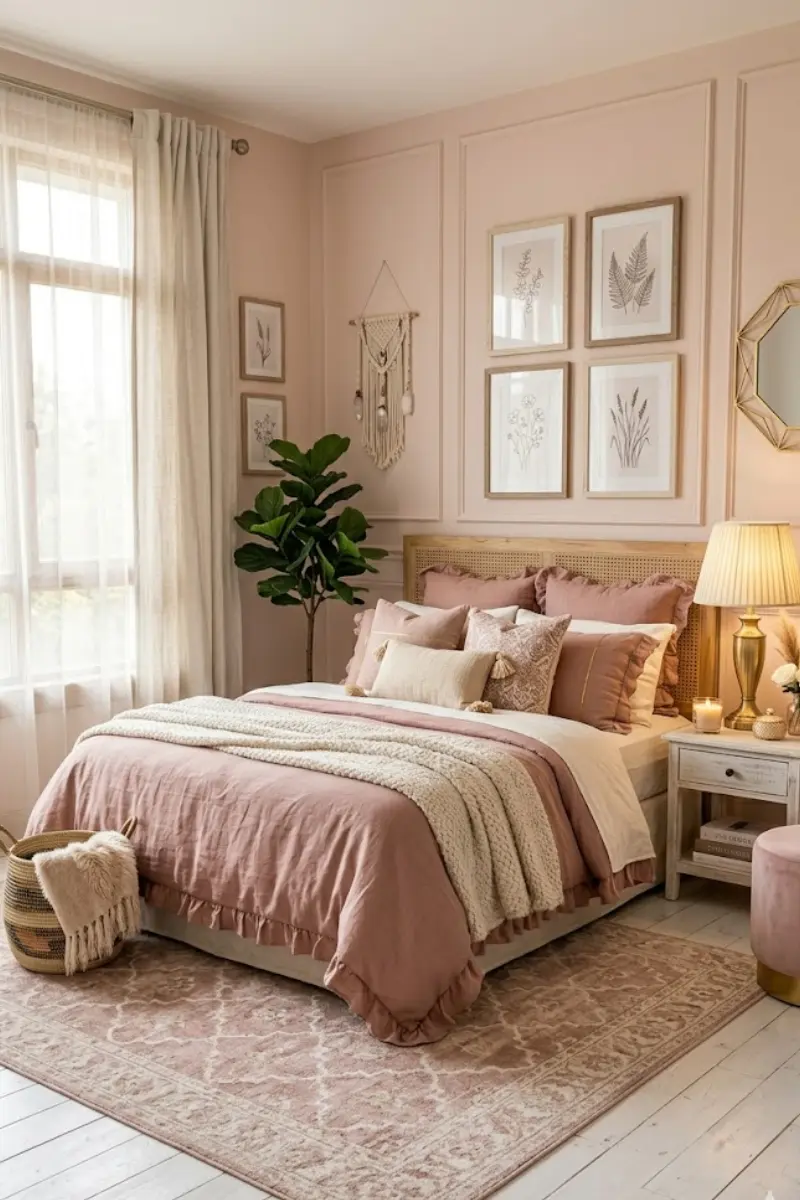
Moroccan Trellis Rugs
Trellis and quatrefoil patterns are the most versatile printed rugs for glam interiors. The repeat geometry scales well. A 5x8 reads just as clearly as a 9x12. Dusty rose and champagne colourways translate the pattern from traditional to contemporary in seconds.
View More Details →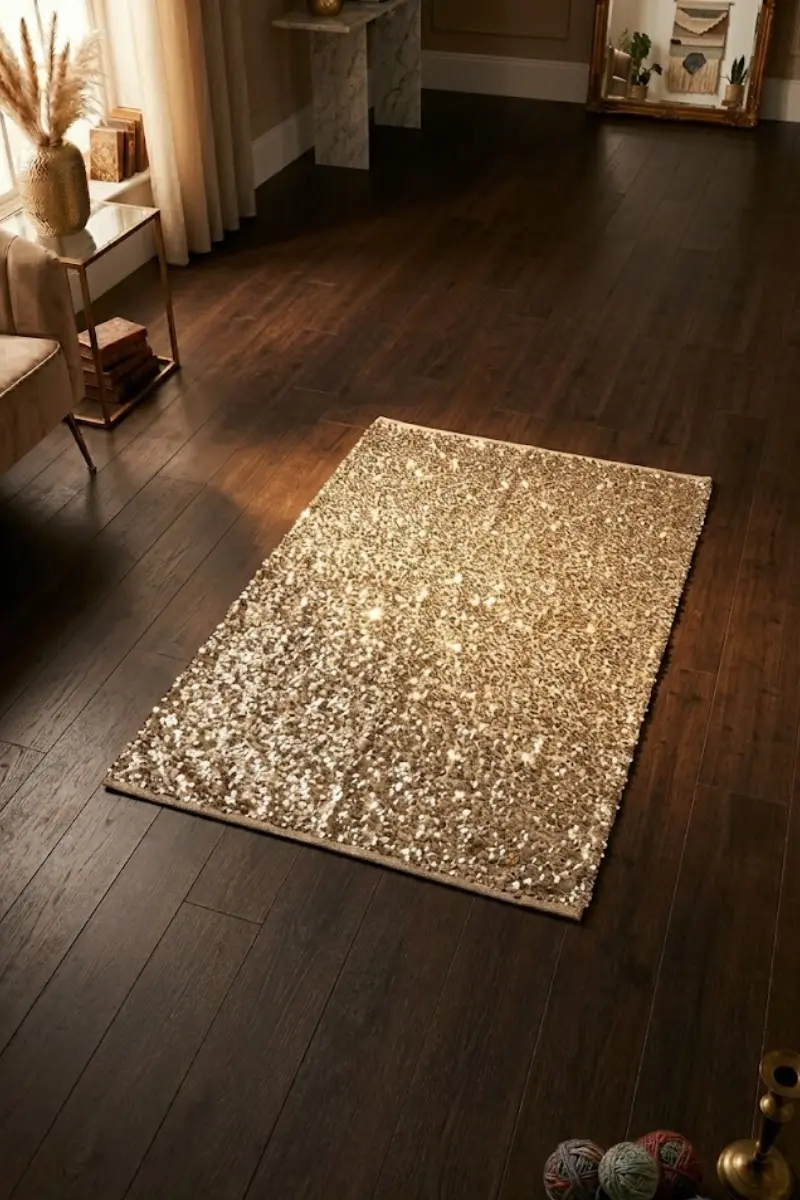
Metallic Accent Rugs
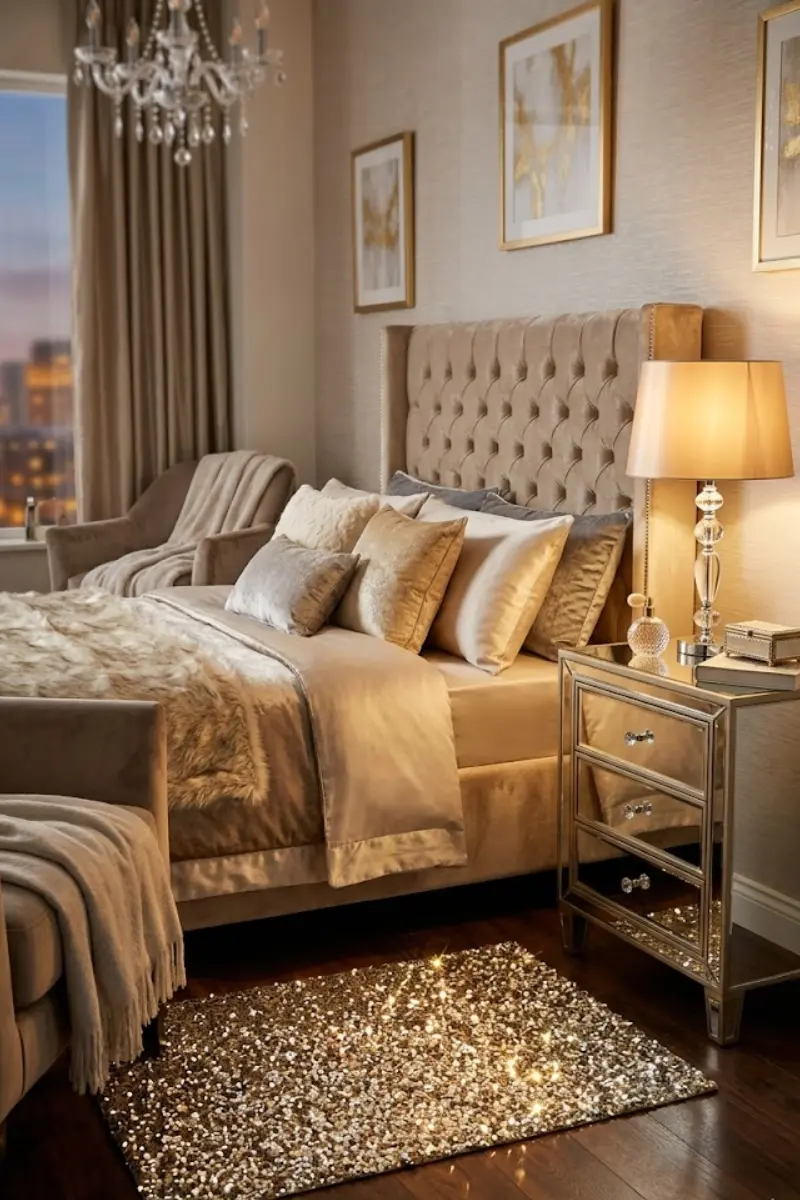
Sequin and metallic-thread rugs are a specific tool: they are for rooms that need one more layer of shimmer. Not a room workhorse, but a punctuation mark. Small scale, 2x3 or 3x5, keeps them from overwhelming the space.
View More Details →Shop Rugs & Carpets
Filter by room to find the right pile height, pattern scale, and shape for your specific layout.
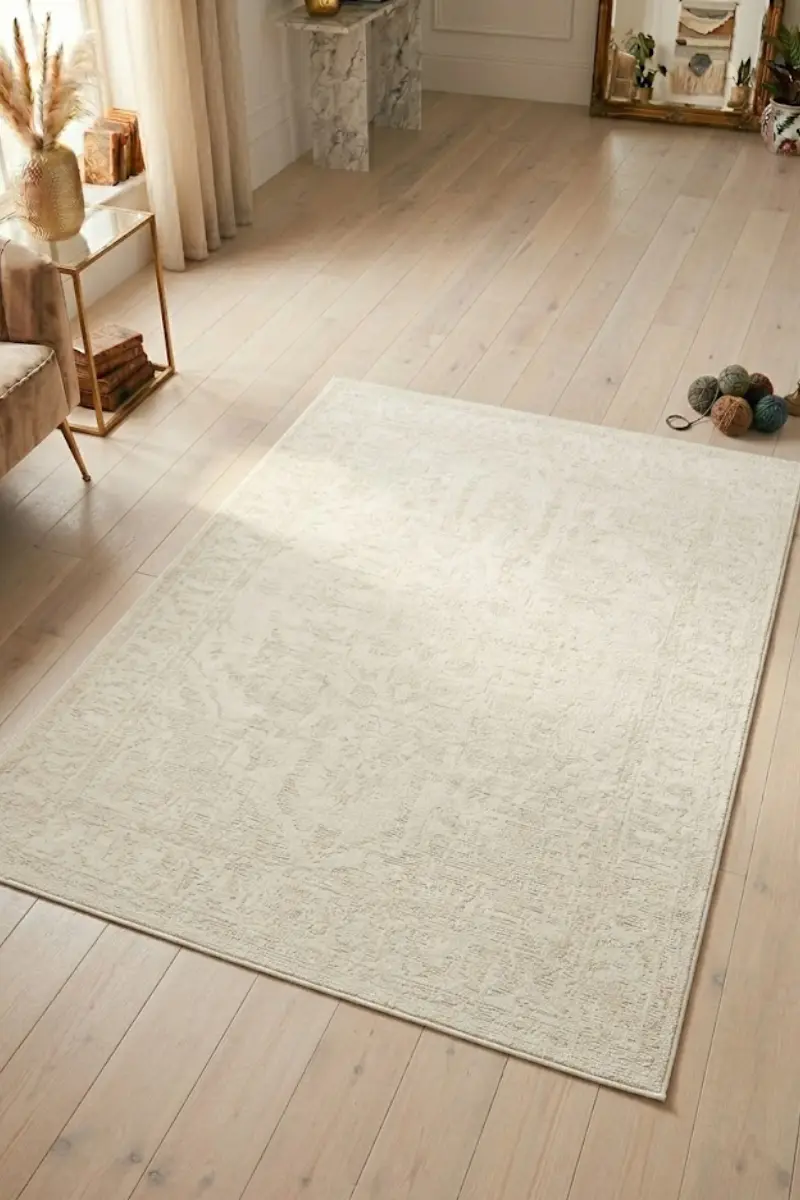
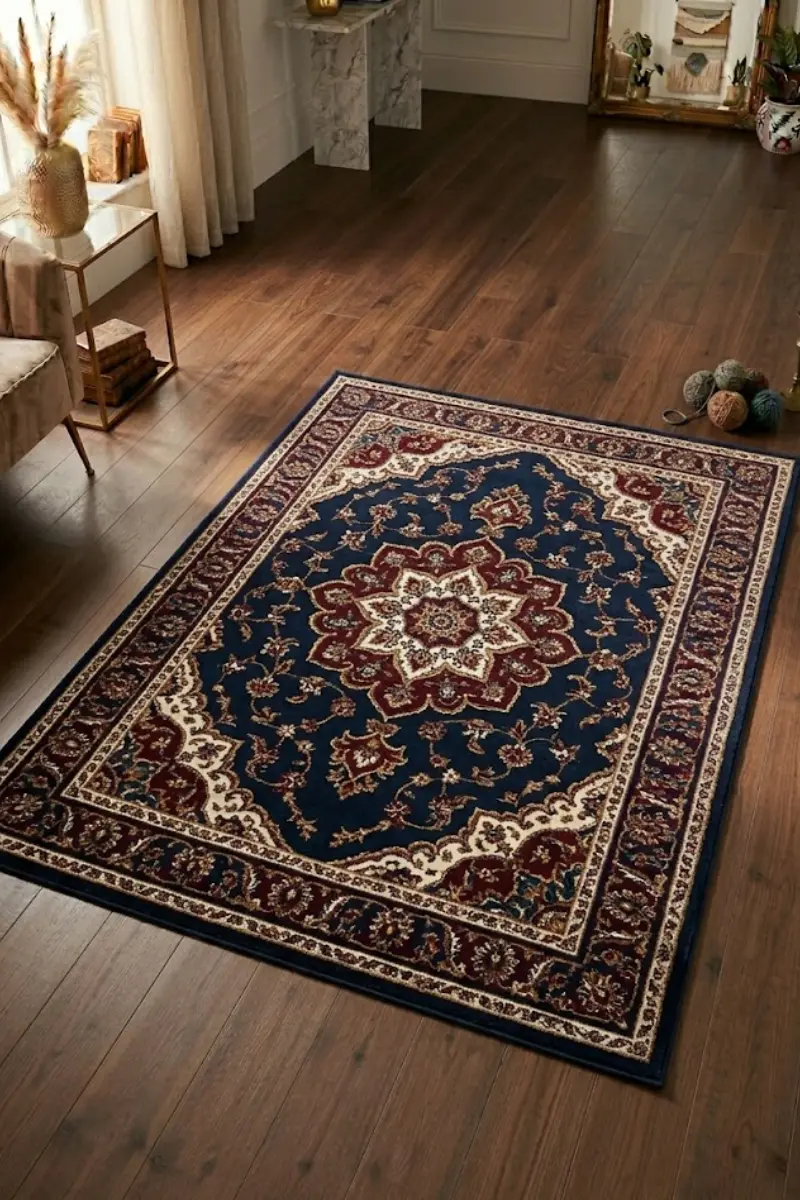
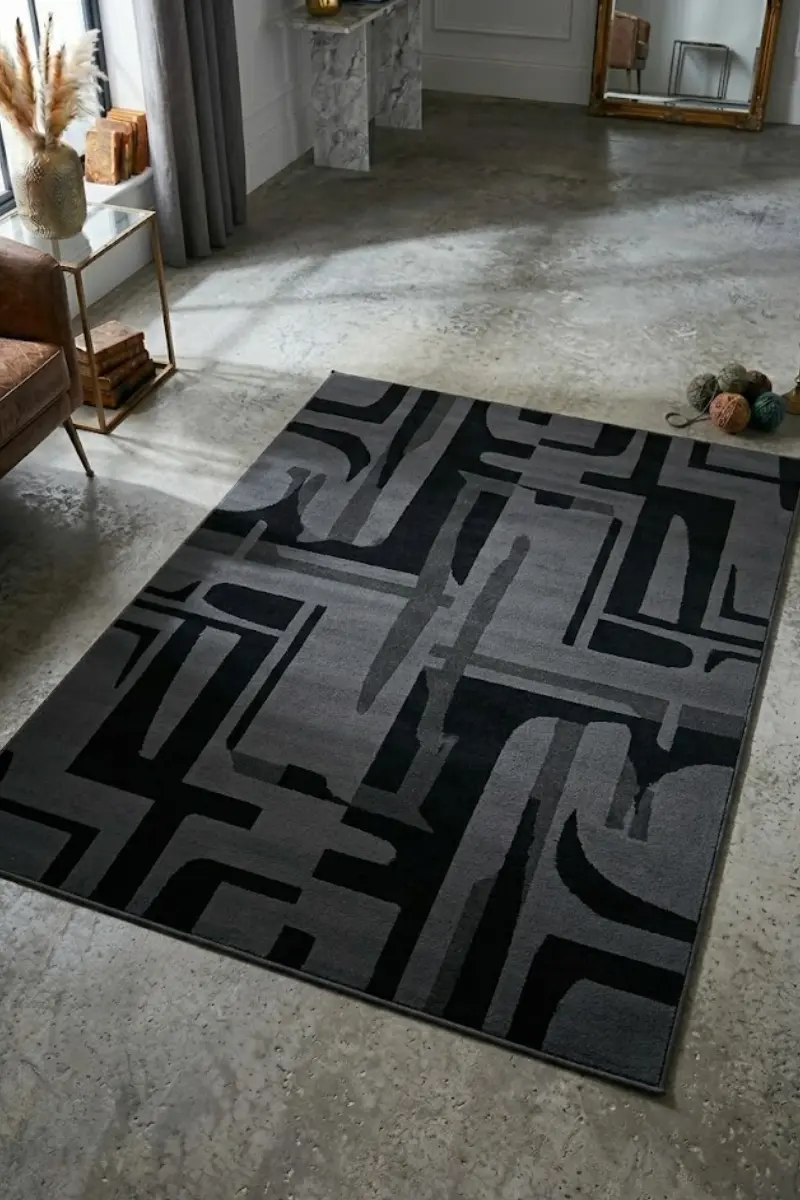
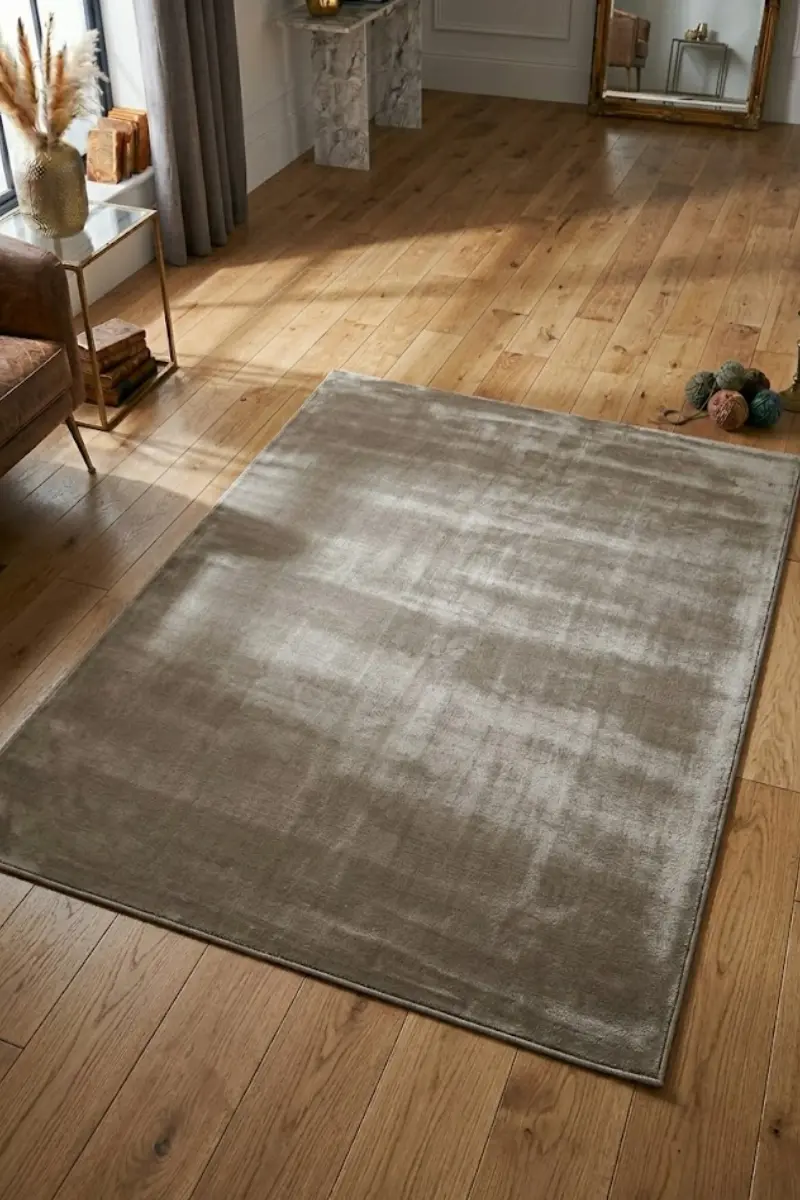
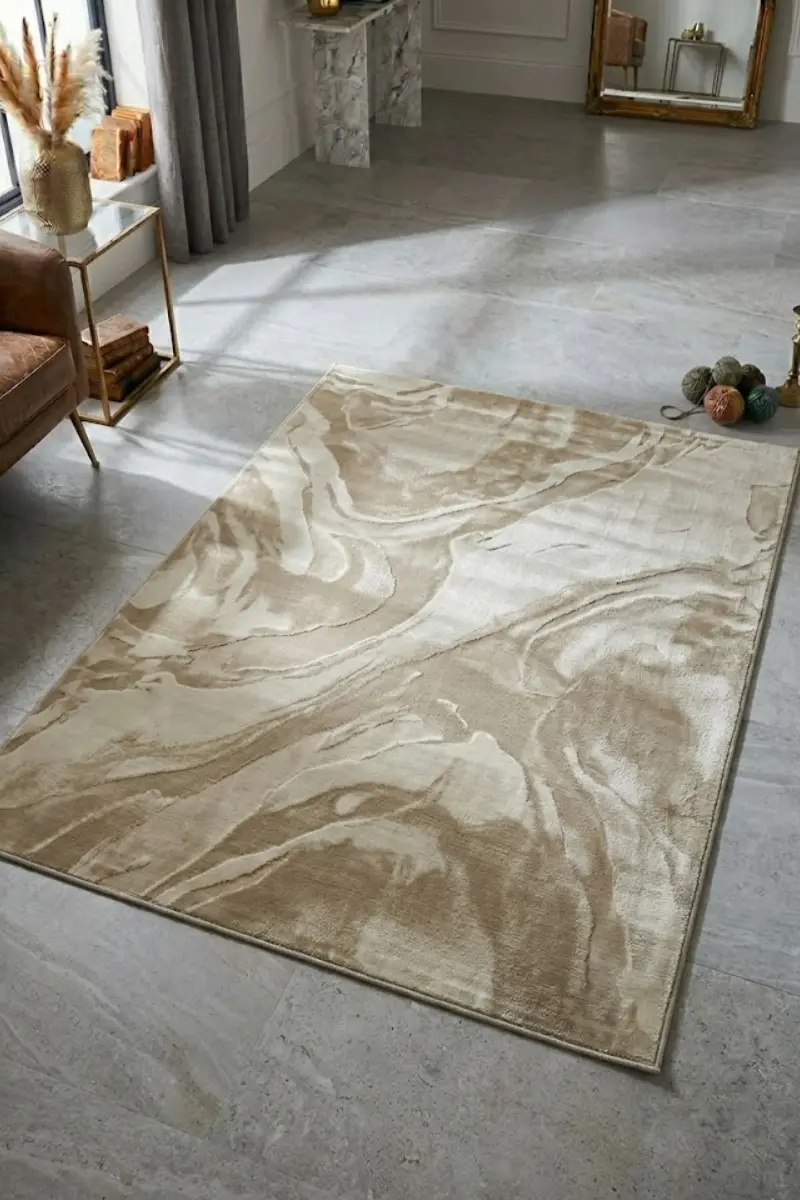
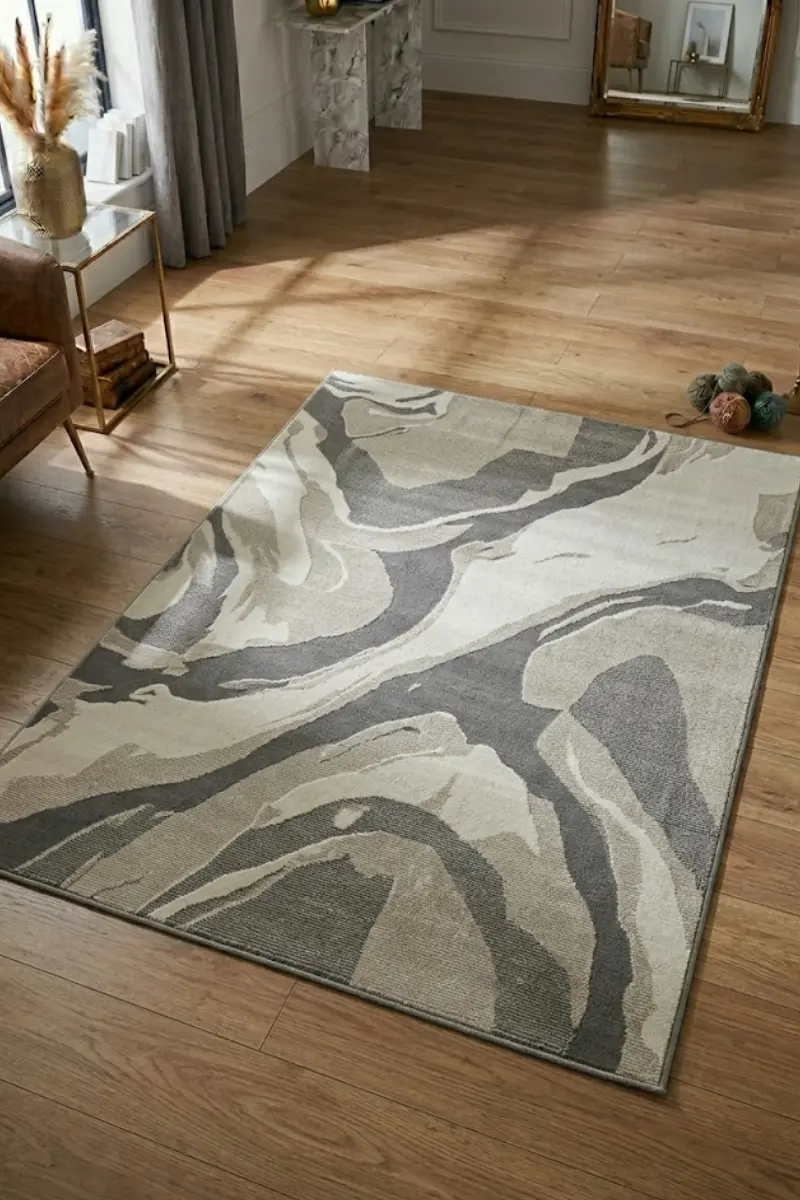
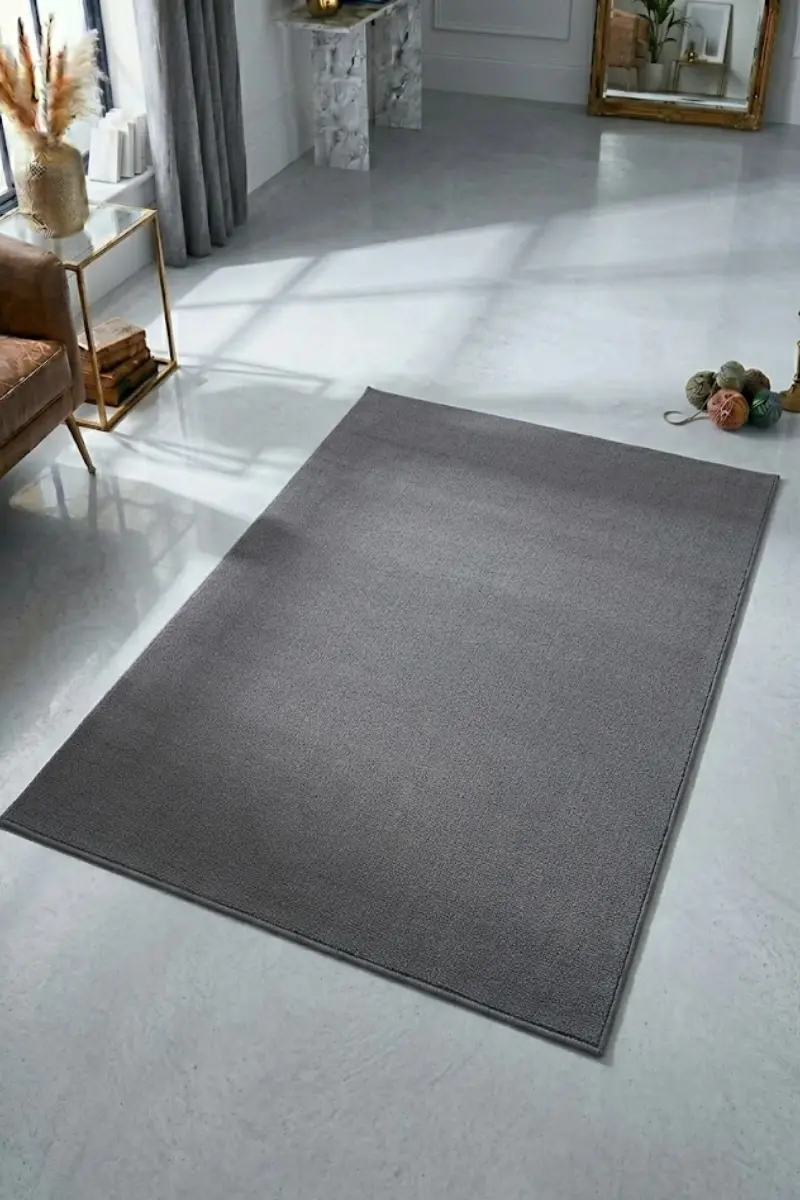


How to Choose
Get the size wrong and even the most expensive rug looks like an afterthought, no matter how beautiful the pattern.
Size first, always
Pile height by room
Pattern scale relative to room size
Material for your actual life
Three materials cover almost every real-life scenario:
- Polypropylene - the practical choice: stain resistant, durable, works in all rooms
- Wool - the investment choice: ages beautifully, holds colour, pile recovers after compression
- Viscose and silk-blend - look extraordinary but show every footprint and do not like moisture
Be honest about your household before buying a viscose shag for the living room.
Shape relative to furniture
Rug pads are non-negotiable
A non-slip rug pad cut 1 inch smaller than the rug on all sides slides, bunches at the edges, and wears faster. A proper non-slip pad extends the life of the rug by years and prevents the trip hazard that comes from curling corners. Buy the pad at the same time as the rug. Do not treat it as optional.
Red Flags to Avoid
- Pile density looks sparse in the product photos. Turn it over and see if light passes through the backing easily. Low density means it will flatten within months.
- No rug pad included and no mention of backing material. Many budget rugs have smooth latex backing that slides even on carpet.
- Viscose or bamboo silk labelled as suitable for high-traffic areas. It is not. These materials crush and stain permanently.
- Size listed in centimetres only with no visualisation aid. Always convert and measure on your floor before buying.
- Colour described as ‘ivory’ in a photo that looks distinctly yellow on screen. Request or find a second photo in natural light before committing.
- No pile height listed for a shag rug. Sellers of low-quality shags routinely omit this because the actual height is under 1 inch.
Rugs & Carpets by Style
A blush shag reads completely differently in a Luxury Glam bedroom than in a Boho living room. Here is exactly how each aesthetic translates to rugs.
Luxury Glam
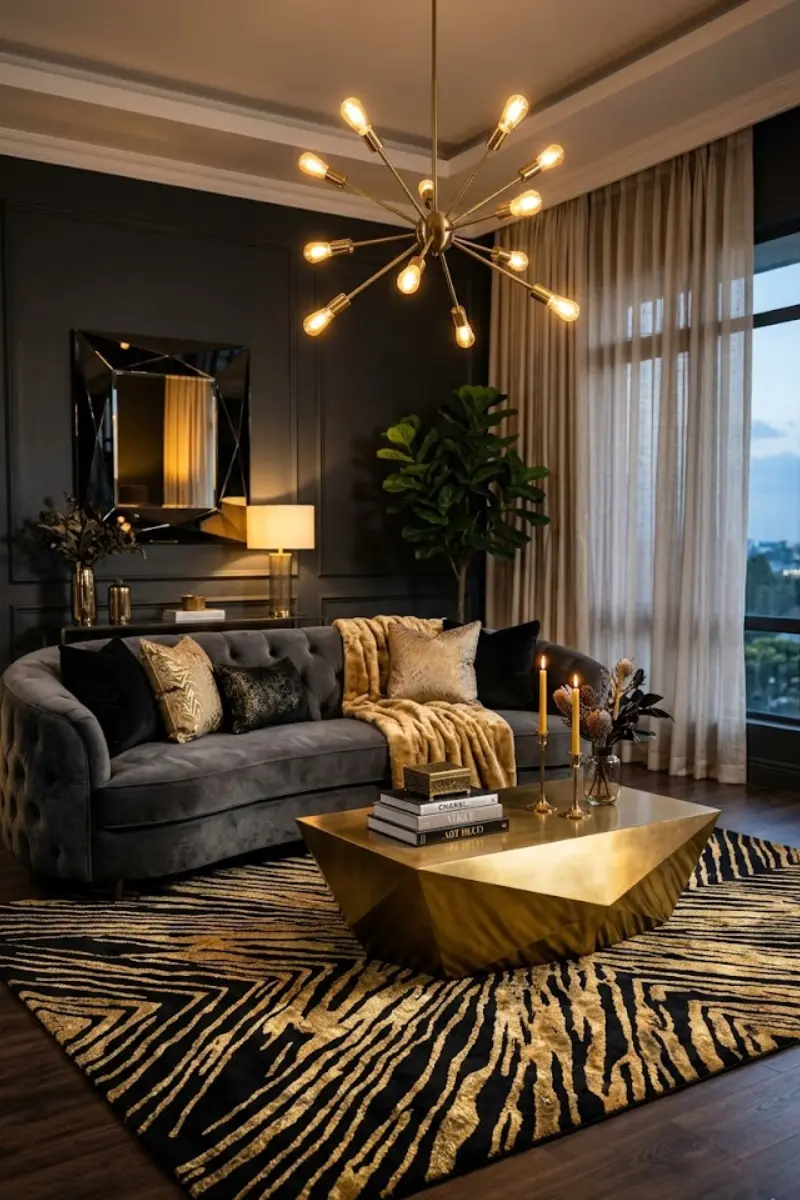
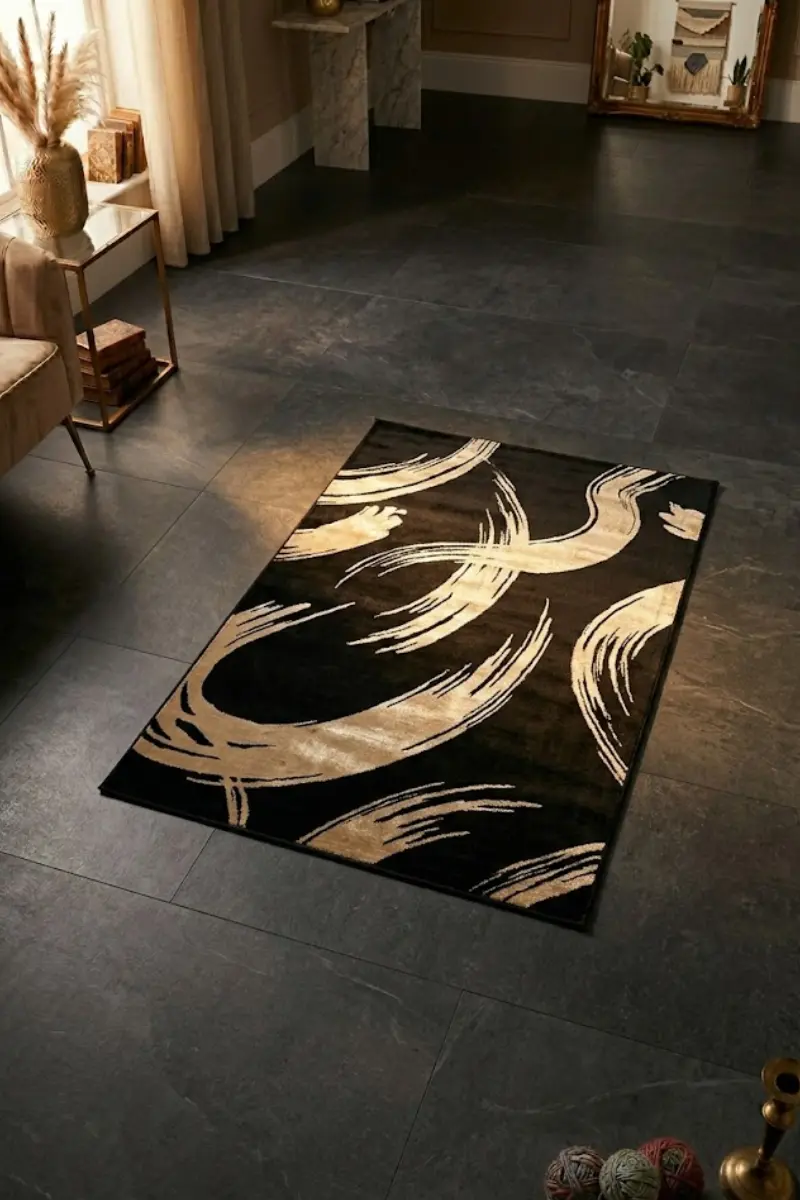
$150–$620+Luxury Glam rugs lead with metallic pattern, high pile, or both. Ivory and gold trellis, black and gold abstract, and blush velvet shag are the core moves. Pile height 1 inch or above, with viscose or high-twist polypropylene for that silky sheen.
Shop Luxury Glam Rugs & Carpets →
Modern Minimalist
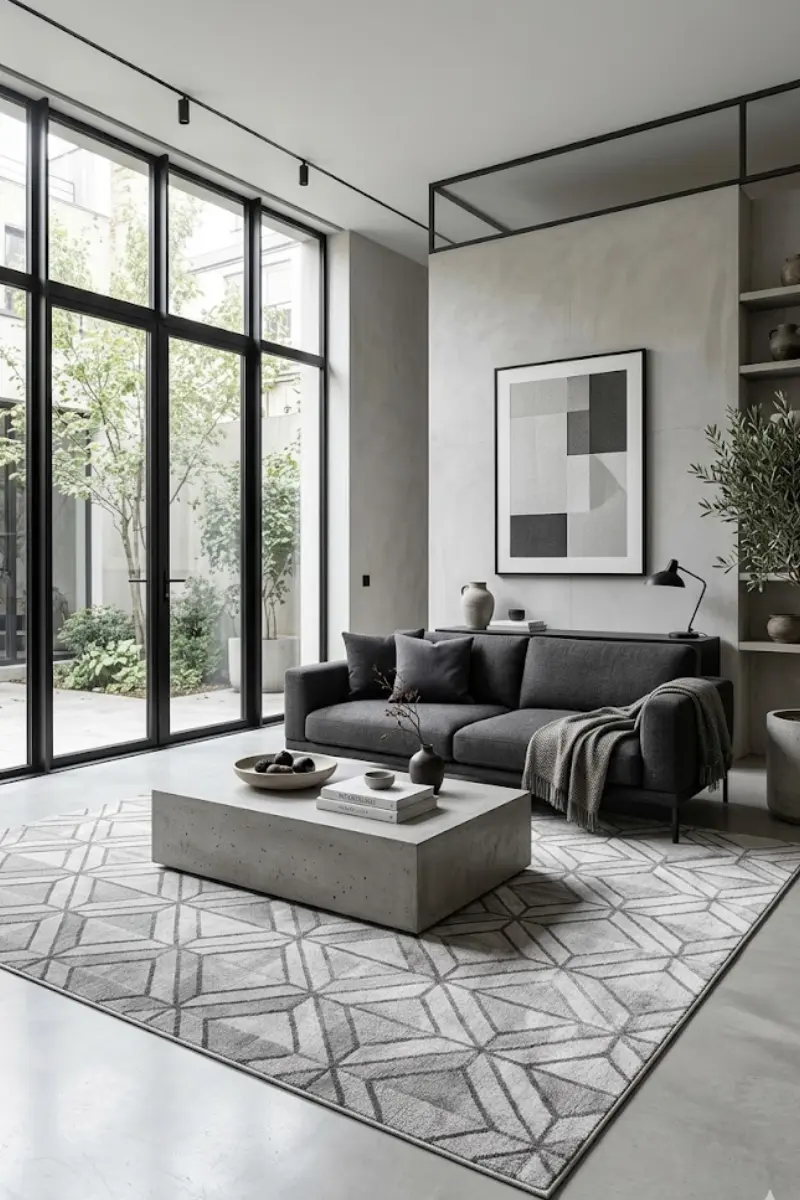
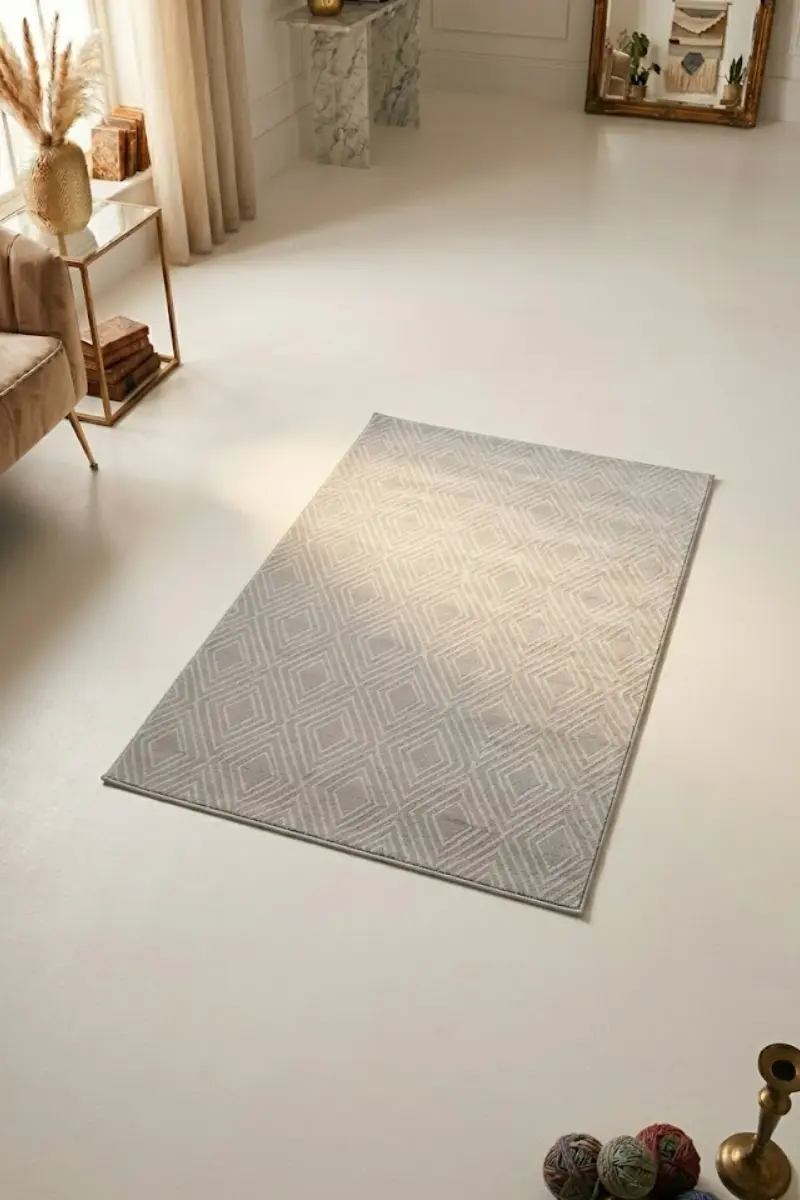
$65–$299Minimalist rugs are about restraint in pattern and precision in scale. Silver grey geometric, cream abstract, and solid low-pile rugs in warm neutrals. The rug should disappear into the room and make everything around it look more considered.
Shop Modern Minimalist Rugs & Carpets →
Boho Eclectic
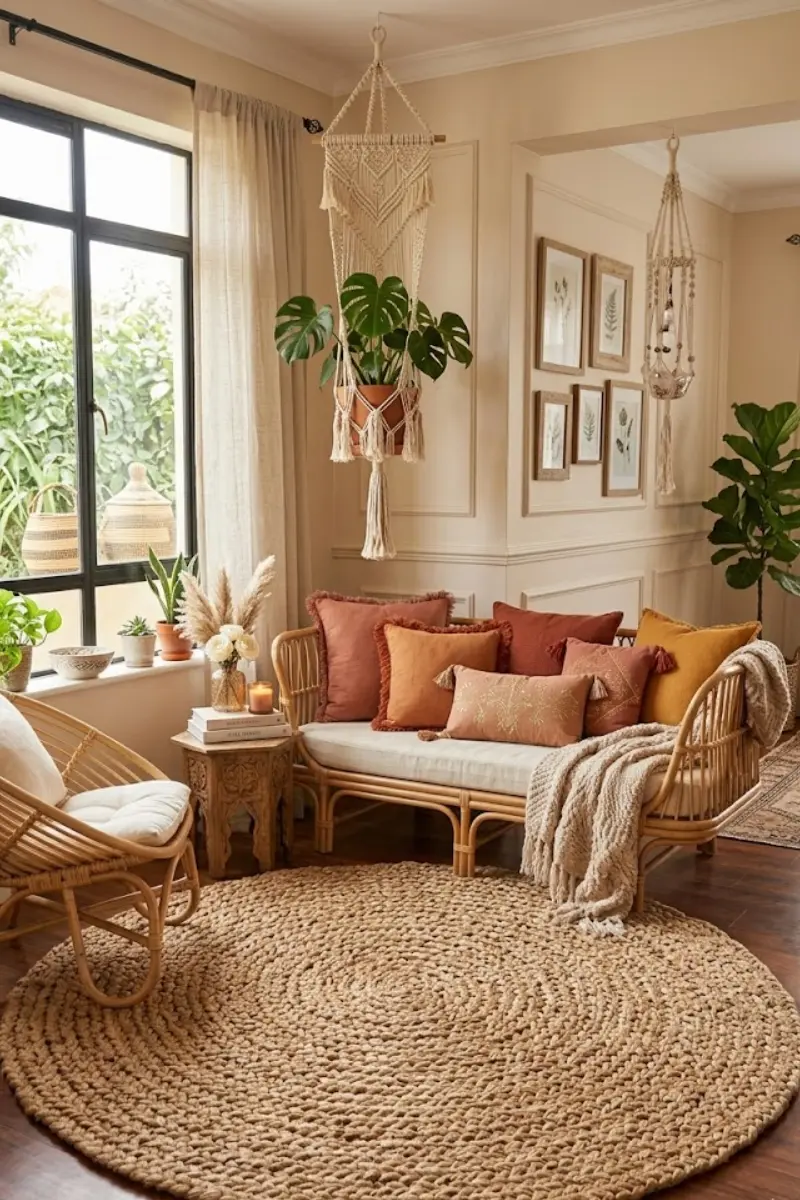
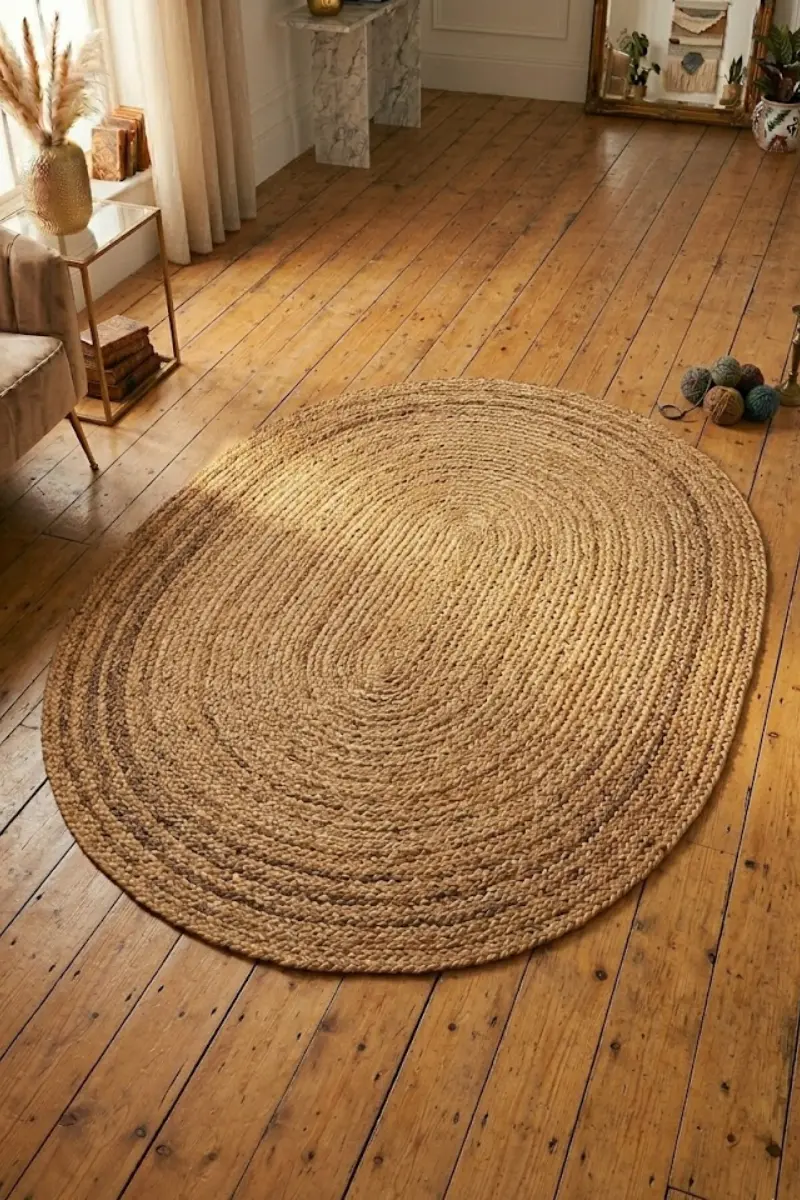
$69–$299Boho rugs are built on natural fibres, earthy tones, and woven texture. Jute braided, Moroccan trellis in dusty rose, and hand-knotted flatweaves are the foundation. Layering a smaller fur or kilim piece over a large jute base is the signature Boho move.
Shop Boho Eclectic Rugs & Carpets →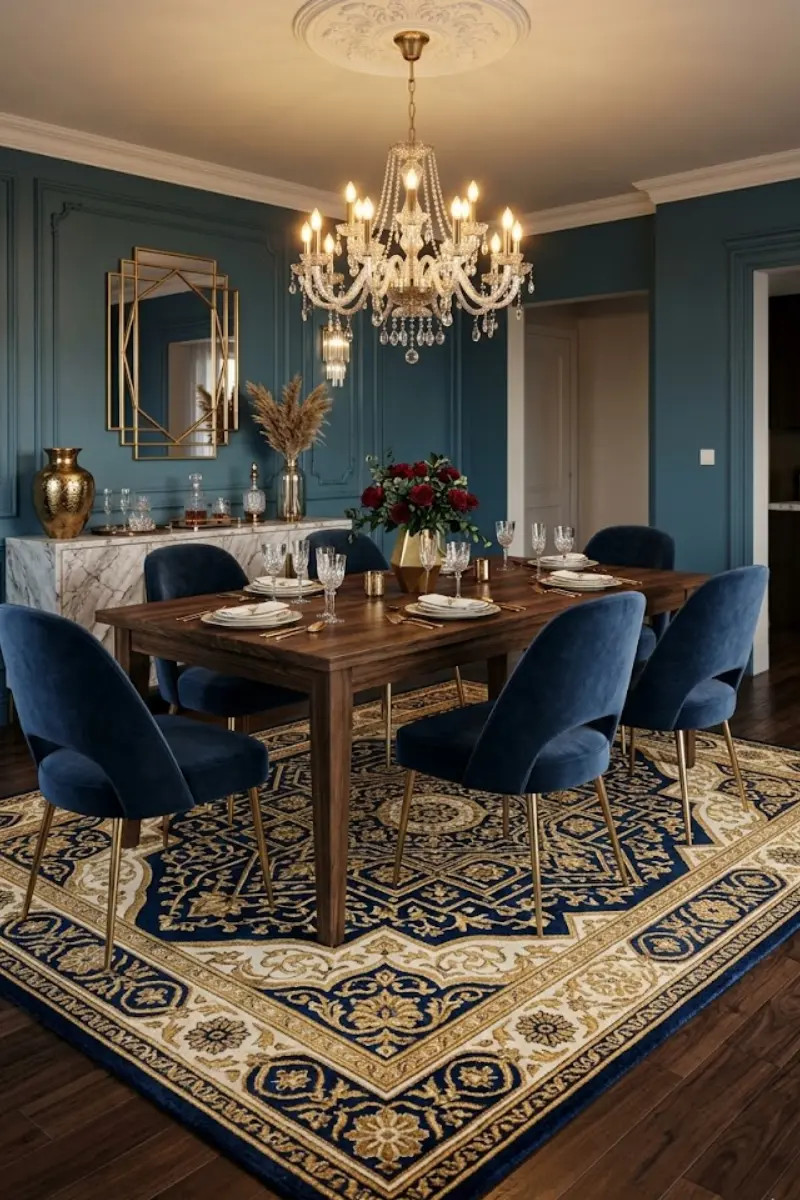
Art Deco
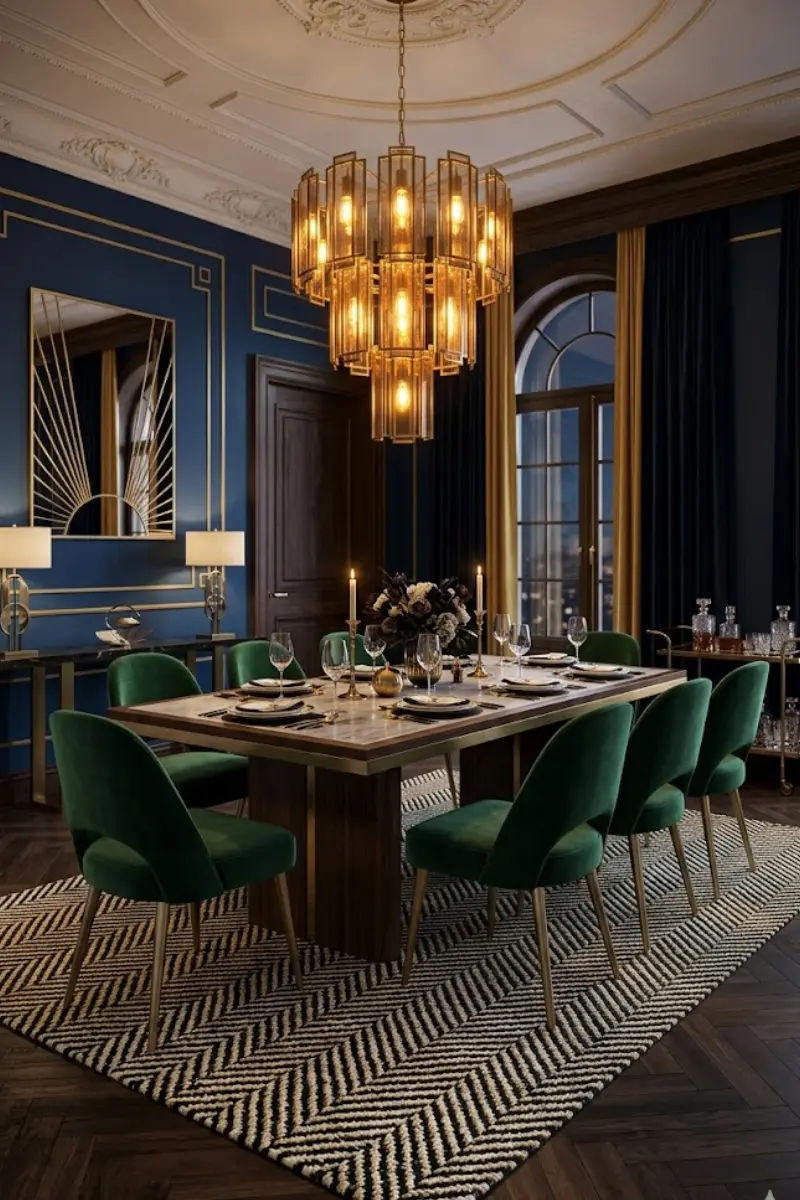
$380–$580+Art Deco rugs are bold in geometry and rich in contrast. Navy and gold medallion, black and champagne chevron herringbone, and sunburst patterns in wool are the signatures. Wool construction at this price point gives you a pattern that stays crisp for years.
Shop Art Deco Rugs & Carpets →
Coastal
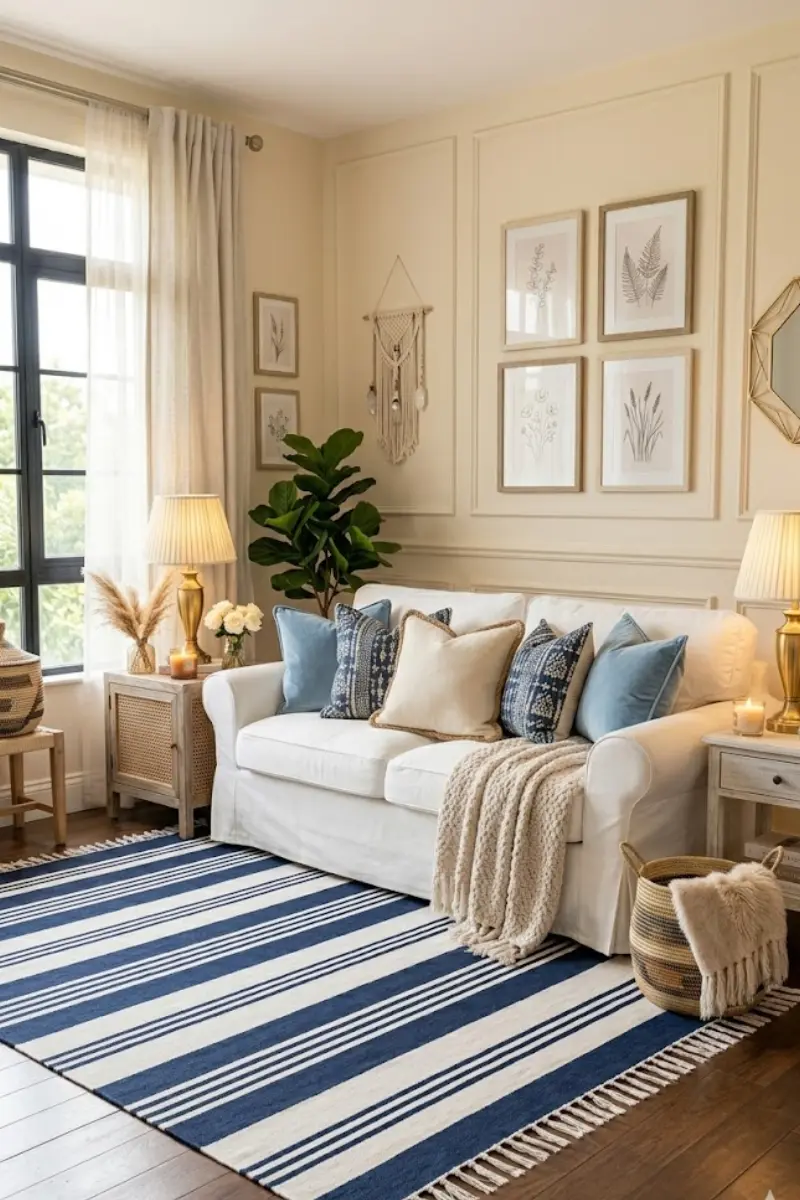
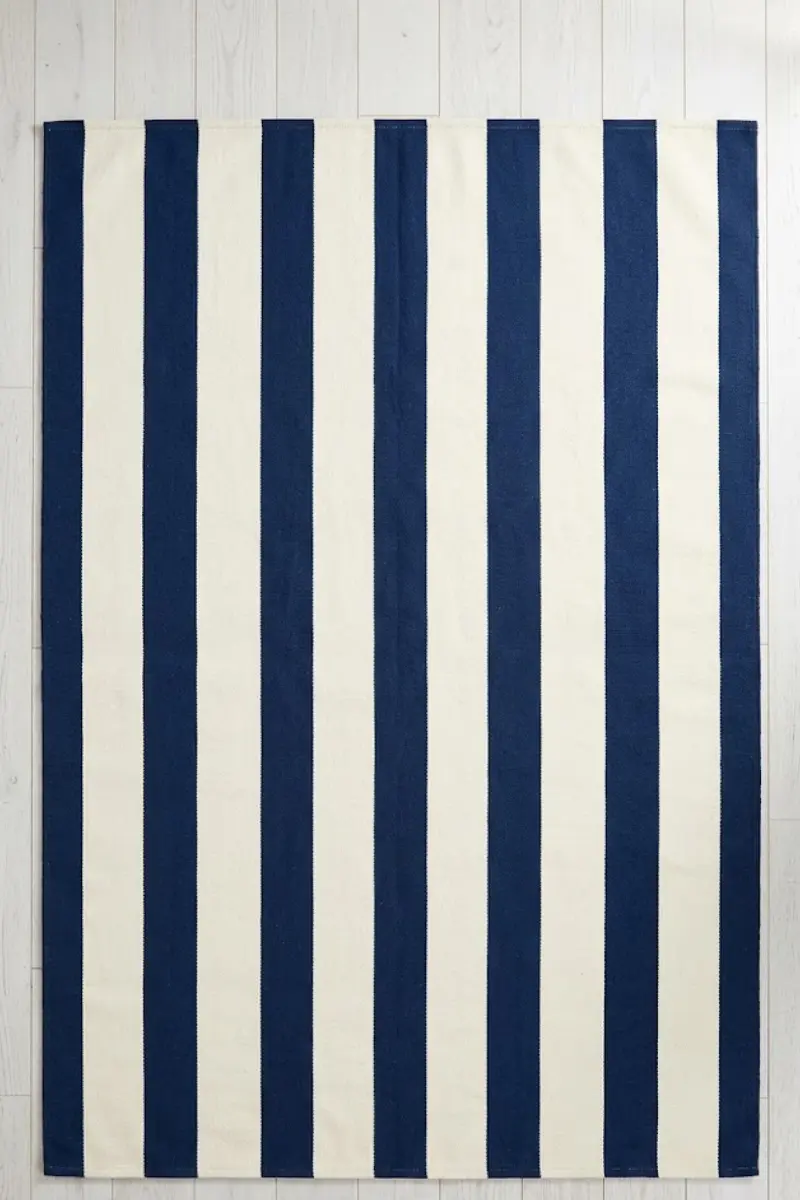
$65–$175Coastal rugs keep it casual and light. Navy and white stripe cotton flatweave is the classic. Natural jute and sea grass weaves bring the texture of the shore indoors without any effort. Pattern stays simple, stripe or solid, because the room does the work.
Shop Coastal Rugs & Carpets →
Rustic Farmhouse
$69–$199Farmhouse rugs are built to look lived-in from day one. Large-scale jute braided rounds, cotton stripe flatweaves in cream and tan, and distressed wool kilims fit the aesthetic. The whole point is warmth without formality.
Shop Rustic Farmhouse Rugs & Carpets →
Scandinavian
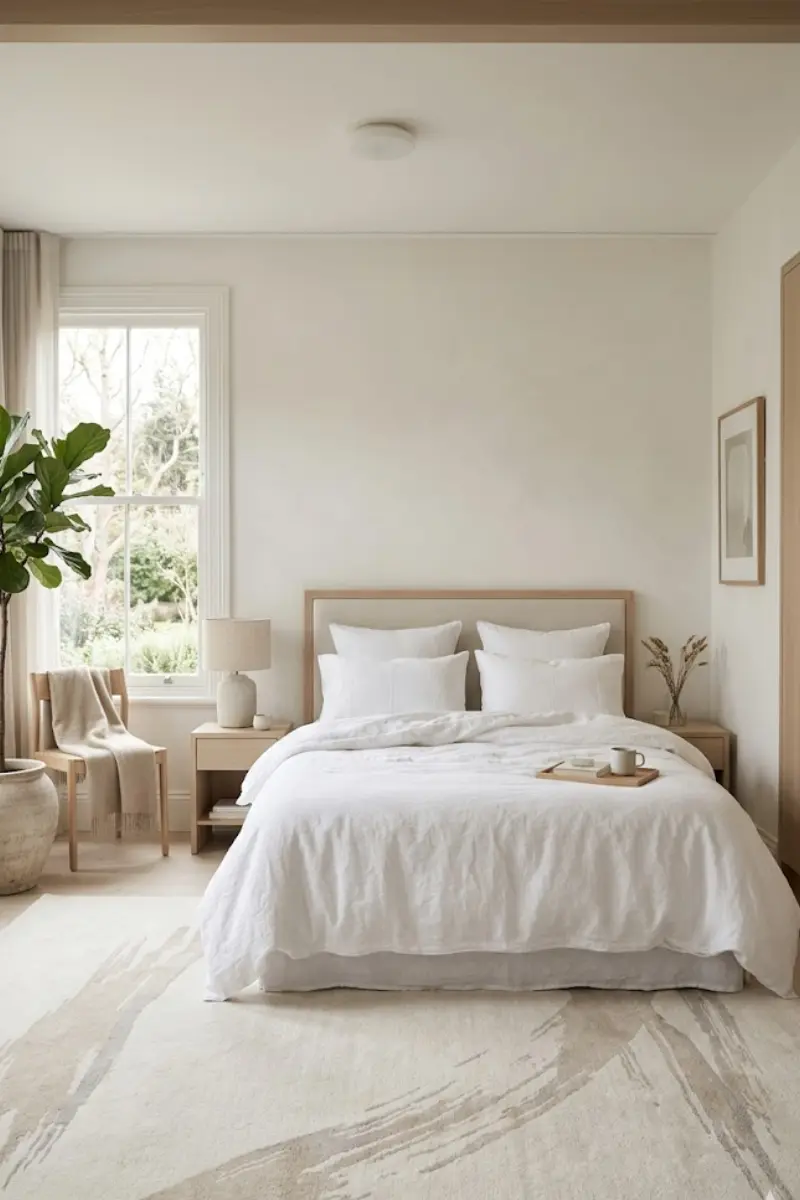
$65–$269Scandi rugs are quiet. Cream abstract, pale grey geometric, and white flatweave with minimal pattern are the go-tos. Pile is low to medium. Nothing that competes with the calm of the room. The rug should feel warm but not decorative.
Shop Scandinavian Rugs & Carpets →
Traditional
$199–$580+Traditional rugs lean into heirloom pattern and rich colour. Medallion designs, Persian-inspired florals, and wool construction with deep jewel tones, navy, burgundy, forest green, are the hallmarks. These are rugs designed to anchor a formal room for decades.
Shop Traditional Rugs & Carpets →
Industrial
$79–$420Industrial rugs keep contrast high and texture low. Black and gold abstract, charcoal geometric flatweaves, and concrete-toned low-pile rugs sit well against exposed brick and metal. Pattern is graphic rather than ornate. The rug has to hold its own in a hard-edged room.
Shop Industrial Rugs & Carpets →Rugs & Carpets by Room
The right rug spec changes by room. Living rooms need durability, bedrooms need softness, and entryways need flat pile or you will trip every morning.
Bedroom
Best choice: Go high-pile shag or velvet pile. This is the one room where softness wins over durability. Blush, ivory, or champagne tones complement most glam bedroom colour palettes without competing.
See all for Bedroom →
Living Room
Best choice: Choose a pattern-forward rug, trellis, abstract, or geometric, that can carry the room when the sofa is neutral. A 9x12 works for most living rooms; size up to 10x14 if you have a sectional.
See all for Living Room →
Dining Room
Best choice: Flatweave or low-pile only in the dining room. Chair legs catch on high pile and the constant friction destroys the fibres within months. A wool or polypropylene flatweave survives the traffic and cleans easily.
See all for Dining Room →
Bathroom
Best choice: Small accent rug, 2x3 or round 3-foot diameter, beside the tub or in front of the vanity. Choose cotton, chenille, or microfibre for easy washing. Avoid jute in bathrooms, moisture destroys natural fibre.
See all for Bathroom →
Home Office
Best choice: Low pile flatweave or tight-loop polypropylene under the desk chair. High pile catches on chair casters and you will fight it every time you roll back. The rug can still be beautiful; it just needs to be practical.
See all for Home Office →
Entryway
Best choice: Flatweave runner or low-pile accent rug only. This is the highest traffic zone in the home and pile will compress and mat within weeks. A durable polypropylene or jute flatweave can look just as intentional.
See all for Entryway →Top Picks: Bedroom
Rug Sizing Guide
The most expensive rug in the store looks cheap if it is the wrong size for the room. Measure before you browse.
Rug Materials Guide
The material determines everything about how a rug ages. Pile recovery, stain resistance, and whether it still looks expensive five years from now.
Wool
Polypropylene (Olefin)
Viscose and Bamboo Silk
Jute and Sisal
Faux Fur and Velvet Pile
What Signals Quality
- Turn the rug over. A dense, tight backing with no light passing through means high pile density and durability
- Knot count for wool rugs: 100 KPSI (knots per square inch) is entry-level hand-knotted; 200+ is investment grade
- Pile height listed explicitly in the product description. Reputable sellers always include this
- Weight in grams per square metre (GSM) for synthetic rugs. 2,000 GSM and above indicates a dense, durable construction
- Latex-free backing. Natural fibre latex backing ages better and off-gases less than PVC alternatives
Care + Maintenance
Vacuuming high-pile and shag rugs
Spot cleaning spills
Wool rug care
Wool rugs shed for the first few months, this is normal and not a quality defect. Vacuum regularly to remove loose fibres. Professional clean every 18–24 months for high-traffic placements. Spot clean only with cold water and a wool-safe cleaner.
Rotating for even wear
Keeping corners flat
Pile Height, Knot Count, and What Actually Matters
Most buyers focus entirely on colour and pattern and completely ignore pile construction. Which is actually what determines whether a rug is worth buying.
Pile height
Pile height is measured in inches or fractions of an inch and tells you how tall the fibres are above the backing:
- Low pile - 0.25 inches or less: durable, easy to clean, no snag
- Medium pile - 0.25 to 0.75 inches: the most versatile range, works in almost any room
- High pile - above 0.75 inches: the shag and fluffy textures that feel most luxurious, but need more care and lower traffic
Pile density
Hand-knotted vs hand-tufted vs machine-made
What the label 'power-loomed' means
Price Guide: Every Budget
In rugs, price buys pile density and knot count. The difference between a rug that stays plush for a decade and one that flattens in six months.
At this level you are buying hand-knotted or hand-tufted wool, often with a knot count above 150 KPSI. Pattern depth, colour saturation, and pile recovery are noticeably superior. These rugs are designed to be passed down.
View More Details →
The serious buyer's range. Quality wool blends, dense polypropylene constructions, and machine-made viscose pieces that hold their look for 5 to 10 years with normal care. This is where most of the glam catalogue lives.
View More Details →
Solid polypropylene area rugs in this range are genuinely good value. Pattern variety is strong, stain resistance is built in, and the construction is dense enough for living rooms. This is the right entry point for a first home or a rental.
View More Details →
Accent pieces only at this price. A 2x3 jute flatweave or faux fur bedside rug works well. A full-room area rug under $50 will flatten within three months and look cheap from day one.
View More Details →Frequently Asked Questions
What size rug do I need for a living room?
What size rug goes under a king bed?
What is the best rug material for high traffic areas?
How do you stop a rug from slipping on hardwood floors?
Can you layer rugs?
How do I choose a rug colour for a neutral room?
What pile height is best for a bedroom?
How often should you clean an area rug?
What rug works best for a dining room?
Are expensive rugs worth it?
Shop by Room
Looking for rugs & carpets for a specific room? Browse our dedicated room guides:
Ideas & Inspiration
No rug is labeled coastal and jute at once, but jute's natural texture is exactly what …
Read guide →
Scandinavian rugs go quiet and low-pile; boho rugs go textured and warm-toned. The answer …
Read guide →
A rubber or felt-rubber rug pad stops most sliding on hardwood. Grip tape and corner …
Read guide →