The one method behind every room that just works, whatever your style. The palette formula, the five layers, the proportions and a versatile starter set, yours free.
You'll get How to Style Any Room, free, by email.
Bedding & Linens: The Complete Buying Guide
Everything you need to know about choosing luxury bedding. Duvet covers, sheets, pillowcases, throws, and how to layer a bed like a hotel designer.
The bedroom is the most personal room in your home.
And the bed is its centrepiece.
You spend a third of your life in it.
Getting your bedding right isn’t a luxury, it’s an investment in your daily quality of life.
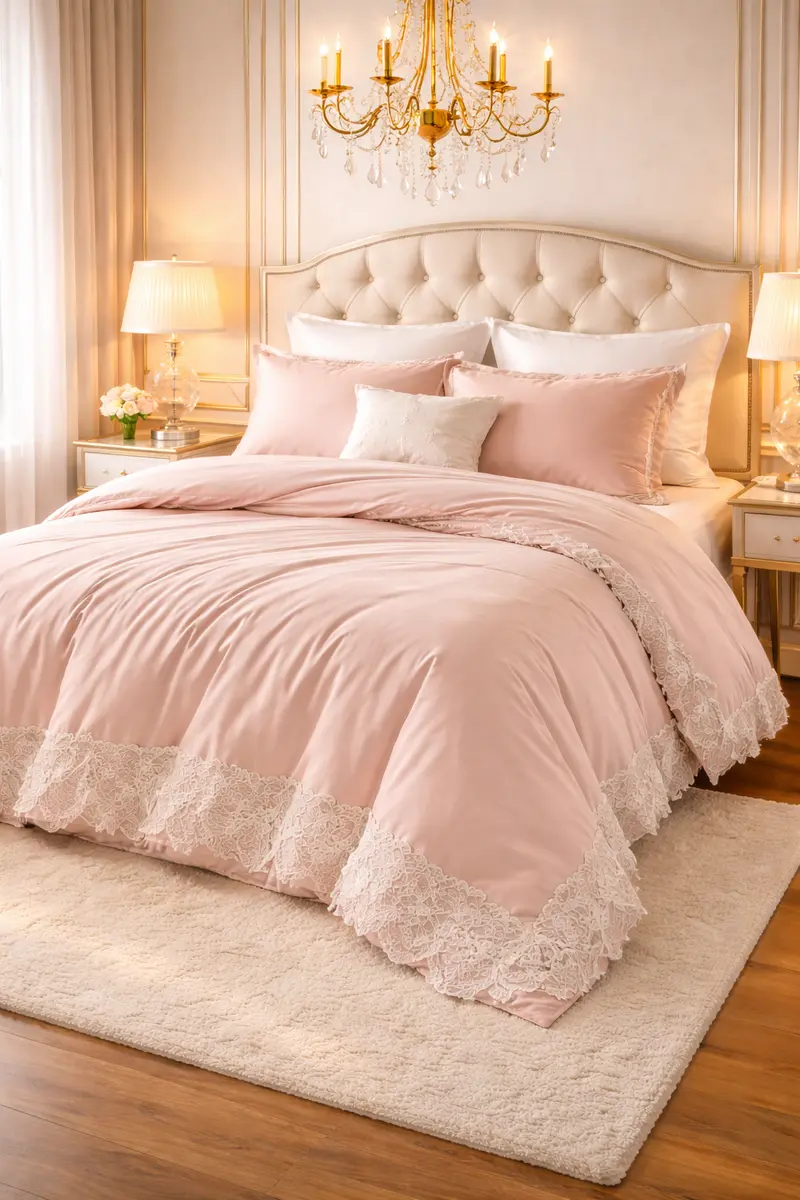
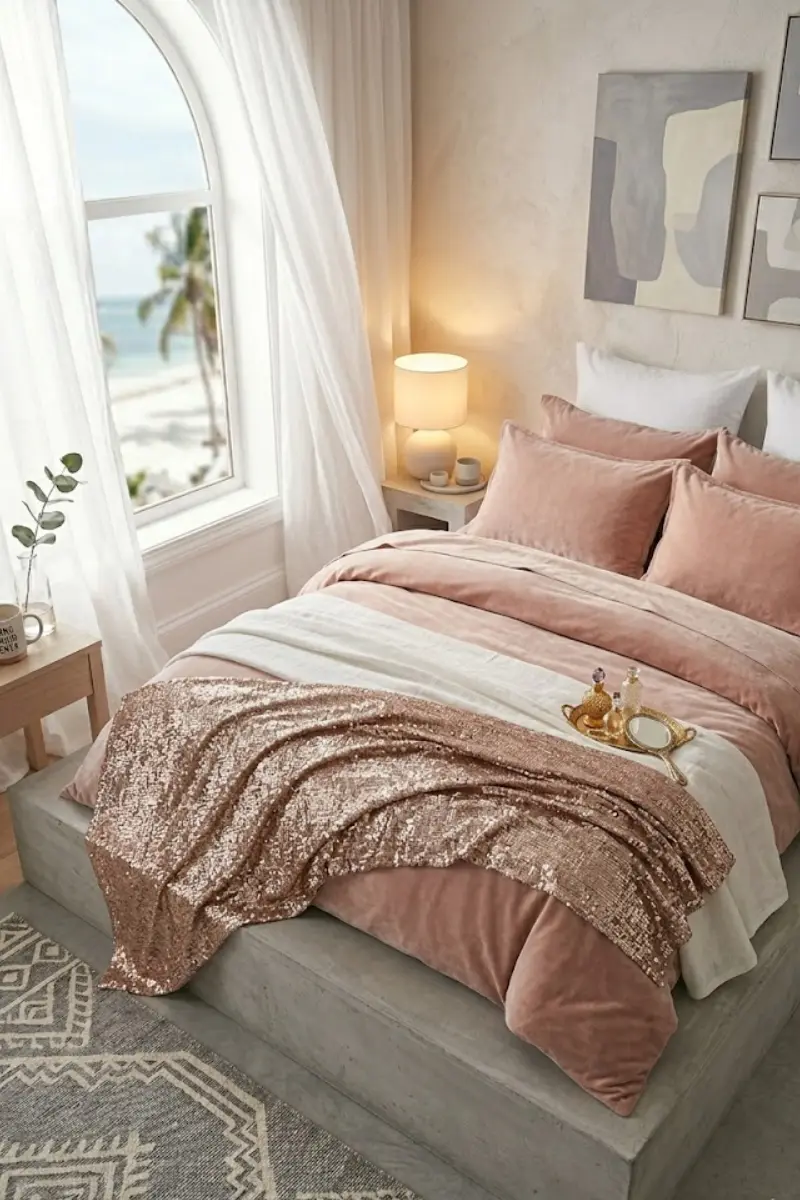
For glam interiors, the bed is the ultimate styling canvas.
Layer these together for the look:
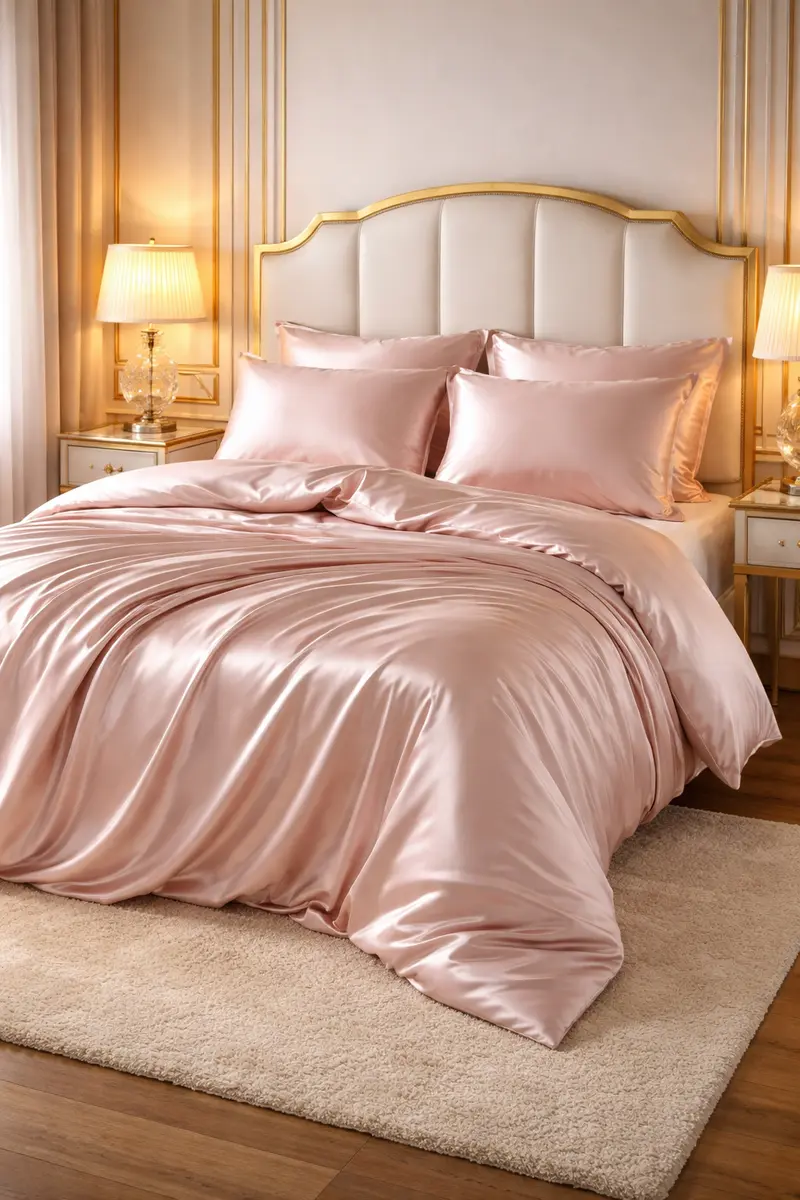
Satin pillowcases
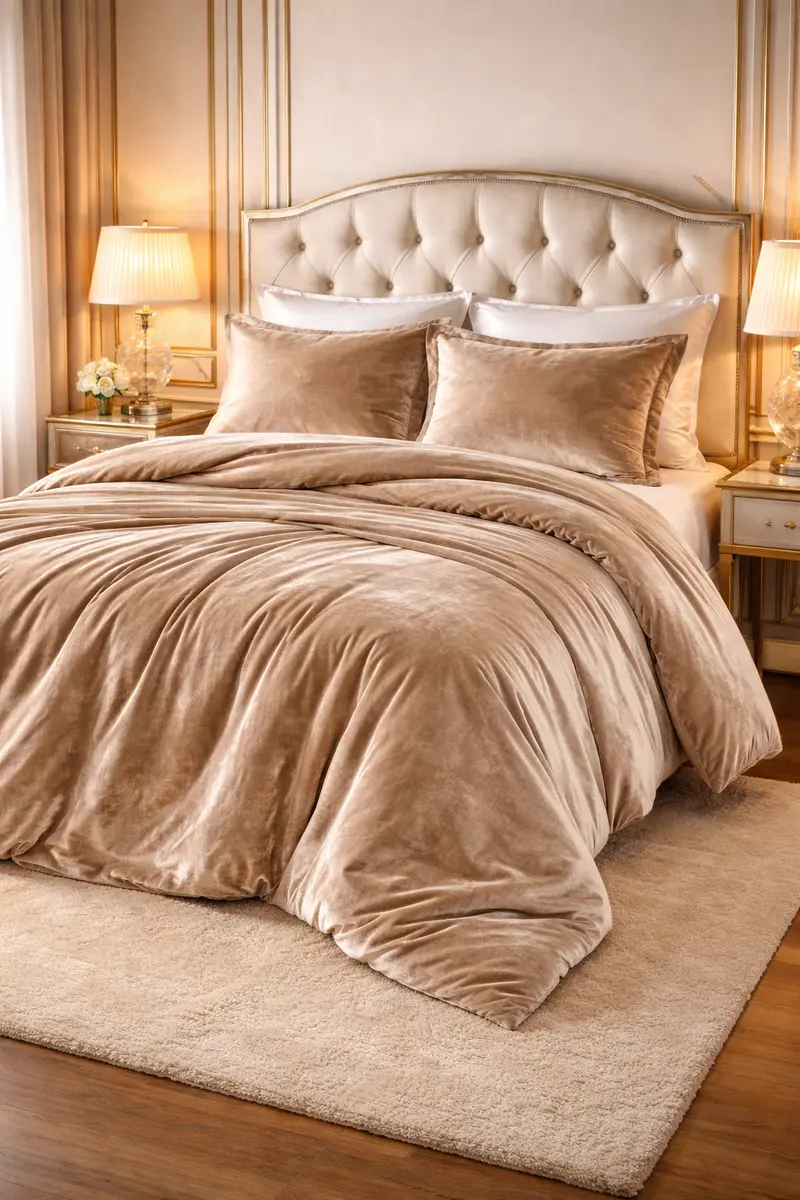
A velvet duvet cover in deep champagne
Euro shams stacked at the headboard
A chunky knit throw draped at the foot
This is the five-star hotel aesthetic, achievable at home without a five-star budget.
This guide covers everything.
The types of bedding available, how to choose the right materials, how to layer a bed like a professional stylist, and how to care for what you buy.
⭐
Must-Have
Short on time? Start with a satin pillowcase set (see Featured Products above). It’s the single cheapest, fastest upgrade in this whole guide, and the one most likely to improve your hair and skin overnight.
Types of Bedding & Linens
Bedding is bought in layers, and most beds that look unfinished are missing a layer rather than needing a better version of the one they already have. Work out which layer is missing before you shop.
Duvet Covers
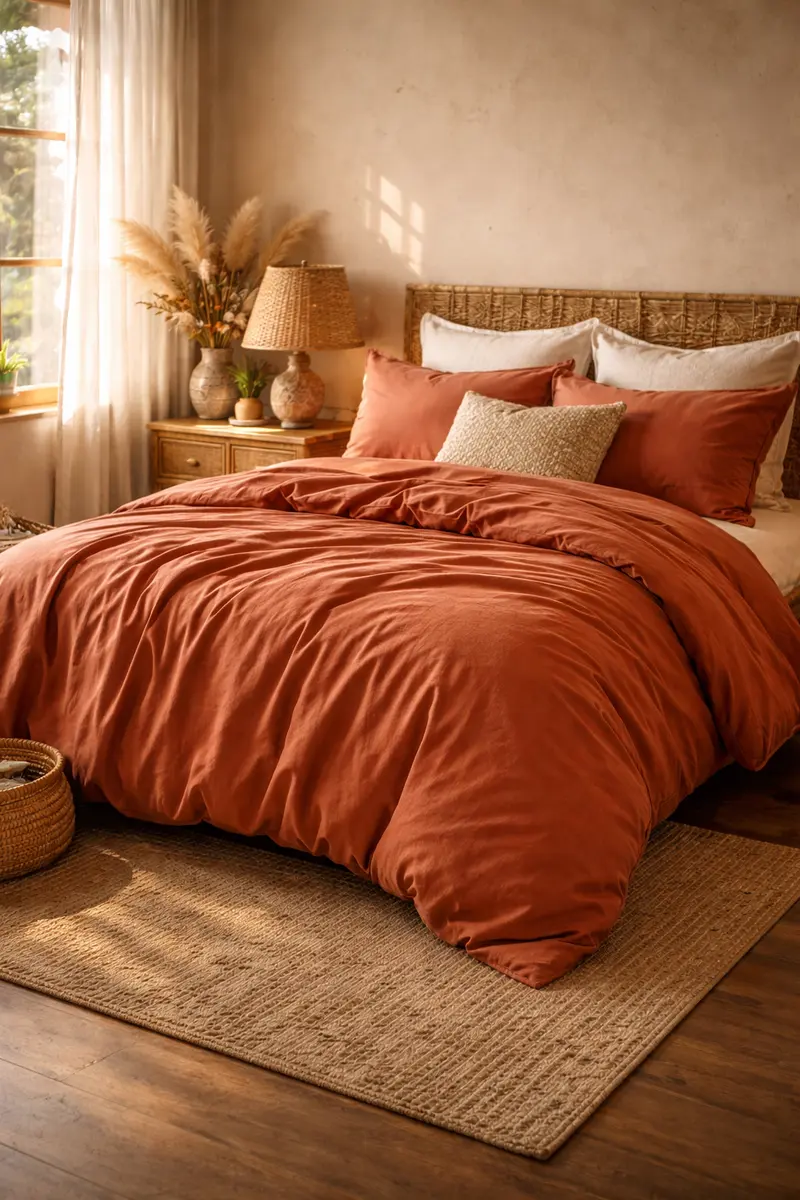
A removable cover for your duvet insert, the most important bedding piece. Sets the entire look and feel of your bedroom. Available in cotton, linen, velvet, and satin. Choose carefully, you'll look at it every day.
Best for:All bedrooms. The foundation of any bedding setup
Sheet Sets
Fitted sheet, flat sheet, and pillowcases sold together. Thread count matters but weave matters more. Percale for crisp cool feel, sateen for silky soft warmth. 400+ thread count sateen is the luxury standard.
Best for:All bedrooms
Pillowcases
Often overlooked but hugely impactful. Satin and silk pillowcases reduce hair frizz and skin creasing. Decorative euro shams add hotel-style layering depth to any bed.
Best for:All bedrooms. Especially beauty-conscious sleepers
Throw Blankets
Decorative blankets draped at the foot of the bed or over a reading chair. Chunky knit throws are the signature glam bedroom accessory. They add texture, warmth, and instant cosiness.
Best for:Bedroom foot of bed, sofas, reading chairs
Bed Runners
A narrow strip of decorative fabric laid across the foot of the bed. Used in hotel-style bed dressing to add a layer of colour and texture without a full throw.
Best for:Bedrooms aiming for a hotel aesthetic
Quilts & Coverlets
Lighter than a duvet, quilts and coverlets sit on top of the bed as a decorative layer. Perfect for warmer climates or as an additional layer in the hotel-style bed.
Best for:Warm climates, layered bed dressing, guest rooms
Shop Bedding & Linens
Filter by room and style to see the sets that suit the bed you actually own, including depth and finish rather than colour alone.
Bedding is the one thing in the house you are in contact with for eight hours a night, so the specifications worth checking are the ones you feel, not the ones printed largest on the packaging.
Weave decides how the bed feels, thread count does not
Percale is a plain one over one under weave. It feels crisp and cool, the way a good hotel bed does, and it softens with washing without ever turning slippery. Sateen floats more threads on the surface, which is what produces the faint sheen and the warmer, silkier hand.
Pick the weave first:
Percale if you sleep hot or you like a crisp bed
Sateen if you want drape, sheen and a warmer feel
Linen if you want texture and do not mind creases
Thread count only starts to mean anything once the fibre and the weave are settled. For cotton, 200 to 600 covers everything worth owning.
Match the cover to the insert, then check the depth
A duvet cover has to match its insert or the filling migrates to one end and the bed looks lumpy however well it is made. If you want that deep, full hotel look, size the insert up rather than the cover.
Fitted sheets are where most sets quietly fail. Mattresses have got deeper, and a sheet cut for a 10 inch mattress will pop off a 14 inch one every single night. Look for the pocket depth stated in inches. If the listing does not state it, assume it is shallow.
Buy the layer that is missing, not another duvet
Most beds that look flat already have a perfectly good duvet. What they are missing is the layer on top: a coverlet, a quilt, or a throw folded across the foot. That layer is what creates the depth you see in a styled bedroom, and it costs a fraction of replacing the whole set.
Spend where your skin actually touches
If the budget is tight, put it into the sheet set rather than the decorative top layer. You feel the sheets all night and you see the coverlet from the doorway. Good sheets under a modest duvet beat an expensive duvet over scratchy sheets every time.
Natural fibres hold colour, synthetics hold heat
Cotton and linen breathe and take dye deeply, so the colour stays true through repeated washing. Microfibre is cheap and convincingly soft in the shop, but it traps heat and pills at the friction points inside a year. In a bed you actually sleep in rather than photograph, that gap shows up fast.
Red Flags to Avoid
A thread count above 1000 on anything microfibre or polyester. Cotton cannot reach it at single ply, so the number is counting plies rather than threads
No fibre content anywhere in the listing. If they will not say what it is made of, it is made of the cheap thing
No pocket depth given for a fitted sheet. Modern mattresses are deep and a shallow sheet pops off nightly
Silk-like, satin finish or silk touch at a silk price. Every one of those phrases describes polyester
A single styled photograph with no close-up of the weave or the trim
No care instructions at all. Velvet and satin both fail fast when washed hot, and a seller who skips this has not thought about year two
Bedding & Linens by Style
The same duvet reads completely differently depending on its finish. A blush satin cover reads polished, a washed linen in exactly that shade reads relaxed, and the fabric is doing that work, not the colour.
Luxury Glam
$45–$400 per set
Satin, velvet, and faux silk in ivory, champagne, blush, or jewel tones. Layered with multiple pillows, a chunky throw, and a bed runner. The hotel suite aesthetic at home.
A primary bedroom, a guest room and a child's room want different things from bedding. Drape, durability and how easily it washes are not equally important in all three.
Bedroom
Best choice: Start with a quality fitted sheet (400+ thread count sateen), add a duvet cover in your chosen style, layer with decorative euro shams, standard pillowcases, and finish with a throw at the foot.
Placement:
Hotel method: fitted sheet, flat sheet tucked tightly, duvet cover, 2–4 standard pillows, 2 euro shams behind, decorative pillows in front, throw folded at foot.
A surprising amount of bedding disappointment is a sizing problem wearing a quality problem's clothes. These are the numbers worth checking before you buy.
Duvet cover to insert
Same size, or size the insert up one for a fuller drape
Fitted sheet pocket depth (modern mattress)
14 to 18 inches, deeper again for a pillow top
Flat sheet overhang each side
12 to 18 inches so it tucks without pulling free
Standard pillowcase
20 x 26 inches, king pillowcase 20 x 36 inches
Throw at the foot of the bed
50 x 60 inches minimum to drape both sides
Coverlet coverage
Covers the top of the bed only, it is not meant to reach the floor
Bedding Materials, and What Each One Is Good At
Fibre sets the ceiling on how a bed feels and how long it lasts. Everything after that is finish.
Long-staple cotton vs ordinary cotton
Staple length is simply how long each individual cotton fibre is. Longer fibres spin into smoother, stronger yarn with fewer loose ends, which is why long-staple cottons such as Supima and Egyptian resist pilling and grow softer instead of thinner. A listing that says only 100% cotton is telling you nothing about staple length, and staple length is the part that decides how it ages.
Percale, sateen, and the sheen question
Both are usually cotton. The difference is entirely the weave. Percale is matte and crisp, sateen is smooth with a soft lustre. If you want a bed that catches lamp light in the evening, sateen and satin will do it and percale never will, at any price.
Velvet, satin and jacquard
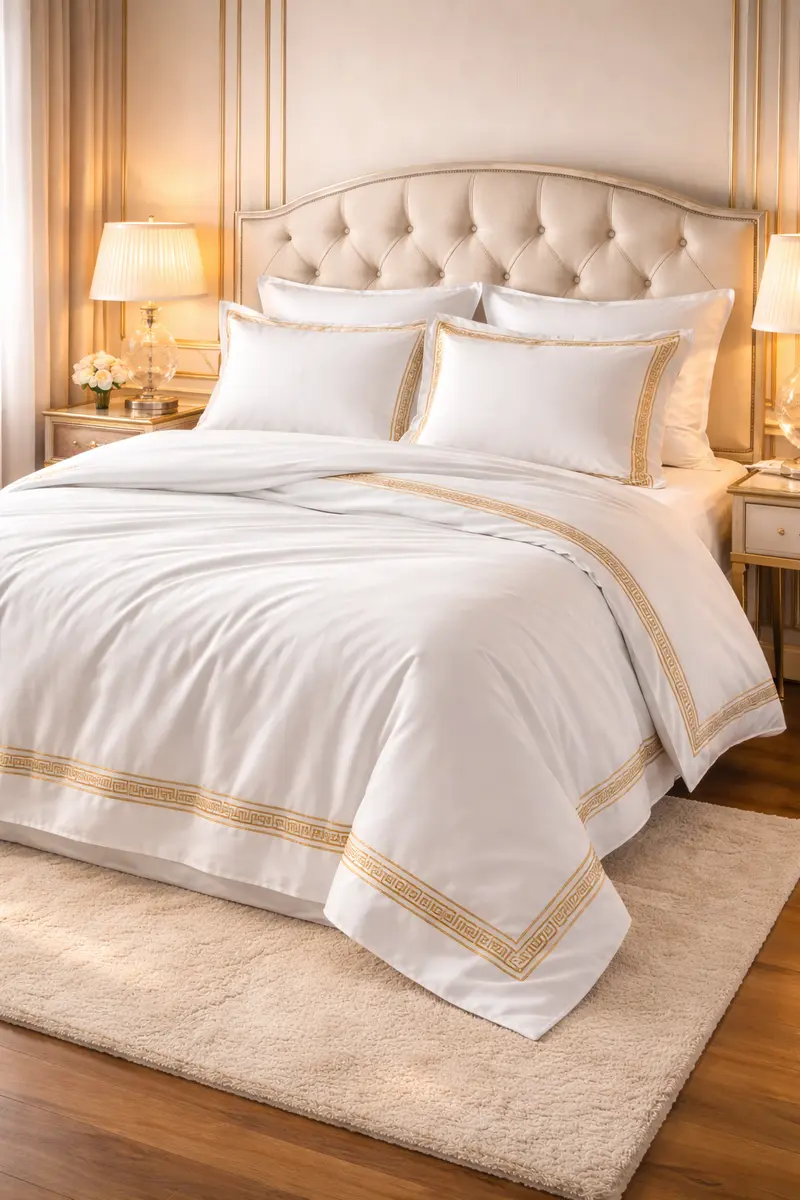
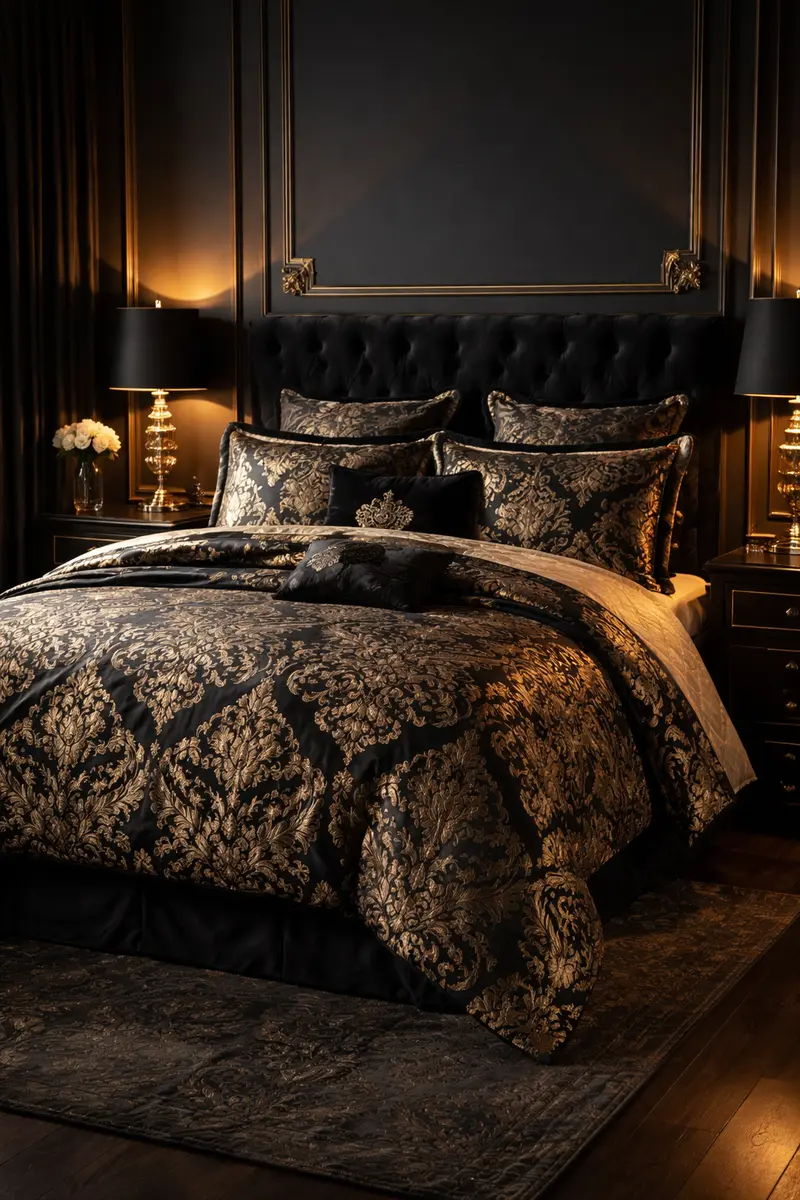
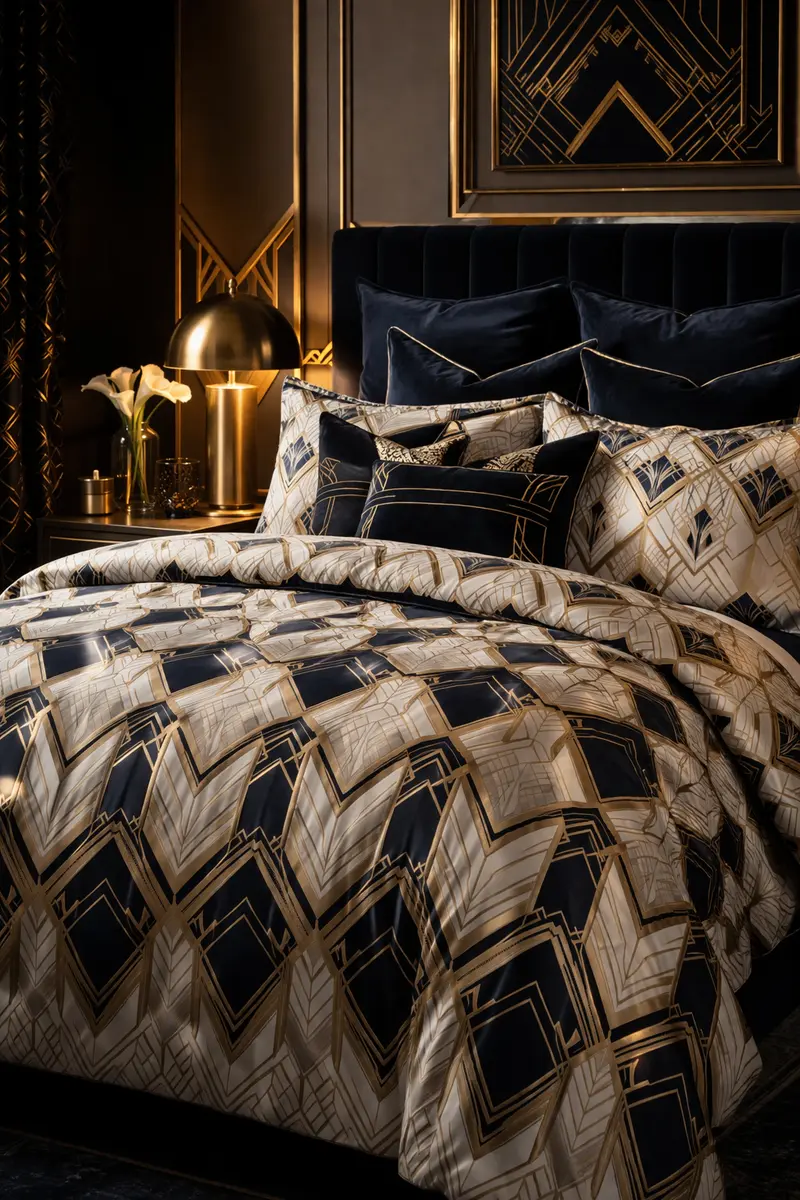
These are the fabrics that read as expensive rather than merely soft. Velvet has genuine weight and pools when it drapes. Jacquard has its pattern woven in rather than printed on, so it will not crack or fade the way a print eventually does. Satin delivers sheen well below the price of silk, and for a decorative top layer that is usually the right trade.
Linen, and why it creases
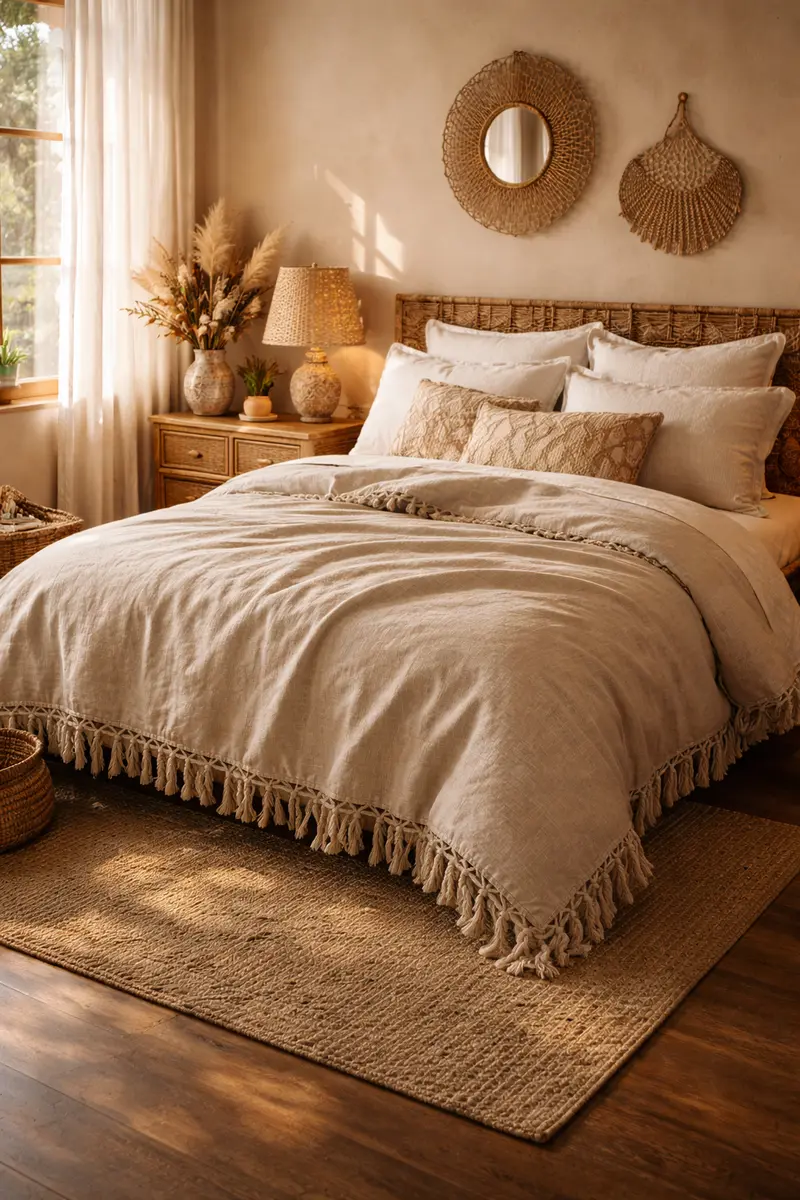
Linen is a thicker, less uniform fibre than cotton, so it never presses flat and it softens with every wash instead of wearing out. If crumpled reads as relaxed to you, it is the best long-term buy on this page. If it reads as unmade, avoid it completely, because no amount of ironing wins that argument.
What Signals Quality
The fibre is named specifically, such as long-staple, Supima or Egyptian cotton, rather than just cotton
The weave is named, percale or sateen, rather than described only as soft
Pocket depth for the fitted sheet is given in inches
Thread count sits between 200 and 600 for cotton, with single-ply stated
GSM or weight is quoted for velvet, quilts and throws
An OEKO-TEX or equivalent certification is listed for the dyes and finishes
Keeping Bedding Looking New
Washing without killing the sheen
⚠️
Heads Up
Heat is what strips sheen. Satin and sateen go dull, and velvet flattens in a way it never fully recovers from.
Cold wash, low or no heat in the dryer, and keep bedding away from zips and hooks in the same load. Skip fabric softener on cotton: it coats the fibres, which makes sheets feel briefly softer and considerably less absorbent over time.
Keeping ivory and white actually white
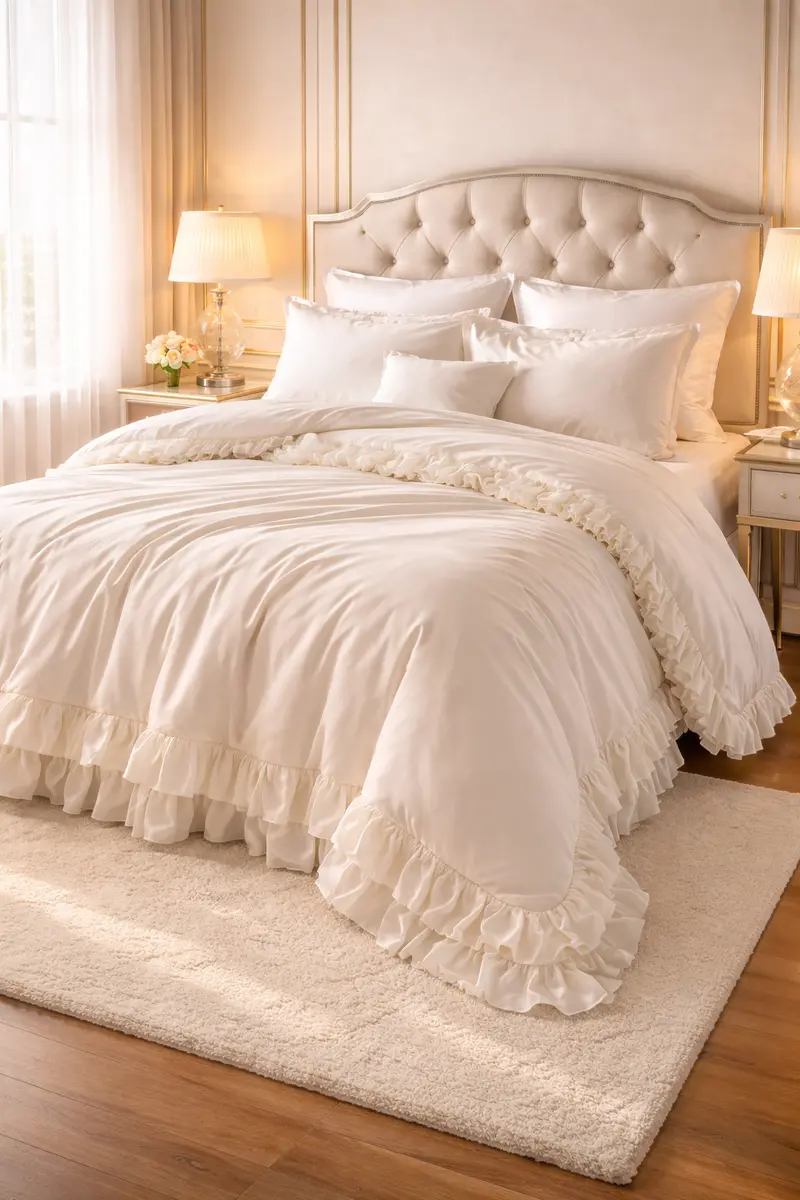
Wash whites separately, and often enough that body oils never get a chance to build up, because yellowing comes from oils oxidising rather than from dirt. Sunlight is the gentlest brightener there is. Chlorine bleach is not: it weakens cotton fibres and can push a warm ivory towards yellow rather than white.
Storing the layers you swap seasonally
Store bedding clean, completely dry, and in cotton rather than plastic. Plastic traps moisture against the fibre, and that is what creates the musty smell people usually blame on the cupboard. A spare pillowcase makes a free and perfectly good storage bag for the set that matches it.
Bedding Basics
The vocabulary here is genuinely confusing, and most of that confusion comes from sellers using the words loosely.
What actually goes on a made bed
From the mattress up: fitted sheet, flat sheet if you use one, then the duvet or comforter, then a decorative top layer such as a coverlet or quilt, then pillows and a throw. A bed can look finished with any of the middle layers missing. It rarely looks finished with the top layer missing, and that is the one most people skip.
Duvet, comforter, coverlet and quilt
A duvet is an insert that needs a cover. A comforter arrives already filled and is used as it is. A coverlet is a lighter top layer that covers the top of the mattress without reaching the floor. A quilt is stitched through in layers, usually flatter and thinner than a comforter. Sellers use all four almost interchangeably, so read the description rather than trusting the product name.
Why thread count stopped meaning anything
Thread count is threads per square inch. It turned into a marketing number once manufacturers began counting each ply of a multi-ply yarn separately, so a 300 thread count fabric could be advertised as 900. That is why a 1000 count set can genuinely feel worse than a 300 count one. Single-ply, long-staple, and the name of the weave tell you far more than the number does.
Price Guide: Every Budget
Bedding spans a wide range, and the money buys something different at each level. Here is what each band actually gets you, using pieces from this range.
Under $150
Duvet covers, satin and sateen sets, and throws. You supply the insert, which keeps the price down and makes the palette easy to change later. This is the sensible first purchase and the cheapest honest way into the look, because the fabric is doing the work rather than the filling.
The fill comes with it and the fabric gets noticeably heavier: velvet comforters, lace trim, embroidered sheet sets. This is the band where a bed stops looking dressed and starts looking finished, and for most bedrooms it is the right place to spend.
The focal layer. Jacquard sets with the pattern woven rather than printed, and crystal embellished velvet coverlets. These are the pieces a bedroom gets built around, and they only make sense once the rest of the bed is quiet enough to let them lead.
Thread count is less important than weave type and fibre quality. For crisp cool sheets: 200–400 thread count percale cotton. For soft warm sheets: 400–600 thread count sateen.
Above 600 thread count is often a marketing gimmick. Manufacturers count individual fibres rather than threads to inflate the number.
Egyptian cotton and long-staple cotton at 400–500 thread count sateen outperforms 1000 thread count polyester blends.
Are satin pillowcases actually better for hair and skin?
Yes. There is genuine evidence that satin and silk pillowcases reduce hair breakage and frizz by reducing friction, and may reduce sleep creases on skin. They also stay cooler than cotton. Satin (polyester weave) is the affordable option; silk is the luxury version. Both outperform standard cotton for hair and skin benefits.
How do I make my bed look like a hotel bed?
The hotel method: use a crisp white fitted sheet, tuck a flat sheet tightly with hospital corners, lay a duvet or coverlet over the top folded back 12 inches at the head. Stack two euro shams against the headboard, two standard pillows in front, and add 1–2 decorative pillows. Place a folded throw or bed runner at the foot. Press everything flat. Hotel beds are ironed.
How often should I wash bedding?
Duvet covers and pillowcases: weekly. Flat and fitted sheets: every 1–2 weeks. Duvet inserts and pillows: every 3–6 months. Throws: monthly or when visibly soiled. Always follow the care label. High thread count sateen and satin require gentler washing than standard cotton.
What is the difference between a duvet and a comforter?
A duvet is a plain insert (usually white) that goes inside a removable duvet cover. A comforter is a pre-filled, pre-decorated piece that is used directly on the bed without a cover.
Duvets are the practical choice for laundry day. You wash the cover weekly and the insert only every 3 to 6 months. A comforter has no separate cover, so the entire piece has to go through the wash, which is a much bigger job.